We may believe our thinking is correct; or it is good—that we are good people.
Even those of us that call ourselves open-minded may find we have unwittingly closed off our minds when spending time with individuals with disabilities.
Why is this?
Because we have to see it their way first to understand. And many times — in some cases most of the time— their way is not easily readable. So we push our agenda on those with disabilities.
Individuals with disabilities’ way of communicating may be very different, or even non-existent in a verbal sense, so actions must be carefully observed. And even then we may remain clueless. It takes too much patience, and so we, even unconsciously, push our way on them, or we ignore them.
Our own belief system must be suspended to decipher theirs. We must let go of trying to be “good” or “helpful” because our version of what is good or helpful may not be for them. This very fact is likely the most challenging, and yet the most empowering process, in our very own lives.
When we suspend our own belief system in order to understand theirs, something shifts within us. Something bigger, something higher — spiritual even.
This process has no end. In fact, in 16 years I’m only just beginning. I’m stronger than I’ve ever been in trying to understand Wil, and understand the world’s reaction to him. I’m learning as a parapro to understand many differing abilities. It’s challenging and I need the expertise of those around me, because again what I think of as being helpful may not be helpful to them.
But it’s also so amazing to understand what in some ways may never be understandable. It wakes up something in me. Not because I’m trying to be a good person; it is because I truly want to understand what these kids are trying to say.
Those with disabilities are true gifts to us all—and yet this population is so very ignored and misunderstood. We must first forget ourselves, in full effort to understand another, and in that we find a stronger constitution of our own selves within.
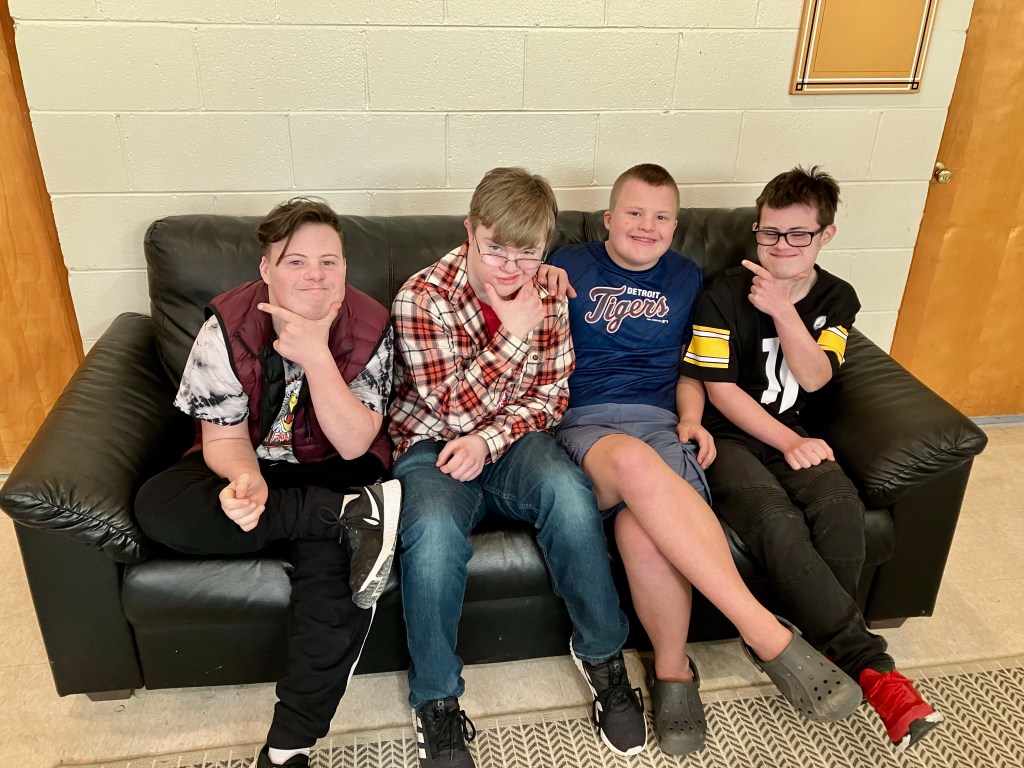


 'WIL'ingness = Willing to Embrace Extra in Life