It’s in the Experience

The teenaged lifeguard; tall, lean and curly-haired, stood on the edge of the wave pool blowing his whistle — at me.

I saw her face in his; though she was his senior by at least 20 years, with straight brown hair and a brisk uniform. She was resolute to get Wil’s boarding pass — from him.

Though the airport incident happened over 2 years before the wave pool incident, time came together in their parallels.

When a pool or a plane is involved, Wil is the happiest guy on the planet; until he’s not. Both travel and swimming fill Wil with excitement, unless it brims over to overwhelm; rendering him stuck on the spot.

In the airport, Wil was well on his way to overwhelm. I saw it building, so did my best to keep him distracted and on-the-move. But the heaviness was taking him over. Wil has never had a problem going through security, so I didn’t anticipate an issue. But when we approached the podium, either Wil read this security guard’s demeanor, or overwhelm finally overtook him. He sat on the ground, smack dab in front of the security guard’s podium. Not the wisest choice, but there we were.

I offered to hand the security guard Wil’s boarding pass, but she refused. He had to do it. I explained he was overwhelmed and had Down syndrome. That wasn’t enough for her. A grown woman chose a stand-off with a then 13-year-old boy with Down syndrome.

Fortunately, a few podiums over, another security guard was witness to what was happening. She asked how she could help. I explained our situation. She reached her hand out to Wil, he accepted it, and she walked us down to another podium. I heard the stolid security guard, upon our leaving, say to the security guard that helped us, “I was just doing my job.”

“I understand we need to get out of the pool,” I said to the curly-haired lifeguard. “My son won’t get out on his own. Just give me a minute.” (I sent up a silent prayer that a minute was all we’d need.)

I crouched down next to Wil and explained that it was dangerous to stay in the water; that a storm was coming; that when lifeguards hear thunder we need to get out; that we need to respect the rules; that they are there for our safety.

I knew my words wouldn’t motivate Wil out of the water now, but they would have meaning later should this happen again. Wil doesn’t fully grasp danger, but he does have an ironclad memory. When I preface a pool trip with the words “we have to get out if there is thunder” these will no longer be empty words. Experience gives Wil meaning to the words, thus being the best teacher.

A pretty lifeguard with white-blond hair stood only a few feet from us. Wil, being a teenager, would certainly respond better to her than me. I walked up to her and said, “My son isn’t wanting to get out. When he’s like this, he does much better with people who are not mom. Would you mind asking him to get out. Maybe offering him your hand?”

She willingly agreed, and approached Wil with an outstretched hand. Wil lifted his head, but couldn’t quite motivate himself to fully reach back. Though he stayed in the pool, I could see she had released some of his resistance.

Two female sheriffs that were nearby approached Wil.

“Would you like a sticker?” They held golden star badges up for Wil to see. I appreciated their efforts, but there was no way a sticker was going to prompt him out of the water (but maybe a trip to the clink would!).

Then another teenaged lifeguard, with auburn hair, walked up to me and said, “Can I help?”

The clouds parted and angels sang! No, that didn’t happen. Or else we would have got back to swimming. But that’s exactly how those words felt.

Three little words; only 8 letters in their entirety. And yet, I knew they were more than words; there had to be experience behind them.

The auburn-haired lifeguard, with a calm, friendly demeanor, reached her hand out to Wil and said, “Would you like to come with me?” Wil must have read her demeanor, because he stood up without hesitation and took her hand. He then looked at the blond lifeguard and took her hand too. Wil walked out of the water hand-in-hand with the two lovely lifeguards. Then the sheriffs gave Wil his stickers. I hope curly-haired whistle-blower was watching 😉

With Wil now out of the water, my main focus was to keep him moving forward. If this were not the case, I would have circled back to ask the auburn-haired lifeguard what inspired her to ask to help (same with the helpful security guard). What experience is in their back-pocket to step in and offer help?

Could it simply be a strong desire to help? Possibly, but my guess is it goes deeper than that. Is it gained from the experience of inclusion during their school years? Is it gained from experience with a family member or friend with a disability? Is it gained from experience as first being an observer then learning from situations such as these?

What transforms a stolid whistle-blower into an asker? What opens a mind from “doing my job” to “can I help?”

These are key questions that lead to the progression of acceptance and understanding of people with disabilities.

Within each of these questions, and likely within each of the answers, lies one common theme: experience.

And that gives me hope, because we can all learn from experience, if we choose to.
Heavy and Light

Wil loves riding his recumbent bike around our property. The challenge is I can’t fully trust he won’t go out to the road. And it’s a busy road.

I was talking to fellow mother yesterday. Her 16-year-old son, who also has Ds, is in summer speech and occupational therapy with Wil. As much as her son loves swimming, she will never have a pool. For the same reason I need to check in on Wil on his bike. She can’t fully trust he won’t go in the pool unsupervised.

Our children are teenagers. They know they are teenagers, their bodies tell them they are teenagers, and they desire the independence of teenagers. And as a parent that has raised 3 babies to teenage-hood, I enjoy a certain measure of independence too.

Last night, Matt and I were enjoying relaxing together after dinner. Wil wanted nothing to do with relaxing. He went outside to ride, and sure enough when I went to check on him he was getting close to the road. He was likely trying to make the biggest circle around our yard that he could, but again, I can’t be fully sure.

Even at 15 years old, he requires an extra level of supervision. And possibly, or possibly not, for many more years to come. With Wil one thing is certain — I won’t know until I know. (If you are a neurotic planner like me, a child w Ds is your best cure! 😂)

Many of my friends are becoming empty nesters. Matt and I may or may not be. I knew this uncertainty would be a reality when Wil was born, but now that the reality is closer, its an interesting feeling of limbo to be in.

I love my life with Wil. He is so fun to be with. We sing in our off-key voices at the top of our lungs. He still surprises me with new milestones, and huge bear-hugs that now knock me over as he’s grown. I’m thankful to fully share in his youthful exuberance.

But I also have a child that may never fully grasp the risks of certain fundamental independences into adulthood. The fullness of that can feel very heavy at times.

And yet, when life feels heavy, it’s being in Wil’s presence that purely and fully lightens the load.

You Go Girl!

At the airport yesterday, Wil was struggling a bit with some young children crying.

As a Starbucks was nearby, I asked Elizabeth to walk him over there while I stayed with our carry-on luggage (as Katherine was in another shop).

Wil was reluctant at Starbucks too, so Elizabeth walked him back to sit with me. She then walked back to Starbucks to get herself something to drink. A woman walked up to Elizabeth while she waited in line for her drink. The woman said she observed Elizabeth with her brother, and expressed her admiration at Elizabeth’s mature patience and how she talked to Wil. Then the woman said, God Bless, and walked away.

Elizabeth was surprised, yet pleased, by this. She was just being a sister to Wil as she always is (and Katherine has this same mature patience with Wil, as well), and didn’t see her actions as anything different than normal behavior.

In Elizabeth’s everyday life, she lifted the spirits of another, and she was uplifted in return.

I’m proud of Elizabeth (always), and also proud of the woman who had the courage to step up and acknowledge Elizabeth.

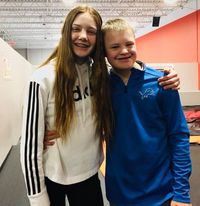
Katherine, Elizabeth, Wil

Brace Yourself

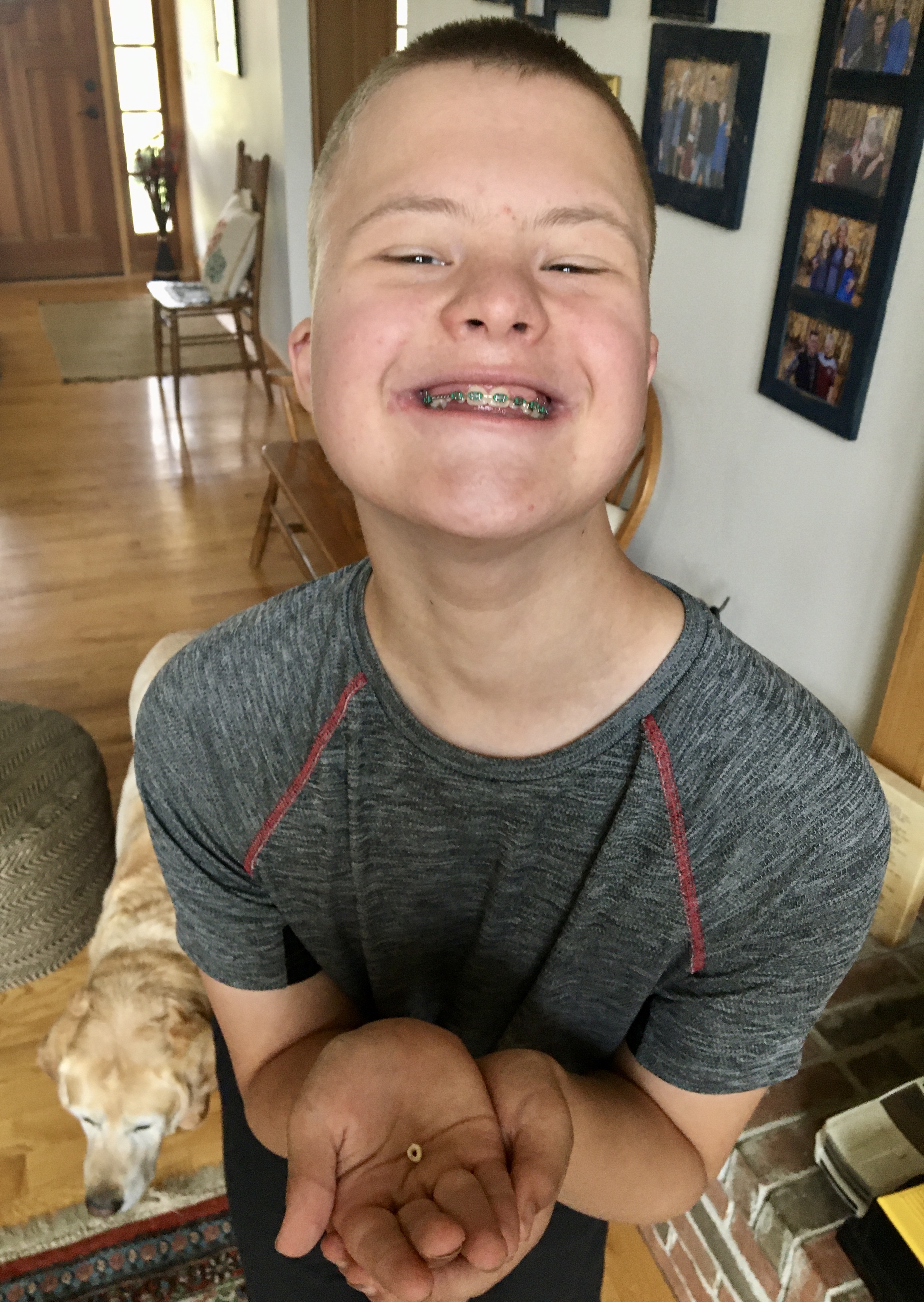
“Look, Mom!”  Wil widened his smile. A thick cord of wire ran through every braces bracket attached to the top row of Wil’s teeth. Then I noticed one of the brackets hung suspended over the jagged edges of an emerging adult tooth. Wil had just lost the baby tooth that previously held the bracket in place. 

Wil reached down to the coffee table and carefully picked up a little white tooth. He cupped both hands and presented the tooth to me, as if in offering. 

Though Wil is 14 years old, every missing tooth is as exciting as the first — and it has nothing to do with the Tooth Fairy. When Wil lost his first tooth, I showed him how to put it under his pillow. When he awoke he exclaimed, “Shiny coins!” Then, “Where’s my tooth?” My explanation that the Tooth Fairy took his tooth in exchange for the shiny coins was not a fair deal to Wil. He wanted his tooth back. Fortunately the Tooth Fairy was still orbiting the area and made a return visit.

Wil is entering high school this fall. I was recently asked by a mother whose daughter with Down syndrome is years younger than Wil: “How did you decide that Wil should receive a Certificate of Completion rather than a high school diploma? And when did you know?”

When Wil was a baby I would have answered emphatically, “Wil is getting a high school diploma! Wil will have full inclusion in school and take college courses.”

As Wil grew in age, I learned step-by-step with him. In his Kindergarten year alone, his teachers and I made multiple changes to his IEP (Individualized Education Plan) in determining the right balance for Wil between the general education classroom and the resource room. Wil excelled learning with his peers in the general education classroom in some subjects, but he also learned math best in the resource room. Though I had linear plans for Wil, they took many detours as I learned by experience what best fit his needs.

By Wil’s middle school years, I knew without a doubt that the Certificate of Completion was Wil’s best option. I was not saddened by this fact, as my earlier self might have been. Living experience-by-experience with Wil, the loss of earlier dreams also created openings for new growth. But I could not know or appreciate what that new emergence of growth looked like until I gained a widened perspective over time.  

A friend, whose daughter with Down syndrome is the same age as Wil, recently shared colleges she investigated that have classes adapted for our kids. There are multiple life skills as entrance requirements. She has implemented those very skills into her daughter’s IEP which I think is brilliant. Because of this conversation, I’m going to look into the same options for Wil; I still hold college course plans for him. That said, my friend and I also have multiple alternate goals in mind understanding the flexibility required along this journey.

It’s vital to be educated, to have goals and plans. I value my bond with friends with whom I openly share experiences and learn from. Even so equipped, there will always be unexpected suspensions in time that appear devoid of answers. Linear plans change no matter how tightly bound. There are no fairies that place shiny solutions under my pillow, or that orbit back to deliver what I once believed lost. I have felt the depth of challenge in each of those spaces, but I now hold an underlying excitement with each one — from the first up to Wil’s entrance to high school and beyond. Not because I anticipate smooth transitions; rather I know, with each step forward I gain a widened perspective that reveals each jagged edge as an offering of new growth.  

You Are Here

Like many mothers, I loved my son before he was born. My daughters and husband placed their hands on my belly and felt his kicks and punches. We pondered names and dreamed our dreams. The field of possibilities was laid open before us.

The golden gates to that field slammed shut seconds after Wil was born. My brain valiantly fought to pry them open, objecting to each indicator the medical staff shared with me that my son may have Down syndrome.  Look at the way his arms and legs splay out, they said, see his short stubby fingers and his low-set ears, note the thickness of his neck. Interestingly enough, they never mentioned the shape of his eyes. 

As Wil melted into my chest the day he was born, I reveled in my love for him. I was careful to keep thoughts of his expected diagnosis locked tight in a separate compartment, though it hovered perilously above me. I looked down into his eyes; their shape struck me. I was both awed by their beauty and intensely terrified. My brain, still playing defense attorney, objected strenuously. But when the heart knows, the defense must concede to rest. The compartment above me busted open and everything spilled out all over us on the hospital bed. 

Just days after Wil came home from the hospital, I stared at him in his crib. Though my brain had rested its case — we even had genetic proof by this time — it begged to object. I simply could not believe I had a child with Down syndrome. But it was true. My heart held deep love for him, yet my brain kept its distance. I had never felt so contradicted in my life. As I stood there, my stomach suddenly dropped as if I was going down a roller coaster. The ground vanished below me and I stood suspended, as if in an elevator well. I visually saw darkness under me and the four walls of Wil’s room suffocated me. I knew this experience was a figment of my imagination but my body felt every sensation as if it were real. 

When I was able to regain my balance and logically analyze what happened, I knew what it meant. I felt completely out of control. Though I had many loving people around me and a packet full of helpful information, I realized more than ever that the work of acceptance is intensely personal. I had to take the first grounding step into acceptance myself. 

Acceptance has no clear start point. I never found a big, red “you are here” circle followed by dashed lines leading the way to acceptance. Rather, acceptance is like an open field surrounded by clouded mountains. You just jump in wherever you are, firmly plant both feet in the field, and figure it out from there. 

I overstepped into territory I wasn’t ready for, like reading books about teens with Down syndrome before Wil was even a year old. Those books offer a different meaning to me now for the landscape I’ve travelled, but then it was too much knowledge too soon. I learned how to back-step and move in new directions.

Fourteen years later, I’m still back-stepping and running forward, climbing, traversing, discovering; yet I arrived to acceptance the day I jumped in and firmly planted both feet on the ground. 

I know the feeling of the gates being closed on me. And that is why at the top of every mountain we ascend, like Julie Andrews in “The Sound of Music,” I open my arms wide above the clouds, spin with the wind and soak in the spectacular view of this beautiful, vast landscape I gratefully call home.  

Simply Powerful

Kristi, Wil’s paraprofessional, sent me this photo of Wil cooking at school with his Connect mentor, Victoria. It was Cinco de Mayo and they were making tacos. Kristi told me he ended up eating 3! 

It’s awe-striking to me, still, even though Wil is a teenager, how powerful the simplest joys with him are. I mean, they were making tacos on Cinco de Mayo. How simple is that? But look at their faces. I think of the support he is encompassed with. Simple never is with Wil. 

When Wil was born, I knew so little about Down syndrome. I didn’t know how powerful the simplest actions could be. 

Though there was a high learning curve in early therapies and doctor’s appointments with Wil, my deepest learning came from knowing him. Knowing Wil’s smile. Knowing Wil’s hugs. Knowing Wil’s first words. Knowing a community that embraced him. 

When I reached out to Victoria, she shared, “it’s kids like him who have really made me want to go into the profession. He is so caring.”  

Victoria is way ahead of where I was. Her knowing will change lives. Not only for her chosen profession in the future, but also right now. The way she interacts with Wil, simply by being who she is, sets an example that shatters stereotypes and alleviates fears. It is not scary to know Wil. It is not hard to know Wil. In fact, it’s really darn cool to know Wil. 

Whenever I hear words like Victoria’s, I’m always drawn to thoughts of my mom’s close friend, Martha. Martha has three sons. Her oldest, Paul, is my age and has Down syndrome. Paul did not have friends like Victoria. In fact, for Paul, general classroom opportunities were scarce to non-existent. Early therapy was not available or encouraged. And a Connect mentor program would have been a far off dream. Martha navigated this life with a tiny fraction of the awareness and advocacy Wil is surrounded with. 

Wil and Victoria’s experiences are not just for Wil and Victoria. They are for the families who navigated this life before us, and for the families Wil and Victoria will open doors for. The power of advocacy is not always found in picket lines. Advocacy is also spread by our daily actions in simple, yet powerful, ways. Simple never is with Wil.

A Love Story

The girl stood behind the hospital wheelchair and clasped the narrow top of the plastic seat. Her mother, standing beside her (both about the same height) grabbed a handful of the girl’s pale blue shirt, directly at the small of her back, and wrapped it tight around her fist. The girl stepped forward, wobbly and deliberate, landing each step on the outside edge of her shoes, with a deeper bend in her left leg. I would guess the girl to be fifteen or sixteen years old, not solely by her height, but by her desired independence – her mother’s expert grip allowing for this. 

Further down the hallway the mother asked, “Are you hungry?” The girl nodded. “Well, let me push you then.” The girl kept walking.

“I know you don’t want to sit,” the mother said, “but we can get to the car faster for lunch. Come on, we’ll play race car.” The girl conceded, and supported herself along the edges of the wheelchair to take a seat. The mother grabbed the black-capped wheelchair handles and sped forward. 

Just last week I left Wil home alone while I took his sisters to school. Wil was stuck on which hat to wear. He’d been sitting in front of his plastic bin of hats for 20 minutes. “Sorry, Wil, time is up,” I said. “I’m taking your sisters to school because it’s not fair to make them late. I’ll see you in a few minutes.” He looked up at me and back down again, but didn’t budge. 

On our drive to school Elizabeth asked, “How late do you think he’ll go to school today?”

“Your guess is as good as mine. When I get home he’ll either still be stuck on the floor, or blasting his iPad to Luke Bryan thinking he has the day off, or running away in the back field.” 

When I turned the car back into our driveway, Wil was seated on the porch steps. His coat and backpack were on – he had put them on himself. Wil’s morning, though wobbly and deliberate, was also deeply triumphant for these things. 

It is easy to grow impatient, as hesitations are built into our everyday – I understand the wheelchair race car game well. I was having coffee with my friend, Laura Walsh, whose son Manny is also a teen with Down syndrome. We were sharing stories about mornings with our boys. Manny was taking his time getting dressed. “Put your freaking shoes on already! I wanted to scream. But of course, I took a deep breath and was calm.” We laughed so hard over that. Our patience may seem supernatural on the outside, but some days our brain begs to put the pedal to the medal. 

Our stories have been looked on with pity or sorrow. Our stories have been dismissed with careless derogatory words. Our stories have been seen as reserved only for “special” people. But when you really take a moment to observe, though our stories of navigating independence with our children may look different, in our own ways we are all wobbly, hesitant, deliberate, impatient and holding on tight to what we love, even as we let go. 

How Big Is a Millimeter?

Early animation was created millimeter-by-millimeter. To some, this is a tedious process — much too much work. Others enjoy the sinuous flow of the completed project, unaware of or unconcerned with the process behind the scenes. To the animator, however, the diligence, patience and love poured into every intricate detail has special meaning. Each development in the process, no matter how slight, contributes to the bigger picture. 

For Wil, getting dressed is an event. He may emerge from his bedroom decked out in grey and declare the day “Grey Power!”  There was a “Red Day” when, you guessed it, he wore red from his hat down to his socks. Wil is equally excited about his blended color outfits, or his self-proclaimed “fancy” or “handsome” collared shirts — accurately meeting both descriptions.  

Wil’s dexterity has not reached the point where he can tackle buttons on his own. Wil’s button-down shirts are hung in his closet with the top three buttons undone. That way he can maintain his independence by pulling the shirt over his head, only needing my help for those last few buttons. As I fasten the very top button, I ask, “Isn’t that too tight?”

“Ugh, mom, no!” Clearly, I do not know fashion. 

Wil’s teenaged response reels me back in time, as I often am, triggered by one of his words or actions. I’m reminded of all the still-frames in time pieced together, millimeter-by-millimeter, to create the moment we are standing in now. Such a typical scene, and yet, it’s not. 

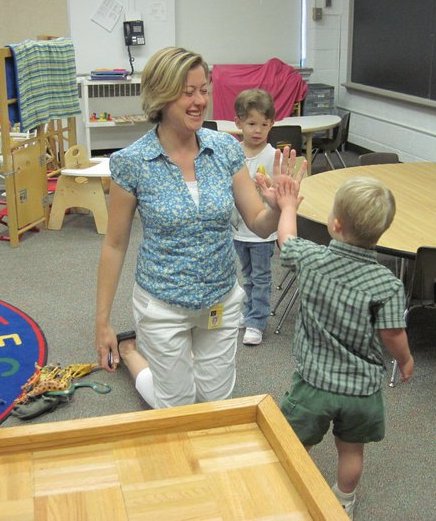
I’m brought back to a 3-year-old Wil, his hair nearly white-blond and wispy. His voice light and sweet, with an upturned, cheerful innocence. Wil sits across the table from Ms. Theresa Herron (Wil’s speech therapist since he was a baby through his grade school years). Wil points at one of the flash cards laid on the table; upon each card a picture with a word describing it. Wil is learning how to pronounce the words on the cards. He’s also learning to make associations with the pictures as they are placed into a scenario. During each session, Wil and Theresa find something to giggle about.

Theresa had an iPad set up on the table, which was an advanced concept at the time, and she videoed certain sessions. The videoed sessions, seen one at a time, may appear to be near repeats of Wil pointing at this, then Wil associating this with that. Progress made might be difficult to detect. However, if you chose to press the fast-forward button to view continuous sessions, you would enjoy a sinuous flow of Wil’s clear advances over time. 

Theresa and I were like the animators as we reviewed each session — we rejoiced in every millimeter of change. Theresa would note how Wil enunciated a word in a slightly different way, or how he made an association he hadn’t before. If he’d been experiencing a roadblock, she’d gather the information we had so far and indicate a new direction to move in. Our shared celebration of each session ran deep, as we both valued the magnitude of each millimeter.

Over 10 years later, Wil’s vocabulary has greatly expanded thanks to the strong foundation of his early speech therapy days. Wil’s ability to communicate has been vital to his flourishing independence.  Even Wil’s “Ugh, mom, no!” is so teenage-typical, and yet it’s not. We stand on a mountain of millimeters, special meaning built within every intricate layer, in this sinuous flow of life. 

The Dance

When Wil was born, I wondered on his differences. How would they separate him from making friends? How would his differences separate him from living a full life? What I didn’t know was Wil’s differences would become woven so deeply into our daily lives that they would be our norm.

One example is Wil’s dancing. When the mood strikes, Wil busts a move down the aisles of Target, Busch’s or Meijer. Wil gets jazzed going shopping with his sisters, because there are mirrors hanging everywhere to dance in front of. 

Chopping vegetables with me for dinner is always a hip wiggling activity for Wil, and a car ride another opportunity to belt a tune out the window.  

Wil’s had the music in him for so long, it’s ingrained in our lives. I forget that not everyone dances whenever the mood strikes, or bounces to the beat in their car seat, until a stranger gives Wil a smile as he rocks out to his own tune. I smile inwardly to myself, as I smile outwardly back to the stranger, how one-dimensionally I once viewed what differences meant. 

Wil’s dear friend, Sarah, is a ballerina. Sarah is graceful in every sense of the word. She is tall and lithe, and practically floats on air when she walks. Wil has low muscle tone so he lands flat-footed with a slight side-to-side gait. I love watching the two friends walk together, because they could not carry themselves more differently. Sarah, however, always makes a point to walk at Wil’s speed, and when he talks, she leans over so they are eye-to-eye. Then, I can almost predict at some point during their conversation, Sarah will throw her head back laughing at something Wil shared with her. And they always find time to share a dance. It’s been that way since preschool. 

On Wil’s 14th birthday, Sarah wrote in a beautifully-crafted handmade card to him: 

“I am so lucky to know you. You are so amazing and always make me laugh. Goodness, you’ve gotta be the funniest person on this Earth! Your laugh is so contagious. I always have fun walking around with you and talking about lots of things. Hope you have the best birthday bud!” 

As I read Sarah’s words, my eyes welled with tears. I now wonder, these 14 years later, how on earth did the differences I once so worried on become a true blessing? That this life, that such friends, have woven themselves into the dance of our lives as our norm. 

At one time differences stopped me in my tracks. Now, all I see are blessings in the dance. 

It’s What Friends Do

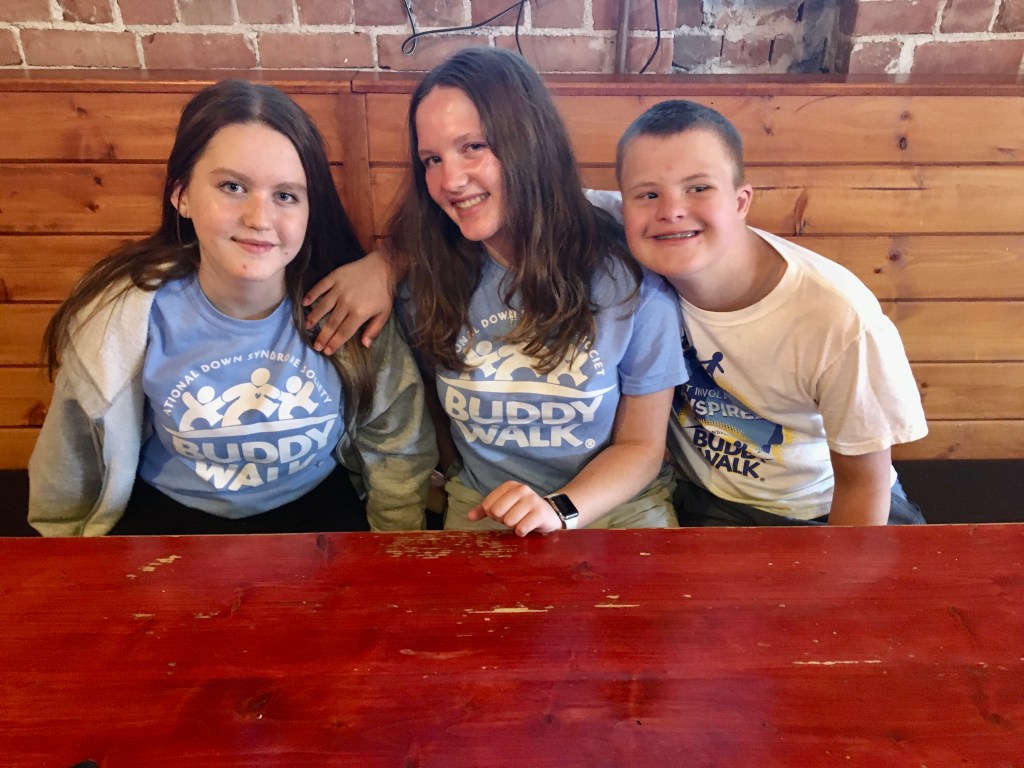
Wil’s closest friends are five girls from school; all typically-developing. In our tight-knit community, I hear over and again how special Wil’s friends are. And it’s true. They are. My gratitude is high because I know in another tight-knit community – the community of parents who have children with Down syndrome — Wil’s friendship circle is not commonplace. I wonder, is there a special ingredient these friends have that can be shared? What exactly is it that sets them apart? 

One obvious answer is Wil sets himself apart. Not by intention, but by his nature. Wil is funny, silly and goofy at times; as most of us can be. Wil belts out a good tune, and hugs heartily; as most of us are moved to do. Wil grows tired, grumpy and impatient; as we all can. Wil, however, takes all of the above to a slightly, and other times very, different level than most of us. 

Last year, I drove Wil through the McDonalds drive-thru to get a Sprite (his reward, aka bribe, for not ditching the school bus to hide in the stairwell. Thanks to a team effort with his teachers, we uncovered another motivator before his teeth rotted).  

“We-we-we-welcome back to McDonalds. Wh-wha-wha-what can I get you?” We were asked via the speaker under the drive-through menu. Wil mimicked the words verbatim, then laughed. My child with special needs was making fun of another person with special needs! How could he? Then I thought on this. We all have varying levels of differences. And this was an unfamiliar difference to Wil. A typical reaction for a child, and even adults, is to make fun of what is ununderstood. So, in effect, Wil was responding in a typical way. I marveled at the irony. I also wasn’t going to stand for it.

I turned around in my seat, looked Wil in the eye and said, “Wil, that is how he talks. Just like you talk the way you do, Elizabeth talks the way she does, and Katherine talks the way she does. We all talk differently. There is nothing to make fun of. Sometimes all you need to do is be patient and listen.”

“Oh, ok,” he said. I pulled up to pick-up window, and Wil leaned forward from the back seat and waved, yelling, “Hi!” Then “Thank you!” Wil has good manners when he’s not being a pistol.

One of my favorite quotes from Wil’s friend, Ashely Bobo is, “That’s just Wil being Wil.” She says this with a shrug and a smile, as any friend would. When Wil grew tired in gym class, he laid flat on the floor as his friends jumped rope. When he was ready, he hopped back into the jump rope game and his friends cheered him on.

Another favorite quote is from Wil’s friend, Lila Harvey. Wil and Lila were playing on the slide at the playground. Wil decided to plant himself at the top. When it was clear to Lila he wasn’t budging she said, “Stop fooling around Wil and get down here!” Wil considered this for a beat, then down he went. Lila knows how to call his bluff, as any good friend would.

Wil and his friends do not have a level playing field, yet they built a friendship on common ground. They are not perfect, either (everyone needs a reminder to use their patience and listening skills now and then). What they have created together is a friendship circle. In the center a revered place to meet, surrounded by a wide breadth of latitude for their varied level of differences. A circle that is absolutely duplicatable; and yet it is not commonplace. That is exactly what makes this group of friends so very special.