Not so long ago, if anyone gave Wil choices he’d pick the last choice offered.
This morning I asked him, “What dipping sauce do you want? Ranch, mustard, ketchup or honey mustard?”
“H — Ranch.” Wil corrected his auto-response for what he wanted.
Life is full of tiny miracles embedded within everyday occurrences. Our kids with disabilities slow life down just enough to reveal these hidden gems for the light they are.
I shared with Wil’s friend, that during the snow days off school, “Wil and I played with these big blow-up things that you put over your hands and then punch each other with.”
Wil interrupted me with a flat-toned, “They are called Socker Boppers, Mom.”
Wil is at a stage where he reads everything around him — even the words printed on the big blow-up things that you put over your hands, that I clearly took no time to read. But when you discover you can read about anything around you, then that’s what you do!
So within that one sentence Wil interrupted me with, I felt elation for his high interest in reading everything around him, mixed with an internal chuckle over his very typical teenaged eye-roll comment.
Life may be found in the present moment. But I have also found that observing the progression of moments over time fill the present with more life.
Though the questions remain static; our answers come from different places.
****
Last night Wil and I drove to Elizabeth’s basketball game in Bedford (just north Toledo). A dark sky, flat un-scenic roads — minus the occasional Christmas lit homes — and nearly a full week of school put Wil to sleep quickly.
Wil remained upright in the passenger seat; his neck stretched to the right at 180°, head at rest on his shoulder. (He can also fold himself in half — thanks to low muscle tone — chest on thighs. It was the seatbelt, not his flexibility, that prevented this sleeping position.)
When Wil woke we were 20 minutes away from Bedford High School. He looked out the passenger window. Same dark skies and flat roads. “Too long, Mom.”
“I know, Wil. Almost there.” I knew the basketball game would be a challenge for him with the loud buzzers. He’d been to enough games to know that too. I gave him the choice to stay home with Matt. But he wanted to go. To cheer on Lila, his friend since grade school. She had aged up to play on the varsity team with Elizabeth.
When we arrived at Bedford High School, I was heartened as Wil entered the school with no hesitation. (There are times when he’s very excited to do something, but when the time comes he has second thoughts.)
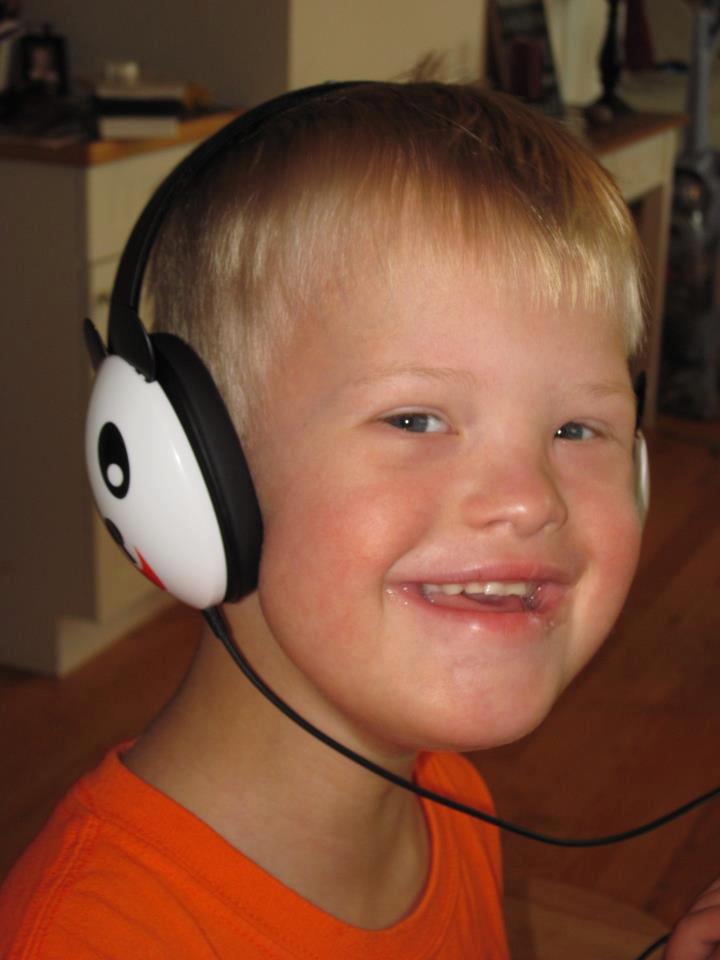
The entry doors opened to a long hallway that led to the gym. About halfway down the hallway Wil stopped. “Headphones, Mom.”
I set my briefcase-sized purse (for such occasions) on the ground and took out his noise-cancelling headphones. Wil took off his hat and we made the exchange.
As we were ready to regain our progress, a custodian walked by us. He looked friendly so I jokingly said to Wil within the custodian’s earshot, “We better hurry or he’s going to put you to work.”
(Though I wasn’t conscious of it at the time, writing this now, I realized it’s become a habit in me to keep situations as light and upbeat as I can when there is an opportunity for Wil to become over-stimulated.)
“Oh, yes,” The custodian said and smiled. “And there is a lot of work. I just finished cleaning the ceramics classroom. That’s the most challenging. Scraping clay off the ground. Every day.”
The three of us chatted our way down the hall; our moods remained light as I hoped with this friendly interaction. Wil and I parted ways with the custodian and peeked into the gym. There was a stack of bleachers about four-high from the gym floor. There was also a second floor balcony with about 20 rows of seating. I suggested to Wil that we go to the balcony; the buzzer noise would be lessened.
But then Wil saw Steve, Lila’s dad. Wil adores Steve and ran into the gym to sit with him —only feet from being directly under the buzzer. I followed and thought, well, the more Wil is able to tolerate the buzzers the better (as most of us game-goers do — tolerate buzzers).
The game started, as did the buzzing and announcements over the loud speaker. When the second period was over, so was the honeymoon period of Wil’s chosen prime seat next to Steve and cheering on his friend and sister. Over-stimulation had taken over. I suggested we take a walk.
It was quiet down the long hallway. We took note of the artwork on the walls as we strolled; when we reached a line of the custodian’s trash pails blocking our path, we turned around and slowly made our way back, stopping at a bench for a seat. Wil sang an a cappella version of Luke Bryan’s “Whatcha Doin’ a Little Later On?” In the song, Luke imitates a high-pitched woman’s voice in her response to his titled question; of course, Wil does the same in his a cappella version. We always laugh when Wil hits that high range. In the car, or at home, I sometimes join Wil; the more obnoxiously high-pitched we can get the better! But I wasn’t as brave as Wil to do so in a school hallway, even being the only ones there. I laughed with him on his high notes, and his bravery, and marveled for the thousandth time of how he knows the purity of fun, and I have a standing first-class ticket to join him.
When it was nearly time for the second half to start, it was time to get back to the business of re-entering the game. We walked back toward the gym. About 15 feet from the entry Wil made an abrupt stop. I sandwiched my body behind his and wrapped my arms around his chest. I gently moved forward, which in-turn moved him forward, in baby-steps. He laughed at first, but after a few steps he stood firmly in place. When I tried to push more, he bent his knees which meant he’d take a full seat on the ground if I kept it up. I suggested we go to the second floor balcony and this time he agreed.
There was a large landing at the top of the stairwell with a window. To the right of the landing were propped open double doors that led to the bleachers overlooking the basketball court. Wil walked to the window and looked out. Then walked back to the top of the steps and took a seat near the wall with his feet on the first step.
“Do you want to stay there?” I asked.
“Yes, Mom.”
The stairwell was divided in the middle by sets of railings. Each railing would span about 3 steps, with an open step so you could cross to the other side, then the next 3 steps would be railed with an open step. I saw the logistical wisdom of this with Wil seated at the top. He was next to the wall so people could easily walk by him, but sometimes people would cross over to the other side giving him space.
Teenagers, individually or in small groups, were in almost constant flow up and down the stairs. I mused over a commonality I witnessed; each teen gave a slight pause of surprise at the sight of the blond teenager with noise-cancelling headphones at the top of the stairs, then resumed their conversation and pace up or down the stairs; sometimes crossing over to the other side, and sometimes walking by him. Just business as usual.
During one of the game’s time-outs, the song “Low” was played, which Wil loves, and he continued singing it on his own. The teenagers traversing the stairs gave no more pause than before.
I saw not a single prolonged stare — not a single one —that indicates the processing of something strange or unusual. Every pause, and I’ve become an expert at identifying pauses (and smiles for that matter…I can discern a friendly smile, or a smile of pity, in .001 seconds flat). These teens paused only long enough for their brains to say, hey! Something is happening that on a typical day isn’t. Oh, it’s just a guy sitting on the stairs. Onward.
From the second floor landing, I watched the game through the propped open double doors. I could see one of the nets and about ¾ of the court. To the far right of my view, standing at the railing and overlooking the court, stood a man and who I guessed was his teenaged son, their backs to me. They talked almost constantly, one turning their head to talk to the other, then back to the game, then turning their heads to one another, then back to the game.
I admired their ease with one another. How this father never in his life gave thought to his son sitting in the stairwell and refusing to walk into the game. How they enjoyed the flow of conversation between them, taking this moment for granted without even realizing they were doing so.
Then I looked at Wil, singing “Low” — he rocked to his own beat, his blond hair poked up over the ridge of his noise-cancelling headphones. He looked absolutely adorable and I was flooded to almost tears with my blessings. I, too, take many moments for granted without even realizing I do so. In a span of less than two hours, I experienced multitudes of small-big happenings that are easily overlooked or not even noticed at all; but raising a child with Down syndrome these moments are highlighted in bold bright colors.
****
I’ve never been skydiving so I looked up how skydivers describe it: “Skydiving is quite breathtaking and gives you a refreshing, incredible perspective on the world.”
The word hard never came up. It’s much too expansive of an experience.
“The Buddy Walk is only one mile walk. I think you can handle it,” I joked. “And really, with so many people with Down syndrome, we don’t move fast!”
When The Peanut Butter Falcon was available for streaming, I didn’t want to watch it on my own. The viewing experience would be fuller with friends who knew Down syndrome. Whether the movie was good, bad or otherwise, we’d share in that knowing together.
A group of us moms got together at my house. The majority of us were raising teens, or kids that teetered on the edge of teenage-hood. We poured generous glasses of wine, loaded tiny decorative paper plates with dense dips, sturdy crackers and crunchy veggies, squished together on the couch, pulled up spare chairs, and settled in.
We erupted in laughter in the same scenes together, we shared audible silences in the same scenes together, tears leaked from the corners of our eyes in the same scenes together, and we enjoyed scenes of pure entertainment in the same scenes together. And we all wondered together, over the rolling closing credits, why Zak’s (the main character with Down syndrome) duration in underwear was deemed necessary.
Then in our post-movie review, we all first recalled the same scene together: Tyler’s adamant assertion to Zak that he stop asking him questions; there was a slight pause then Zak picked right back up with more questions. We broke out in laughter again and remarked on how our kids would do the same.
Our review continued along the same vein; how relatable Zak’s behaviors were to our own kids’. And where there were varied differences, we could still fully relate.
If you are a parent, it’s highly likely you have your own friend group of parents who have children in a similar age group.
Though your kids are fully their own individuals, you easily laugh together over shared traits; you easily share audible, thoughtful silences over certain situations, and likely enjoy the pure entertainment in others. Though each child has their own unique differences, a group of friends raising children of a certain age group can fully appreciate and relate to another’s experiences through their own.
There is running joke at our annual Buddy Walk: “Who is going to win the Buddy Walk this year?”
I’ve been to 15 annual Buddy Walks (since Wil was 7 months old). I can guarantee about 70% of the kids will either decide at some point to sit it out (more than once), run to a play structure, or take some sort of tangent. Our kids can be very quick, and cunning in their moments of escape, but typically in any other direction than the paved walk. (Some may argue my statistic is on the low side).
Laughing about our kids taking their time to get to the finish line is not a slight against them. Its relating a typical scene in our lives that we share together. Any one of us parents would say our lives are fuller for it.
So sometimes I forget when I make “off the cuff” comments like that. It’s not a familiar scene to everyone yet — it wasn’t one to me once — and we are both watching a movie of our own. When those scenes find a way to merge, I have no doubt we’ll share in that laughter together.
Wil loves riding his recumbent bike around our property. The challenge is I can’t fully trust he won’t go out to the road. And it’s a busy road.
I was talking to fellow mother yesterday. Her 16-year-old son, who also has Ds, is in summer speech and occupational therapy with Wil. As much as her son loves swimming, she will never have a pool. For the same reason I need to check in on Wil on his bike. She can’t fully trust he won’t go in the pool unsupervised.
Our children are teenagers. They know they are teenagers, their bodies tell them they are teenagers, and they desire the independence of teenagers. And as a parent that has raised 3 babies to teenage-hood, I enjoy a certain measure of independence too.
Last night, Matt and I were enjoying relaxing together after dinner. Wil wanted nothing to do with relaxing. He went outside to ride, and sure enough when I went to check on him he was getting close to the road. He was likely trying to make the biggest circle around our yard that he could, but again, I can’t be fully sure.
Even at 15 years old, he requires an extra level of supervision. And possibly, or possibly not, for many more years to come. With Wil one thing is certain — I won’t know until I know. (If you are a neurotic planner like me, a child w Ds is your best cure! 😂)
Many of my friends are becoming empty nesters. Matt and I may or may not be. I knew this uncertainty would be a reality when Wil was born, but now that the reality is closer, its an interesting feeling of limbo to be in.
I love my life with Wil. He is so fun to be with. We sing in our off-key voices at the top of our lungs. He still surprises me with new milestones, and huge bear-hugs that now knock me over as he’s grown. I’m thankful to fully share in his youthful exuberance.
But I also have a child that may never fully grasp the risks of certain fundamental independences into adulthood. The fullness of that can feel very heavy at times.
And yet, when life feels heavy, it’s being in Wil’s presence that purely and fully lightens the load.
This week’s story is an excerpt from “Stories of Wil: Puberty Part 1” (publ. July 2020)…
When I woke Wil up, he was very sluggish.
“Hey, buddy, time to wake up,” I said. I sat on the edge of his bed and tickled him lightly under his chin.
“Hmmph!” Wil turned his face into his pillow and commenced fake snoring.
“Oh Wil, I almost forgot. It’s your favorite day of the week today. It’s Monday. Happy Monday, Wil!” Wil turned his head from his pillow, opened his clenched eyes, and looked up at me.
“Ugh, Mom. It’s Friday.”
“Hmmm, I’m pretty sure it’s Monday today. Let’s go Monday!” “Mom,” he bolted upright in bed, “it’s Friday.”
“Ok, I guess it’s Friday. Ho-hum. How boring. The end of a week of school. I think the beginning is much more fun. Too bad it’s not Monday. Time to get dressed now.”
“Oh, Moooooom. Hugs now.”
“Yes, we can’t forget our hugs,” I said, and hugged him. “Ok, let’s get up and dressed and ready for our Monday.”
“Oh, Moooooom. Ok, I’ll get dressed. Go Friday!”
Later that morning as I was driving all three kids to school, Elizabeth said, “So Wil, what’s for lunch on Mondays?”
“It’s FRIDAY!” Wil replied.
“Oh, it is? Phew, I thought it was Monday,” Elizabeth said. Then as they all exited the car at school, Elizabeth said to me, “Have a great Monday, Mom!”
“You too, Elizabeth!”
“Sheesh, you guys. It’s FRIDAY! Let’s go Friday!” Wil laughed and took off running to the school.
A sluggish start can easily extend itself into a very challenging day at school for Wil. Silliness is the kryptonite to his sluggishness—it doesn’t always work, but it’s always worth a try (and the bonus is the silly start added fun for all of us). Let’s go Friday!
I write about the challenges raising Wil, so it’s expected to frequently hear that, and I’m thankful. I used to hear, “well, he’ll always be happy.” To wrap Wil into one emotion both undermines who he is as a person, and the value of what it means to be his mother.
There are few constants raising Wil; I live in a guessing game of interpreting his thoughts and ambitions. He very well knows, but he doesn’t always have the words to communicate his thought processes. So I am left hypothesizing, considering, deducing, reaching in and reaching out. One common saying in our Down Syndrome Support Team is: “What worked today may not work tomorrow!” To place Wil in a happy corner is laughably simplistic. He is fully, frustratingly, beautifully, imaginatively, ubiquitously challenging. Aren’t we all in our own multi-dimensional ways?
I am in daily awe, however, of one constant in Wil’s life. That is how open and loving he lives it. His friends find a level of peace with him. He will never judge them, and that provides an internally settling feeling few other emotions can match. Wil will never grow jaded. Wil remembers slights and hurts, but he doesn’t hold on to them. He travels light. I’m ever the student when it comes to Wil.
Last Thursday night, I sat on the edge of Wil’s bed as I tucked him in and we had a conversation. His school was going virtual again and he’d just had his last day of in-person school for what we hope only lasts 2 weeks. He was feeling sad about not seeing his friends and teachers so we talked it out. Then suddenly he changed the subject. “Mom, pancakes.”
“You want pancakes for breakfast?”
“No, made pancakes.”
“Oh, you made pancakes in school today?”
“Yes, with Kennedy.” Rachel Kennedy is Wil’s resource room teacher. Sometimes he refers to his teachers by their last names: Campbell, Kastel, Kennedy.
Then he smiled and held up two fingers. “I made two. With chocolate chips.”
My heart leapt with joy. That smile of his was for more than just pancakes. It was a smile of connection. A connection made through his own self-initiated words that invited me into his world.
In Wil’s early school years, there were few words. He would get frustrated, the tears streamed, and he couldn’t tell me why. I could only ask questions, hoping I’d strike something with some accuracy that he would nod to. At times he would nod for the sake of nodding. He desperately wanted to say yes to something. To connect. So I would hug him and hide my tears, aching for the day he could express his own thoughts. You don’t know the value of a word until you know what it’s like to wait to hear just one, please just one word, that tells me what you are thinking.
I used to believe I knew what optimism meant, but I confused it with positivity. Positivity is rather one-dimensional, as is slapping someone, or something, with a happy label without care to delve deeper. Optimism lengthens with patience. Optimism holds on tight with faith. Optimism searches, reaches, climbs, knowing there is an answer, it’s simply not ready to appear yet. Optimism feels sadness but never stops believing. Optimism rejoices as optimism knows it grows through the challenges.
Yes, I have enough challenges raising Wil; as is the reason I brim with optimism. He’s grown my heart to believe with every part of my being…with chocolate chips on top.
“Give me a hug.” Those were Laura’s first words when she came over for a visit.
A slanderous word had been directed at Wil that he thankfully didn’t hear (when I learned about it, this careless use of a word hurt me more than him). Even as Wil grows in maturity and in self-advocacy, he will always have a level of vulnerability that is indefensible, which is why it is key that we as parents and friends rise up to advocate for our loved ones with Down syndrome. And that is exactly what Wil’s friends did; they spoke up and their words righted a wrong.
Words have the power to educate, to elevate, and to tear down. As powerful as words are, words can also fall short; notably in experiences when the day-to-day minutia of our lives vary enough from the norm to be easily misunderstood, or carelessly undervalued. One favorite example is from a school psychologist who was told in his early days of training that individuals with Down syndrome can be stubborn. “Well, ok, stubborn is stubborn,” he thought. After his experience working with individuals with Down syndrome he said, “I learned there was a whole new level of stubborn!”
Laura’s hug articulated a level of understanding words never could. Laura’s son, Manny, who is almost 16 years old, also has Down syndrome.
A podcaster who has a daughter with severe disabilities recently said that when raising a child with disabilities, you need friends who are doing the same. That these friends innately understand the specifics of your life because they live it too. She added that if at all possible, these friends would be your friends anyway.
On St. Patrick’s Day, Laura and I were at a coffee house. We chose an outside table as it was unseasonably warm. Laura’s attention turned over my shoulder. I followed her gaze and saw a group of four young men walking in our direction. All of the men were dressed for the holiday; including the group leader with them. The men stopped by our table, and flipped the sheets of paper they held, conferred with each other, then looked down at flower pots, and up at signs.
“Are you on a scavenger hunt?” I asked the young man closest to me. He had a slight speech delay and was not the least bit shy. He showed me his sheets of paper, and told me what they found already, and what they were now looking for. He was clearly enjoying this activity with his friends. Laura and I exchanged a warmhearted smile. An entire conversation passed between us without a single word.
Like most mothers, Laura and I want our children to be happy. Laura’s two other children will soon be leaving home for college and careers of their own. I’ll be in the same position just over two years from now. Many of our friends are either experiencing, or soon to be experiencing, an empty nest. Our nests will look different; Laura and I are on the cusp of navigating what that will look like. Having a friend who understands the entirety of this upcoming new adventure, without explanation, lifts me beyond words.
Though Laura and I connected through our boys, somehow I know we’d be friends anyway. There are some things you just know.
Wil’s closest friends are five girls from school; all typically-developing. In our tight-knit community, I hear over and again how special Wil’s friends are. And it’s true. They are. My gratitude is high because I know in another tight-knit community – the community of parents who have children with Down syndrome — Wil’s friendship circle is not commonplace. I wonder, is there a special ingredient these friends have that can be shared? What exactly is it that sets them apart?
One obvious answer is Wil sets himself apart. Not by intention, but by his nature. Wil is funny, silly and goofy at times; as most of us can be. Wil belts out a good tune, and hugs heartily; as most of us are moved to do. Wil grows tired, grumpy and impatient; as we all can. Wil, however, takes all of the above to a slightly, and other times very, different level than most of us.
Last year, I drove Wil through the McDonalds drive-thru to get a Sprite (his reward, aka bribe, for not ditching the school bus to hide in the stairwell. Thanks to a team effort with his teachers, we uncovered another motivator before his teeth rotted).
“We-we-we-welcome back to McDonalds. Wh-wha-wha-what can I get you?” We were asked via the speaker under the drive-through menu. Wil mimicked the words verbatim, then laughed. My child with special needs was making fun of another person with special needs! How could he? Then I thought on this. We all have varying levels of differences. And this was an unfamiliar difference to Wil. A typical reaction for a child, and even adults, is to make fun of what is ununderstood. So, in effect, Wil was responding in a typical way. I marveled at the irony. I also wasn’t going to stand for it.
I turned around in my seat, looked Wil in the eye and said, “Wil, that is how he talks. Just like you talk the way you do, Elizabeth talks the way she does, and Katherine talks the way she does. We all talk differently. There is nothing to make fun of. Sometimes all you need to do is be patient and listen.”
“Oh, ok,” he said. I pulled up to pick-up window, and Wil leaned forward from the back seat and waved, yelling, “Hi!” Then “Thank you!” Wil has good manners when he’s not being a pistol.
One of my favorite quotes from Wil’s friend, Ashely Bobo is, “That’s just Wil being Wil.” She says this with a shrug and a smile, as any friend would. When Wil grew tired in gym class, he laid flat on the floor as his friends jumped rope. When he was ready, he hopped back into the jump rope game and his friends cheered him on.
Another favorite quote is from Wil’s friend, Lila Harvey. Wil and Lila were playing on the slide at the playground. Wil decided to plant himself at the top. When it was clear to Lila he wasn’t budging she said, “Stop fooling around Wil and get down here!” Wil considered this for a beat, then down he went. Lila knows how to call his bluff, as any good friend would.
Wil and his friends do not have a level playing field, yet they built a friendship on common ground. They are not perfect, either (everyone needs a reminder to use their patience and listening skills now and then). What they have created together is a friendship circle. In the center a revered place to meet, surrounded by a wide breadth of latitude for their varied level of differences. A circle that is absolutely duplicatable; and yet it is not commonplace. That is exactly what makes this group of friends so very special.







 'WIL'ingness = Willing to Embrace Extra in Life