Over the summer, Wil greatly anticipated celebrating at his Connect friends’ senior grad parties. However, once at the event, he’d soon become overwhelmed with the activity and number of people and flee.
As many of the grads live in the country, I’d turn my back in conversation, only to find Wil already deep in a field (we live on acreage so he’s very familiar with going on what he calls “adventures”). I’ve chased him through a few fields over the years. Fortunately at one city home, he only rounded the backyard to the front porch. The two of us hung out there, Wil refusing to move, for about an hour.
Matt and I had talks with Wil before and after each grad party: It’s okay to feel overwhelmed. You just need to tell us. Just say you feel overwhelmed and want to go.
Wil nodded in agreement, but the next grad party he’d flee again. So we’d again reinforce Wil using his words. But again he’d flee.
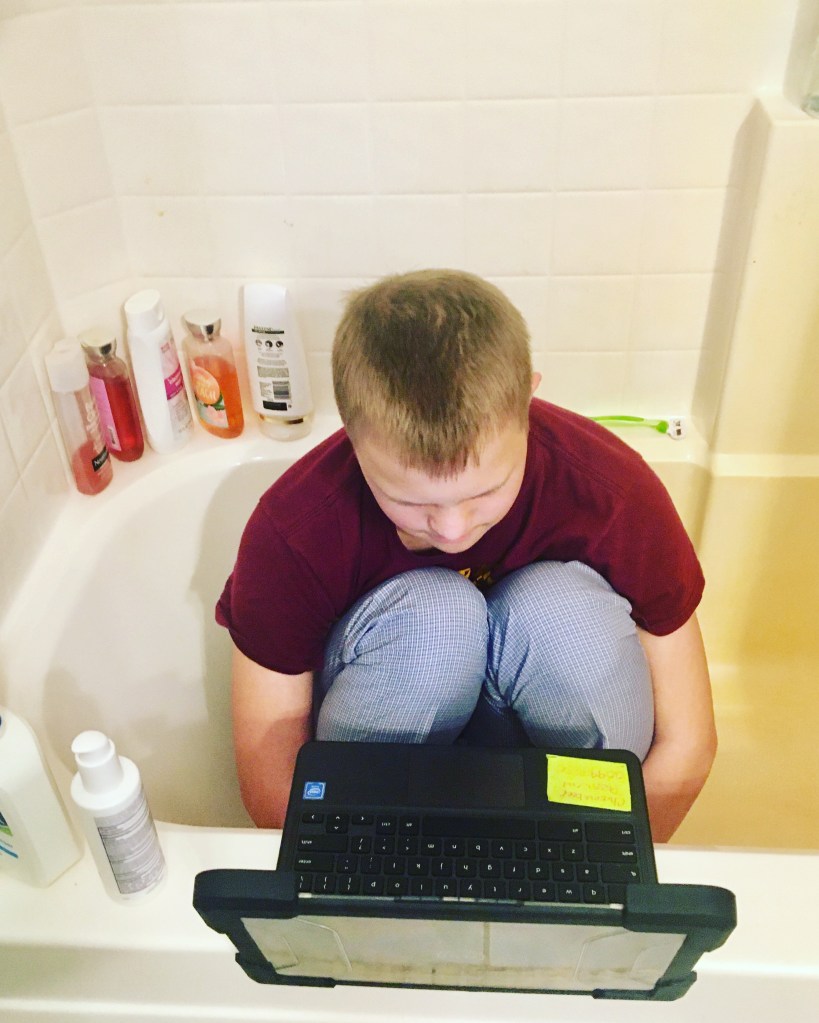
So fast-forward from the summer to last night. Wil did not want to shower but he needed one. I prepared everything for him to reduce any further obstacles; I turned on the water, got his towel, pulled back the shower curtain, then left him to it.
Less than 5 minutes later he came marching up the stairs in his towel, but with hair completely dry.
“Wil,” I asked, “why didn’t you finish your shower?”
“I was overwhelmed.”
“Nice try,” I said stifling a laugh. “Now back downstairs and finish your shower.”
He went back downstairs but switched the shower to a bath. Oh the teenage rebellion 🙄😂
One of the most common things I hear (and what many of my friends who have children w disabilities hear) is, “well, just make him do it.”
I literally feel a huge distance grow between us with this seeming logic. And yet, it’s a very difficult distance to close as there is no logical explanation. It’s a “living it” thing.
We parents, special education teachers, para educators, and caregivers are constantly on the alert for “triggers” that cause our kids to dig in their heels.
Some of these triggers are constant, and we have created ways to work with them.
Some of these triggers are only known to our kids and appear spontaneously to us. And when triggered, there is no “make him do it.”
When Wil refused to get on a connecting flight, how I wish I could give the “make him do it-ers” a chance to use their logic on Wil that day. That would have been a helluva education.
Heck, I don’t know even know it all and I’ve been raising Wil for over 15 years, not to mention knowing many other children with Down syndrome quite well. And each and every kid defies this logic.
So next time you want to think it’s logical, and fits some kind of mold, I challenge you to spend a day with Wil, his friends, or in a life skills room, and let me know how that logic goes for you.
At the airport yesterday, Wil was struggling a bit with some young children crying.
As a Starbucks was nearby, I asked Elizabeth to walk him over there while I stayed with our carry-on luggage (as Katherine was in another shop).
Wil was reluctant at Starbucks too, so Elizabeth walked him back to sit with me. She then walked back to Starbucks to get herself something to drink. A woman walked up to Elizabeth while she waited in line for her drink. The woman said she observed Elizabeth with her brother, and expressed her admiration at Elizabeth’s mature patience and how she talked to Wil. Then the woman said, God Bless, and walked away.
Elizabeth was surprised, yet pleased, by this. She was just being a sister to Wil as she always is (and Katherine has this same mature patience with Wil, as well), and didn’t see her actions as anything different than normal behavior.
In Elizabeth’s everyday life, she lifted the spirits of another, and she was uplifted in return.
I’m proud of Elizabeth (always), and also proud of the woman who had the courage to step up and acknowledge Elizabeth.
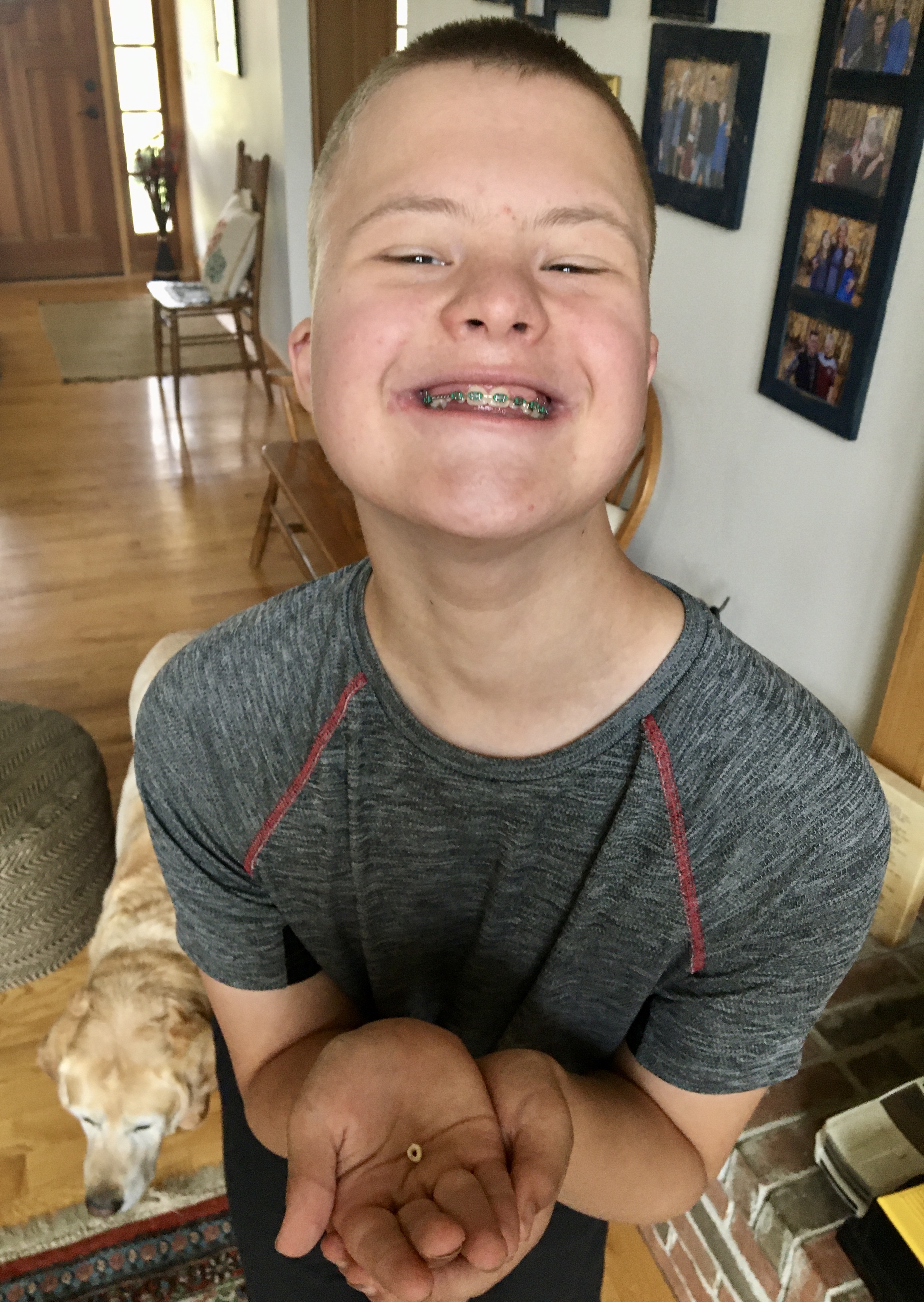
“Look, Mom!” Wil widened his smile. A thick cord of wire ran through every braces bracket attached to the top row of Wil’s teeth. Then I noticed one of the brackets hung suspended over the jagged edges of an emerging adult tooth. Wil had just lost the baby tooth that previously held the bracket in place.
Wil reached down to the coffee table and carefully picked up a little white tooth. He cupped both hands and presented the tooth to me, as if in offering.
Though Wil is 14 years old, every missing tooth is as exciting as the first — and it has nothing to do with the Tooth Fairy. When Wil lost his first tooth, I showed him how to put it under his pillow. When he awoke he exclaimed, “Shiny coins!” Then, “Where’s my tooth?” My explanation that the Tooth Fairy took his tooth in exchange for the shiny coins was not a fair deal to Wil. He wanted his tooth back. Fortunately the Tooth Fairy was still orbiting the area and made a return visit.
Wil is entering high school this fall. I was recently asked by a mother whose daughter with Down syndrome is years younger than Wil: “How did you decide that Wil should receive a Certificate of Completion rather than a high school diploma? And when did you know?”
When Wil was a baby I would have answered emphatically, “Wil is getting a high school diploma! Wil will have full inclusion in school and take college courses.”
As Wil grew in age, I learned step-by-step with him. In his Kindergarten year alone, his teachers and I made multiple changes to his IEP (Individualized Education Plan) in determining the right balance for Wil between the general education classroom and the resource room. Wil excelled learning with his peers in the general education classroom in some subjects, but he also learned math best in the resource room. Though I had linear plans for Wil, they took many detours as I learned by experience what best fit his needs.
By Wil’s middle school years, I knew without a doubt that the Certificate of Completion was Wil’s best option. I was not saddened by this fact, as my earlier self might have been. Living experience-by-experience with Wil, the loss of earlier dreams also created openings for new growth. But I could not know or appreciate what that new emergence of growth looked like until I gained a widened perspective over time.
A friend, whose daughter with Down syndrome is the same age as Wil, recently shared colleges she investigated that have classes adapted for our kids. There are multiple life skills as entrance requirements. She has implemented those very skills into her daughter’s IEP which I think is brilliant. Because of this conversation, I’m going to look into the same options for Wil; I still hold college course plans for him. That said, my friend and I also have multiple alternate goals in mind understanding the flexibility required along this journey.
It’s vital to be educated, to have goals and plans. I value my bond with friends with whom I openly share experiences and learn from. Even so equipped, there will always be unexpected suspensions in time that appear devoid of answers. Linear plans change no matter how tightly bound. There are no fairies that place shiny solutions under my pillow, or that orbit back to deliver what I once believed lost. I have felt the depth of challenge in each of those spaces, but I now hold an underlying excitement with each one — from the first up to Wil’s entrance to high school and beyond. Not because I anticipate smooth transitions; rather I know, with each step forward I gain a widened perspective that reveals each jagged edge as an offering of new growth.
Last night my neighbor came over to deliver some squash and zucchini from her garden. Wil was sitting in the Lazy-boy watching Wild Kratts. He’d been to the pool, then outside playing, and had just finished eating dinner. He was chillin’.
My neighbor, Nancy, asked him some questions. He didn’t want to answer. Nancy takes Wil to the Dollar Store on a weekly basis to help him with life skills. She also has an adult son with autism. She understands how these situations can go. Wil kept making “umf” responses. “Well, I guess I am interrupting his TV show,” she said. “See you tomorrow, Wil.” As soon as she left Wil said, “Dollar Store with Nancy tomorrow.”
As simple as this moment in time seems, it was not to me. First of all, Nancy understood Wil. She urged words out of him, but didn’t force them or give up, either. She took time to understand the situation. And many times, as simple as that sounds, it’s not so simple when you don’t understand.
I wrote recently about Wil having a melt-down at my parent’s house. My sister and her kids were visiting, staying with my parent’s. Wil wanted to spend the night after a day of playing. It was not a good scene and all of us were exhausted afterwards.
The next day, going back to my parent’s to visit, we discussed the incident. My sister said her daughter’s friend works at a camp for kids with disabilities. This friend said it is helpful to anticipate what is going to happen. I sat there speechless. In my mind, my ego responded first. A 16-year-old girl who spent a summer with kids with disabilities knows more than I do? Puh-lease! My next thought was that I live in anticipation. Every single day, even for the simplest of tasks. Just going to the store might take an extra half-hour because Wil gets stuck on what hat he wants. Or he simply refuses to go. I’m always planning ahead for whenever and whatever. That is my norm, as well as the norm for Katherine and Elizabeth. Then I realized she just doesn’t know. She is trying to help. She lives 5 hours away and sees Wil about twice a year.
And that’s what it mainly comes down to. People aren’t trying to hurt, they just don’t know. They aren’t trying to be mean, but our egos kick in because we live this every day. Its easy to get defensive rather than inform. Every single moment is a teaching moment in our lives; not only with our kids, but for the world that surrounds us.
“Oh, ok.” Wil went to his bedroom and got dressed.
Though Wil’s 8th grade year had its challenges, in comparison to his 7th grade year, it was smooth sailing. But it took what we learned in his 7th grade year to break way to the “oh, ok” of where we are now.
When 7th grade hit, so did puberty and hormones. And they hit hard. Wil developed multiple new behaviors that stumped his teachers and me. With Wil’s communication delays, I repeatedly asked my own series of whys to uncover his thought processes. I knew we would break way to that “oh, ok” moment, but I didn’t know what that looked like or how many whys it would take to get there.
My first personal experience with a behavior plan was in Wil’s 7th grade year. Behavior plans are more “if then” plans that follow their own timeline. Wil’s teachers and I planned ways to support him through his pubescent changes. We learned from each experience, asked more why questions in relation to that experience, and revised the plan with what we learned. In this way we inched ahead, why-by-why, experience-by-experience. Eventually, one of his barriers would break and he’d fly forward at full speed. I stood there with my head spinning at the seemingly instant transformation.
Wil has a recumbent bike that he drives like a madman. He cuts corners burning rubber and flies down the grassy hill in our front lawn. The fenders over the front and back tires are bent from spills. Fortunately a fall from a recumbent bike isn’t far. Wil gets back up, and gets back to riding full speed ahead.
Wil recently rode his bike over something sharp— likely a big rock, but he won’t tell me what that something was. Maybe in time he will tell me. Whatever it was, it tore a hole through the actual tire and into the inner tube. His bike was sidelined.
I’ve never fixed a tire on a bike before. I checked the sizing of the inner tube and tire, bought a new one of each, and set to work on replacing it. When I googled directions on how to fix a bike tire, I read that a proficient cyclist can complete the task in about 7 minutes. For the novice, like myself, it can take 20 minutes or more. I didn’t time myself, but I can assure you it took me all of that 20 minutes and more.
After replacing the tire, I gave Wil’s bike a quick test spin. Then I called Wil to come outside. Seeing the new tire, he jumped on his bike and tore around the driveway without hesitation.
“It’s fixed mom!” He said in surprised awe.
“It took me some time but I got it done for you, Wil.”
“Why?” Wil asked.
“Because I love to see you fly.”
“Oh, ok,” he called back to me already nearly to the bottom of the hill.
When fueled by our why, no matter the timeline, we find a way to fly.
It was just after 9 p.m. and I heard the back patio door click shut. I tucked Wil into bed only moments before. But I knew it was him. My alarm was set for 3:20 a.m. to rise for work, so I’d recently tucked myself into bed too.
I got out of bed, walked to the kitchen, and opened the patio door. I saw Wil walk to the far edge of our yard. He stopped at the outcropping of alfalfa. About five deer were scattered across our back field contentedly grazing. Two of the deer lifted their heads; more in curiosity than with concern.
Woody, our yellow lab, sniffed the grass close to Wil. Woody would have created chase with the deer in his younger years. But now with arthritic hips, Woody guarded Wil in close proximity.
Wil turned around and saw me standing on the back porch. Instead of running away, he walked over to the hammock. Woody followed him then rolled in the grass. Wil attempted to open the material of the hammock wide enough to lie down. He decided that was too much work, sat down on the hammock, gripped the material on either side of him, and swung gently as if on a swing.
“Not tired yet, Wil?” I asked.
“Hmph.” With this response, I knew pressing or prying would only tighten the knot of his emotions and he’d clamp down, resisting any type of communication.
“It’s a nice night. Look at Woody roll in the grass.” Wil looked at Woody, then back at me. His open response to my comment, even if non-verbal, was a good sign. I decided to take a chance. “Are you upset because your sisters aren’t home?”
“Yes,” he said and dipped his chin.
“Don’t worry, they will be home soon. How about I walk you back to bed and give you extra snuggles?” I said.
“Ok, Mom. You going to work in the morning? Can you make me breakfast?”
“Sure, Wil. I’ll leave it on the island for you. I bet I’m back home before you’ve put your plate away!”
“Thanks, Mom. Hugs!” Wil jumped off the hammock and barreled into me. Only a year ago he likely would have responded by running away from me or remained on the hammock refusing, or unable, to explain his upset. But on this night, with only minimal resistance, he shared his feelings of sadness about his sisters not being home. And as he typically makes his own breakfast, his asking me to make it revealed the extra comfort he desired in my absence.
I tucked Wil back in bed, with the extra promised snuggles, then crawled back into my bed. I’d barely pulled up my sheets when I heard Wil’s heavy footsteps move toward the kitchen (with low muscle tone, he’s not exactly light on his feet). This time it wasn’t the patio door that I heard shut. It was a kitchen cabinet. Then I heard Wil scoop up ice, pour it in a cup, turn on the faucet, and walk back to bed.
“Ah, fresh,” Wil said (a phrase he commonly uses sipping a cold drink). With these words of satisfaction, I knew sleep would soon follow. And it did, for both of us.
A milestone in communication had been attained that night. It was mutually understood…no explanation necessary.
Wil went to the doctor for his well visit Friday afternoon. He’s now 5’4” and 136 pounds. Wil was a champion through all of the doctor’s tests and questions. In previous appointments, he would act silly if he didn’t understand a test, or glance at me when the doctor asked him a question. On this day he kept eye contact with the doctor, followed her cues with each test, and answered every one of her questions.
Katherine recently secured a job as a server. She asked Wil to quiz her on the menu. It was a natural choice for her as one of Wil’s favorite subjects is food (he reads take-out menus for fun). Wil held the menu up, ordered a meal, and Katherine told him what sides or dressings it came with. Wil had so much fun with this task that he pointed out all of the items to me too!
Wil is no longer a “little guy.” Each forward step of independence is incredibly gratifying to see. But like any teenager, he also asserts his independence when he doesn’t want to do something. Wil has summer speech therapy twice a week, and occupational therapy (OT) once a week. He enjoys going so I was surprised when he resisted one morning. I tried but was unable to deduct the reasoning behind it. Thankfully Elizabeth was home and I needed to take Katherine to work first. So I told Wil I was leaving for speech and OT without him and was very sorry he made a decision to miss it. Katherine and I left. We hadn’t made it more than one minute down the road when my cell phone rang.
“Hi Mom,” Elizabeth said, “Wil has something he wants to say to you.” Wil got on the phone and said, “Hi Mom. I want to go to speech and OT.”
Now knowing the consequences, Wil is unlikely to refuse again. But to reach that point, it can take such measures that require more than just me. I could write an entire book on how innately understanding Katherine and Elizabeth are when it comes to motivating and supporting Wil.
There have been times when Katherine, Elizabeth and I have had to physically move Wil when he won’t leave a situation. It’s happened at the airport, when for a reason only known to him, he refused to board a connecting flight. It’s as emotionally trying as it is physically — for all of us.
On one recent occasion, Wil didn’t want to leave my parents’ house. After much reasoning on all of our parts — even bribing with a Coke — he sat unmoving on the floor. I knew once he left my parents’ house he would unwind from whatever was keeping him stuck (once Wil is out of the physical location he’s stuck in, it’s like an emotional release too).
When it was clear he wasn’t going to move, I came behind him, reached under his armpits and clasped my hands in front of his chest. Katherine and Elizabeth lifted him by the legs. He cried and fought us. It was awful. When we got too tired and set him down on the ground to catch our breath, I bent down to talk to him quietly and Katherine hugged him. When we managed to get him in the car, it was like a switch went off in his head. He was completely fine. However, the switch doesn’t flip that easily for Katherine, Elizabeth and myself. I sat in the car trying to hide the tears streaming down my face so as not to upset him again.
On our drive home, Wil belted out the words to a Luke Bryan song, and Katherine and Elizabeth rolled their eyes as they usually do. I took in a deep breath and took in the equilibrium of the moment.
Wil’s timeline is different from our timeline. Finding an equilibrium in that is one of my greatest challenges as his parent. I suppose that is why there is such a thing as growing pains. There is no growth without them; and yet the growth is always worth it.
I didn’t know exactly where or when Wil would get stuck at the party, but I knew it was a possibility. The graduate was one of his Connect mentors that he admires greatly. As Wil is used to her individualized attention at school, I knew he would expect that level of attention at her party, too. I explained — every day for a week leading up to her party — that there would be lots of guests. That she would be very happy to see him, and that she would also have many other guests to greet.
As Wil gets older, experiences like these are valuable life lessons for him to learn from; as his reactions are valuable life lessons for me too (and reinforce the value of our close-knit community).
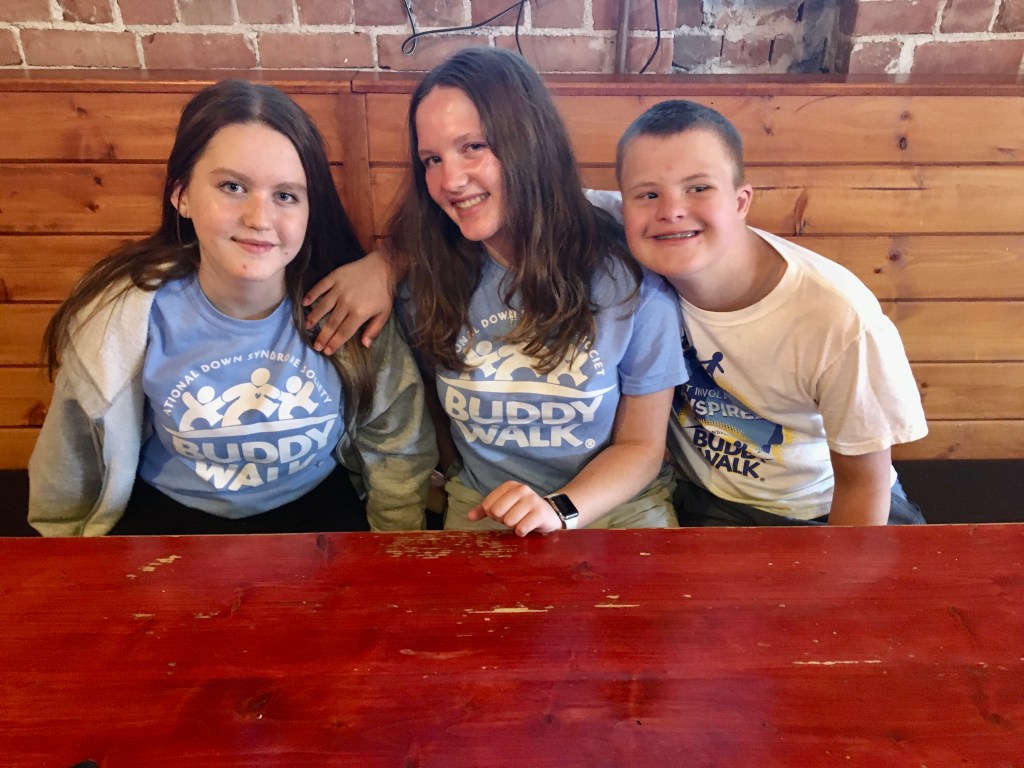
When we arrived, Wil received a very warm welcome from Victoria. He understood she couldn’t spend the entire party with him, so he did well joining me to get a plate of food and sat down with friends to eat. Then, upon his own initiative, Wil walked over to join an ongoing game of cornhole.
Wil has matured a lot this year, and I watched him play impressed with his newfound independence and self-initiative. I didn’t relax too much, however, as I knew the situation could change at any moment.
Whenever we enter a situation Wil has built up great anticipation for, he can get stuck. His anticipation and excitement build to a point of overwhelm. His way of coping is to sit down on the spot or flee the scene. When he becomes overwhelmed, all he really needs is time to unravel his emotions. The challenge is that we don’t always have the time (we’ve almost missed plane flights), and I can’t always see from the outside what is going on inside his mind.
And just like that, Wil took off toward the front yard. As I had one eye on him from the table, I was hot on his trail. He found a quiet spot near the front porch.
Knowing he needed time, we sat down for a moment together. Then I tried singing a Luke Bryan song with him. He told me to stop (I’m not a good singer). I asked him to do a silly dance with me, but he didn’t move. Even a bribe of a Sprite was met with a head shake.
I racked my brain for more motivators. Anyone at the party would have been happy to help if they knew we were in the front yard (and I’d left my car keys and phone on the table).
Then I heard voices near us. Two men were now in the front driveway. I recognized one of the voices.
“Hey Jason!” I called out.
“Hey Christie! Hey Wil!”
I asked Jason if his wife, Melanie, was there. Melanie Woods used to babysit Wil when he was a preschooler. The two formed a strong bond and to this day Wil calls her “my Melanie” and he is her Wil.
“Yes, Melanie is here,” Jason said. “Right around the back.”
“Wil, your Melanie is here! Let’s go see her.” To my relief, Wil took my hand and walked back to the party. When we found Melanie she immediately gave Wil a hug. I asked Melanie if she could walk Wil to the car while I thanked Victoria, and grabbed my car keys and phone.
Wil has many stuck moments on a day-to-day basis, which is normalcy for us, but not familiar to most. As I watched Wil and Melanie walk off easily together, and said good-bye to friends, I was flooded with gratitude for the support that surrounds us.
When I met Wil at the car he said, “Sprite now, Mom!”
Kristi, Wil’s paraprofessional, sent me this photo of Wil cooking at school with his Connect mentor, Victoria. It was Cinco de Mayo and they were making tacos. Kristi told me he ended up eating 3!
It’s awe-striking to me, still, even though Wil is a teenager, how powerful the simplest joys with him are. I mean, they were making tacos on Cinco de Mayo. How simple is that? But look at their faces. I think of the support he is encompassed with. Simple never is with Wil.
When Wil was born, I knew so little about Down syndrome. I didn’t know how powerful the simplest actions could be.
Though there was a high learning curve in early therapies and doctor’s appointments with Wil, my deepest learning came from knowing him. Knowing Wil’s smile. Knowing Wil’s hugs. Knowing Wil’s first words. Knowing a community that embraced him.
When I reached out to Victoria, she shared, “it’s kids like him who have really made me want to go into the profession. He is so caring.”
Victoria is way ahead of where I was. Her knowing will change lives. Not only for her chosen profession in the future, but also right now. The way she interacts with Wil, simply by being who she is, sets an example that shatters stereotypes and alleviates fears. It is not scary to know Wil. It is not hard to know Wil. In fact, it’s really darn cool to know Wil.
Whenever I hear words like Victoria’s, I’m always drawn to thoughts of my mom’s close friend, Martha. Martha has three sons. Her oldest, Paul, is my age and has Down syndrome. Paul did not have friends like Victoria. In fact, for Paul, general classroom opportunities were scarce to non-existent. Early therapy was not available or encouraged. And a Connect mentor program would have been a far off dream. Martha navigated this life with a tiny fraction of the awareness and advocacy Wil is surrounded with.
Wil and Victoria’s experiences are not just for Wil and Victoria. They are for the families who navigated this life before us, and for the families Wil and Victoria will open doors for. The power of advocacy is not always found in picket lines. Advocacy is also spread by our daily actions in simple, yet powerful, ways. Simple never is with Wil.








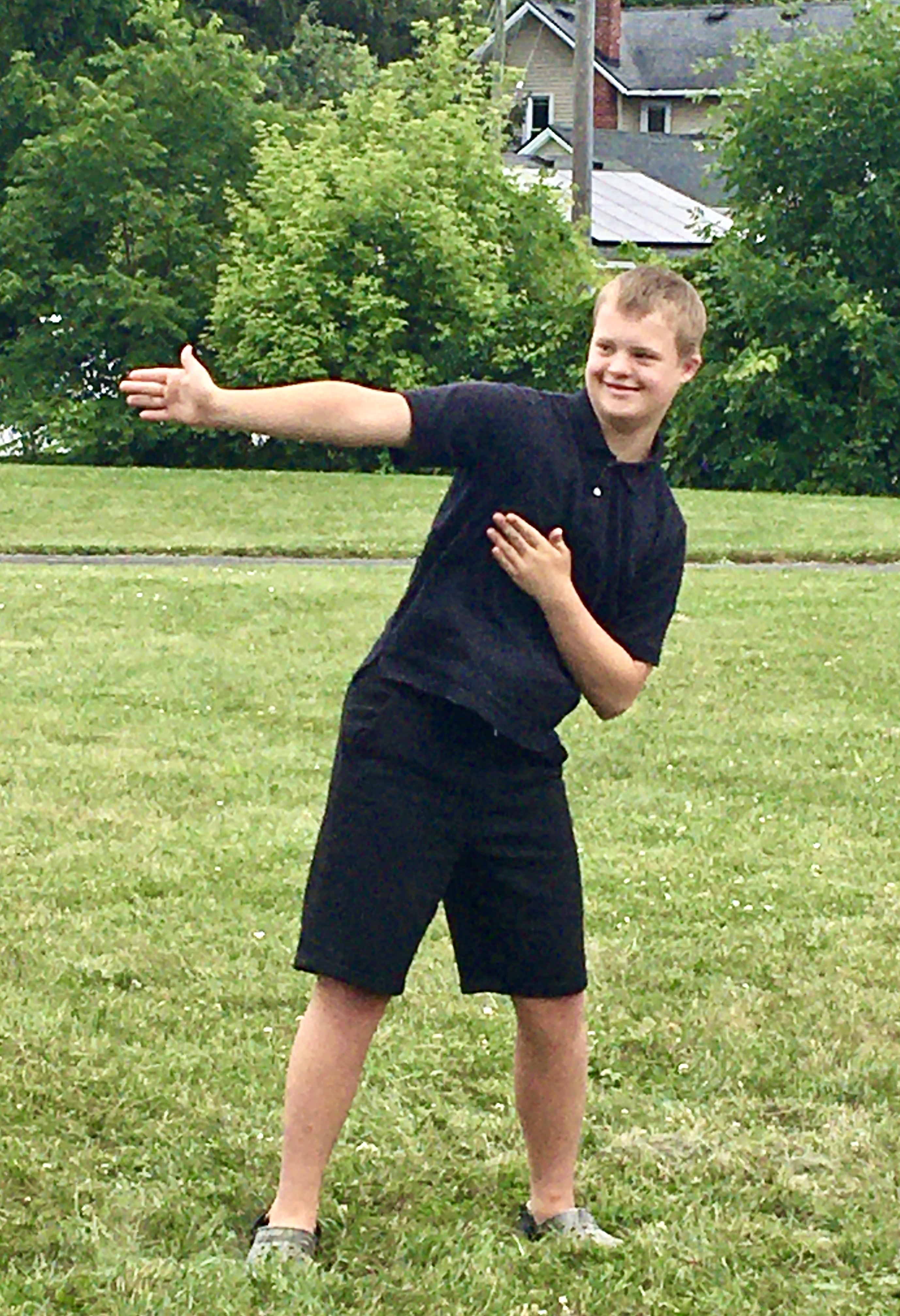


 'WIL'ingness = Willing to Embrace Extra in Life