Growing Pains

Wil went to the doctor for his well visit Friday afternoon. He’s now 5’4” and 136 pounds. Wil was a champion through all of the doctor’s tests and questions. In previous appointments, he would act silly if he didn’t understand a test, or glance at me when the doctor asked him a question. On this day he kept eye contact with the doctor, followed her cues with each test, and answered every one of her questions. 

Katherine recently secured a job as a server. She asked Wil to quiz her on the menu. It was a natural choice for her as one of Wil’s favorite subjects is food (he reads take-out menus for fun). Wil held the menu up, ordered a meal, and Katherine told him what sides or dressings it came with. Wil had so much fun with this task that he pointed out all of the items to me too!

Wil is no longer a “little guy.” Each forward step of independence is incredibly gratifying to see. But like any teenager, he also asserts his independence when he doesn’t want to do something. Wil has summer speech therapy twice a week, and occupational therapy (OT) once a week. He enjoys going so I was surprised when he resisted one morning. I tried but was unable to deduct the reasoning behind it. Thankfully Elizabeth was home and I needed to take Katherine to work first. So I told Wil I was leaving for speech and OT without him and was very sorry he made a decision to miss it. Katherine and I left. We hadn’t made it more than one minute down the road when my cell phone rang. 

“Hi Mom,” Elizabeth said, “Wil has something he wants to say to you.” Wil got on the phone and said, “Hi Mom. I want to go to speech and OT.”

Now knowing the consequences, Wil is unlikely to refuse again. But to reach that point, it can take such measures that require more than just me. I could write an entire book on how innately understanding Katherine and Elizabeth are when it comes to motivating and supporting Wil. 

There have been times when Katherine, Elizabeth and I have had to physically move Wil when he won’t leave a situation. It’s happened at the airport, when for a reason only known to him, he refused to board a connecting flight. It’s as emotionally trying as it is physically — for all of us. 

On one recent occasion, Wil didn’t want to leave my parents’ house. After much reasoning on all of our parts — even bribing with a Coke — he sat unmoving on the floor. I knew once he left my parents’ house he would unwind from whatever was keeping him stuck (once Wil is out of the physical location he’s stuck in, it’s like an emotional release too). 

When it was clear he wasn’t going to move, I came behind him, reached under his armpits and clasped my hands in front of his chest. Katherine and Elizabeth lifted him by the legs. He cried and fought us. It was awful. When we got too tired and set him down on the ground to catch our breath, I bent down to talk to him quietly and Katherine hugged him. When we managed to get him in the car, it was like a switch went off in his head. He was completely fine. However, the switch doesn’t flip that easily for Katherine, Elizabeth and myself. I sat in the car trying to hide the tears streaming down my face so as not to upset him again.  

On our drive home, Wil belted out the words to a Luke Bryan song, and Katherine and Elizabeth rolled their eyes as they usually do. I took in a deep breath and took in the equilibrium of the moment. 

Wil’s timeline is different from our timeline. Finding an equilibrium in that is one of my greatest challenges as his parent. I suppose that is why there is such a thing as growing pains. There is no growth without them; and yet the growth is always worth it. 

Growth Rings

Last week, after swimming at the Saline Rec Center, I gave Wil a dollar bill and 2 quarters to buy a Gatorade in the vending machine. 

He held the dollar bill in a pincher grasp (between his forefinger and thumb). It took him a moment to steady the dollar bill so it would fit through the narrow slot. Wil then secured the same pincher grasp on each quarter, which was slightly more challenging due to their size, and slid each one through the coin slot. I then asked him which Gatorade flavor he wanted. He pointed to the lemon-lime. 

“Ok, do you see the letter and number under the Gatorade you want?” I asked. “Punch in those same buttons.” Wil punched in the buttons with care, and a lemon-lime Gatorade slid out of its place and fell to the bottom of the vending machine. Wil reached down, pulled his Gatorade out of the machine and raised it in victory.

I had a quick flashback of Wil sitting in his high-chair. Theresa, his speech therapist, was teaching him how to pick up a Cheerio with a pincher grasp. Wil tried to scoop it with his fist. The fine motor skills required to achieve a pincher grasp was (and still is to a lesser extent) very challenging for Wil. It took much patience, care and repetitive practice for him to achieve. Like many of Wil’s achievements, there is more than what is seen on the surface. Each success has a depth to it; like the rings within the trunk of a tree. 

Our neighbor, Nancy, recently started taking Wil to Dollar General to work on his life skills. As a retired educator with the Washtenaw Intermediate School District, Nancy has years of experience working with people with disabilities. Nancy’s grown son has autism, so she understands the many rings of this tree as a mother, too. 

When Nancy first took Wil to Dollar General, he just followed her around. This fact didn’t surprise me, but shook me up all the same. When Wil and I grocery shop, he may run ahead to pick out something he wants, or help me take items off of the shelf, but I’ve never given him more ownership than that. I realized, talking to Nancy, how easy it is to fall into familiar routines and miss obvious growth opportunities. 

On Wil’s last visit to Dollar General with Nancy, I gave him $10.00. Elizabeth asked him to buy her Chapstick and I asked him to buy himself toothpaste. Then Wil bought himself a drink. The cashier asked Wil for $7.30. Wil gave the cashier $2.00. Nancy said, “Try again. $7.30.” Wil gave the cashier $3.00. Nancy said, “Try again. $7.30.” Nancy’s goal is to teach Wil to listen to what the cashier asks for. He then gave the cashier $7.00 and $1.00 more for the change (“One more for the change” is a term Nancy taught Wil for covering the change. Wil now chants, “And one more for the change!”). 

As much as I revere how far we’ve come, and cheer with each new victory, I also fall unconsciously into repetitive familiar circles. Until a friend like Nancy comes along, shakes up the tree, prompts another look, another listen, and to try again. And that’s how the rings on the tree grow one more for the change! 

Wil & Nancy

In Our Wheelhouse

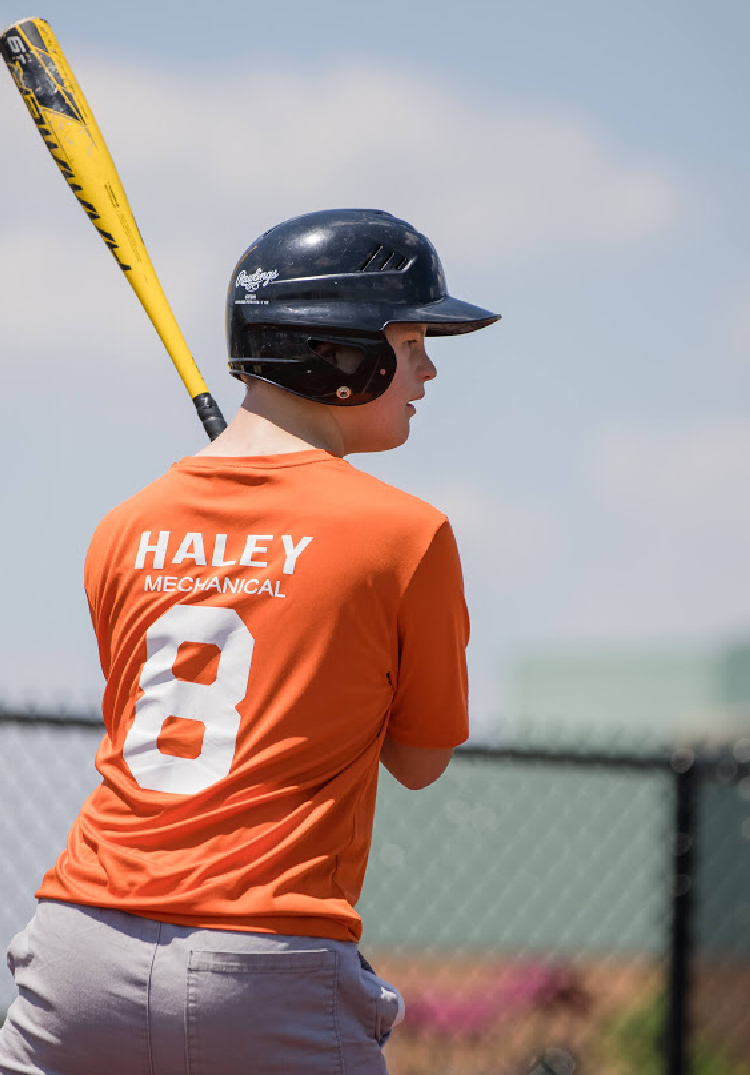
Wil sat down in the outfield. A bead of sweat slowly slid down the side of his pink cheek. The outfield was made of rubber; I’m sure it felt like a cushiony relief to him. Wil gets overheated very easily. I placed an icepack I had carried with me on the back of his neck. 

At his previous Challenger baseball game, Wil played 2nd and 3rd base. The weather was cooler and my parents were spectating, so he had plenty of showing off to do. Wil ran after every ball and threw it to his coach on the pitcher’s mound without hesitation. (The coach is diligent about Wil stopping, taking a step and throwing. Wil is equally diligent about following those instructions.) 

A batter in a wheelchair bunted the ball and her sister grabbed the handles of the wheelchair and ran her to first base. The next batter runs every base in a single hit, no matter where his ball lands. Sure enough, after he hit the ball, he tapped all the bases (passing those already on base), then sped across home plate. He raised his arms in success and the spectators cheered. The next batter stepped up to plate and the inning would continue until every player made it home. 

When a strong hitter came up to bat, the coach asked everyone in the outfield to back up. Wil didn’t budge. A father, who had been standing near us with his son, walked over and crouched down to talk to Wil. The father then reached out his hand, Wil took it and stood up, then we all walked deeper into the outfield. 

I thanked him and he said, “It’s always easier when it’s not coming from Mom or Dad. Music is the only thing that motivates my son. Some days I swear I have constant music playing on my phone.” 

Last Sunday at our Down Syndrome Support Team picnic, Elizabeth and I walked by a boy of about 10 years old. He was walking backwards with his arms spread out wide. His younger sister, a cute blond with pigtails, was trying to run past the width of her brother’s arms and escape to the parking lot. Their parents were a few feet behind them packing up their belongings.  

The boy smiled at us and said, “One thing I don’t like about Down syndrome is they don’t listen!” 

Elizabeth and I laughed. “We know exactly how that is,” I said. “I think we’ve chased her brother at least one thousand times!” 

I find it incredibly refreshing, rejuvenating actually, to be in places where our kids can be themselves without stares, sideways glances or need for explanation. No matter how diverse or similar our children’s disabilities are, there is an underlying understanding. Though you can feel it on the inside, on the outside, it is seen in gestures such as an outstretched hand, cheers for home runs (in any order), and laughs about siblings. 

Kindness, I have found, looks quite “typical” in any place it is shared.

Stuck On You

I didn’t know exactly where or when Wil would get stuck at the party, but I knew it was a possibility. The graduate was one of his Connect mentors that he admires greatly. As Wil is used to her individualized attention at school, I knew he would expect that level of attention at her party, too. I explained — every day for a week leading up to her party — that there would be lots of guests. That she would be very happy to see him, and that she would also have many other guests to greet. 

As Wil gets older, experiences like these are valuable life lessons for him to learn from; as his reactions are valuable life lessons for me too (and reinforce the value of our close-knit community). 

When we arrived, Wil received a very warm welcome from Victoria. He understood she couldn’t spend the entire party with him, so he did well joining me to get a plate of food and sat down with friends to eat. Then, upon his own initiative, Wil walked over to join an ongoing game of cornhole.  

Wil has matured a lot this year, and I watched him play impressed with his newfound independence and self-initiative. I didn’t relax too much, however, as I knew the situation could change at any moment. 

Whenever we enter a situation Wil has built up great anticipation for, he can get stuck. His anticipation and excitement build to a point of overwhelm. His way of coping is to sit down on the spot or flee the scene. When he becomes overwhelmed, all he really needs is time to unravel his emotions. The challenge is that we don’t always have the time (we’ve almost missed plane flights), and I can’t always see from the outside what is going on inside his mind. 

And just like that, Wil took off toward the front yard. As I had one eye on him from the table, I was hot on his trail. He found a quiet spot near the front porch.

Knowing he needed time, we sat down for a moment together. Then I tried singing a Luke Bryan song with him. He told me to stop (I’m not a good singer). I asked him to do a silly dance with me, but he didn’t move. Even a bribe of a Sprite was met with a head shake. 

I racked my brain for more motivators. Anyone at the party would have been happy to help if they knew we were in the front yard (and I’d left my car keys and phone on the table).

Then I heard voices near us. Two men were now in the front driveway. I recognized one of the voices.

“Hey Jason!” I called out.

“Hey Christie! Hey Wil!” 

I asked Jason if his wife, Melanie, was there. Melanie Woods used to babysit Wil when he was a preschooler. The two formed a strong bond and to this day Wil calls her “my Melanie” and he is her Wil. 

“Yes, Melanie is here,” Jason said. “Right around the back.”

“Wil, your Melanie is here! Let’s go see her.” To my relief, Wil took my hand and walked back to the party. When we found Melanie she immediately gave Wil a hug.  I asked Melanie if she could walk Wil to the car while I thanked Victoria, and grabbed my car keys and phone. 

Wil has many stuck moments on a day-to-day basis, which is normalcy for us, but not familiar to most. As I watched Wil and Melanie walk off easily together, and said good-bye to friends, I was flooded with gratitude for the support that surrounds us. 

When I met Wil at the car he said, “Sprite now, Mom!” 

Melanie & Wil

You Are Here

Like many mothers, I loved my son before he was born. My daughters and husband placed their hands on my belly and felt his kicks and punches. We pondered names and dreamed our dreams. The field of possibilities was laid open before us.

The golden gates to that field slammed shut seconds after Wil was born. My brain valiantly fought to pry them open, objecting to each indicator the medical staff shared with me that my son may have Down syndrome.  Look at the way his arms and legs splay out, they said, see his short stubby fingers and his low-set ears, note the thickness of his neck. Interestingly enough, they never mentioned the shape of his eyes. 

As Wil melted into my chest the day he was born, I reveled in my love for him. I was careful to keep thoughts of his expected diagnosis locked tight in a separate compartment, though it hovered perilously above me. I looked down into his eyes; their shape struck me. I was both awed by their beauty and intensely terrified. My brain, still playing defense attorney, objected strenuously. But when the heart knows, the defense must concede to rest. The compartment above me busted open and everything spilled out all over us on the hospital bed. 

Just days after Wil came home from the hospital, I stared at him in his crib. Though my brain had rested its case — we even had genetic proof by this time — it begged to object. I simply could not believe I had a child with Down syndrome. But it was true. My heart held deep love for him, yet my brain kept its distance. I had never felt so contradicted in my life. As I stood there, my stomach suddenly dropped as if I was going down a roller coaster. The ground vanished below me and I stood suspended, as if in an elevator well. I visually saw darkness under me and the four walls of Wil’s room suffocated me. I knew this experience was a figment of my imagination but my body felt every sensation as if it were real. 

When I was able to regain my balance and logically analyze what happened, I knew what it meant. I felt completely out of control. Though I had many loving people around me and a packet full of helpful information, I realized more than ever that the work of acceptance is intensely personal. I had to take the first grounding step into acceptance myself. 

Acceptance has no clear start point. I never found a big, red “you are here” circle followed by dashed lines leading the way to acceptance. Rather, acceptance is like an open field surrounded by clouded mountains. You just jump in wherever you are, firmly plant both feet in the field, and figure it out from there. 

I overstepped into territory I wasn’t ready for, like reading books about teens with Down syndrome before Wil was even a year old. Those books offer a different meaning to me now for the landscape I’ve travelled, but then it was too much knowledge too soon. I learned how to back-step and move in new directions.

Fourteen years later, I’m still back-stepping and running forward, climbing, traversing, discovering; yet I arrived to acceptance the day I jumped in and firmly planted both feet on the ground. 

I know the feeling of the gates being closed on me. And that is why at the top of every mountain we ascend, like Julie Andrews in “The Sound of Music,” I open my arms wide above the clouds, spin with the wind and soak in the spectacular view of this beautiful, vast landscape I gratefully call home.  

Once Upon a Hat

On Friday morning, Wil sat on his bedroom floor rifling through his bin of hats. He couldn’t decide which one.

“Well, no hat then!” Wil announced to himself. 

“Do you need some help, Wil?” I asked.

“No.” I sat down next to him and laid his hats on the floor. He turned them all down.  We had to leave for school in 10 minutes. 

Wil had a Manchester shirt on so my best guess was he wanted a Manchester hat too. I presented his Manchester hats to him but he turned them all down. I convinced him to get off the floor, even without a hat, which was a good sign. 

A few months ago when Wil couldn’t decide on a hat, he stayed on the floor. I told him I was taking his sisters to school so they wouldn’t be late and I’d be back to get him. When I returned, he was seated on the porch step with a hat and backpack on. I was proud of him for turning his day around. 

On this Friday morning, however, when Wil stood up he fled the house without a hat or backpack. Katherine dashed after him. I grabbed Wil’s Manchester hats, his backpack, and flew out the door behind them.

I found Katherine standing in the dog kennel which is attached to the side of our garage. Wil was attempting to climb through the dog door which would have been hilarious to all of us, if we hadn’t been in a time crunch. 

“Silly Wil,” I said. “Woody is going to be jealous of you using his door. Come on, you don’t want to be late to see Ms. Campbell, do you?”

“Kristi Campbell!” Wil jumped out of the dog door and exited the kennel as he said his paraprofessional’s name. Then he stood unmoving in the driveway ­— two steps forward and one un-moving step is still a step forward in our book.

I walked behind him, put my hands on his waist and said, “Chugga-chugga choo-choo!” As I pushed him forward, he leaned back in resistance, yet kept putting one foot in front of the other. When we reached the car, Katherine opened his door but he stood firm by it. 

“All aboard,” I said. I bent his head down and kind of hoisted him into the car. He laid on his stomach with his legs hanging out. At this point his resistance was becoming a game. I was in part thankful for that, as I knew he was pulling out of his funk. But I was also running out of patience as he was in jeopardy of making his sisters late for school, which wasn’t fair to them. 

Elizabeth was in the back seat with Wil and talked him into sitting up straight and putting his backpack and seatbelt on. 

“Hey, Wil,” Elizabeth said looking at the Manchester hats I threw in the car, “that Manchester visor is mine.”

“No, my visor,” Wil said. They bantered back and forth. I knew what Elizabeth was doing. Sure enough, Wil chose the Manchester visor.

I reached my arm over the seat and splayed my hand. “Give me a turkey, Wil. You turned it around! Now you are going to have a great day.” He fist bumped my open palm. “And how about those sisters of yours? They are awesome.”

“They are bratties.” Wil said and laughed.

“No, you’re bratty,” Elizabeth said and playfully nudged Wil. (Typical sibling banter is as refreshing as it gets when life isn’t feeling so typical.)

By some miracle, we all made it to the school with 90 seconds to spare and in good spirits.

Sometimes it’s the simplest things that throw us off track, the simplest things that place us back on track, and the simplest things that we appreciate most. 

Perpetual Student

“On page 65 and 66, you said you used creativity and silliness to encourage Wil to do things. How did you think of using silliness?”

“From Wil,” I answered. “He’s the master of silly. He uses it all the time. It’s an incredible motivational tool…for me too!” 

I was the guest author of a book club meeting. The book being discussed was, “Stories of Wil: Puberty Part 1.” Upon answering the question, I realized something I had known but never consciously registered — almost everything I do to motivate Wil was originated by him. 

As I grew into adulthood, much of my silliness faded. It was revived by raising Wil. He adds silliness to nearly everything he does. And so I learned to do the same. Just last week, Wil refused to brush his teeth. I knew if I pressed the issue he would dig his heels in deeper. The night before, Elizabeth showed our family a salsa dance she learned in Spanish class. So I grabbed Wil’s hands and said, “Let’s salsa!” We salsa danced from the living room to the bathroom while I sang, “Let’s go brush, brush your teeth,” to the tune of “La Cucaracha.” The song and dance flipped a challenging morning into a joyful one.

“On page 92,” a reader from the book club stated to me, “you said that ‘I may be missing a lot of clues that someone from the outside looking in could see plainly.’ I find that astounding, that when you were struggling like you were with Wil’s behaviors, that you could step back like that and have perspective.” 

This process of stepping back, too, I learned from raising Wil. Wil’s behaviors, at times, can be challenging and difficult to identify the underlying triggers. When Wil was born, I felt the most stuck I ever have in my life. I knew I needed to take a step forward, but I didn’t even know which way forward was. So I reached out to people who were already living this life, and though the road stretched out long before me, I was guided by those who had a much wider perspective than I did at the time.

On the occasion the reader referred to, Wil was knee-deep in puberty. I was navigating new behaviors I had never seen from him before. Neither his teachers nor I knew what to do. I was receiving almost daily calls from the school. After one such phone call, I pulled into the parking lot at work and broke into tears. I knew Wil was hurting, I was hurting and his teachers were hurting. I was in that stuck place again and didn’t know a way out. I had to go into work so I took a series of deep breaths to calm myself down. I reminded myself there was a solution, I just didn’t see it yet. With each deep breath, I repeated to myself, “there is a solution, there is a solution.” A name popped in my head. Julie Feldkamp. She has been Wil’s teacher consultant since preschool. I called her quickly and she soothed my nerves immediately. She said I was not alone, she had worked with many students with varying behaviors, and we would get through this. We still had a long road ahead of us, but her words pulled me out of the abyss and placed us on the road of progress. 

At the end of the book club, the readers shared how much they learned through Wil’s stories. “As I have, too,” I said.

I may be the author, but Wil is the teacher. 

Simply Powerful

Kristi, Wil’s paraprofessional, sent me this photo of Wil cooking at school with his Connect mentor, Victoria. It was Cinco de Mayo and they were making tacos. Kristi told me he ended up eating 3! 

It’s awe-striking to me, still, even though Wil is a teenager, how powerful the simplest joys with him are. I mean, they were making tacos on Cinco de Mayo. How simple is that? But look at their faces. I think of the support he is encompassed with. Simple never is with Wil. 

When Wil was born, I knew so little about Down syndrome. I didn’t know how powerful the simplest actions could be. 

Though there was a high learning curve in early therapies and doctor’s appointments with Wil, my deepest learning came from knowing him. Knowing Wil’s smile. Knowing Wil’s hugs. Knowing Wil’s first words. Knowing a community that embraced him. 

When I reached out to Victoria, she shared, “it’s kids like him who have really made me want to go into the profession. He is so caring.”  

Victoria is way ahead of where I was. Her knowing will change lives. Not only for her chosen profession in the future, but also right now. The way she interacts with Wil, simply by being who she is, sets an example that shatters stereotypes and alleviates fears. It is not scary to know Wil. It is not hard to know Wil. In fact, it’s really darn cool to know Wil. 

Whenever I hear words like Victoria’s, I’m always drawn to thoughts of my mom’s close friend, Martha. Martha has three sons. Her oldest, Paul, is my age and has Down syndrome. Paul did not have friends like Victoria. In fact, for Paul, general classroom opportunities were scarce to non-existent. Early therapy was not available or encouraged. And a Connect mentor program would have been a far off dream. Martha navigated this life with a tiny fraction of the awareness and advocacy Wil is surrounded with. 

Wil and Victoria’s experiences are not just for Wil and Victoria. They are for the families who navigated this life before us, and for the families Wil and Victoria will open doors for. The power of advocacy is not always found in picket lines. Advocacy is also spread by our daily actions in simple, yet powerful, ways. Simple never is with Wil.

Unfiltered

This morning Wil sat on his bed. He wouldn’t get dressed. The frustration rose in me. The clock doesn’t stop for him. School would start ready or not. Inside I have to give my heart a deep breath. Why do the simplest things have to take such patience? Every.single.day. I ask, in my calmest voice, if he needs help. No. I say ok, and walk away. I don’t know what he’ll do. I know I can’t push it or he’ll push back. The tension rises in me. I exhale it again.

A 14-year streak of sitting on his bed, and he won’t move, and the clock is ticking, and the only way to get him to move is to be your calm damnedest self when you just want to scream for him to please just do the simplest thing in the world. Please just put your pants on.Then you hear him move. And it’s like the best thing in the world. The absolute best. And he emerges from his room victorious, with his long-sleeved T-shirt with Luke Bryan on the front, and yes, his pants on. He raises his arms, “Look Mom!”

It’s an event so much smaller than those filtered close-up selfies proclaiming “gratitude!” and “seize the day!” I mean, my selfie would be me in my pjs, holding a cup of coffee while playing air guitar in response to Wil’s clothing choice, because we just freaking seized the day.

Yes, so much smaller than those filtered, designed proclamations. And yet, so much bigger.

True Nature

When Wil said, “Walk to the river, Mom,” I left my phone on the countertop, took off my watch and grabbed our mud boots. With the constant tug of a virtually agenda-driven world, I was more than ready to leave behind the volitional tools that bound me to it. Woody, our yellow lab, perked up his ears at the word “walk” and was quickly on our heels as we hurdled out the door.

It was late April and the temps had recently warmed so the bugs were sparse. We reached the tree-cover and squished through mud over imprinted deer tracks. Deep puddles and fresh, bright green undergrowth lined the path. We could now hear the river and it sounded cold. Woody ran ahead and plunged in as if it were a hot summer day. He plodded around the shoreline looking for water bugs that weren’t yet existent, then swam out to the center of the river. He paddled against the current like he was on a treadmill; running hard but getting nowhere. He eventually grew tired of the grind and veered off to the other side of the river and played along that bank. 

Wil slid down a muddy embankment and stretched his legs into the river. His muck boots filled with water. “It’s cold, Mom!” He got his footing and waded out until the water reached the bottom edge of his shorts. Then he reached down into the river and pulled out a smooth, black rock. He held the rock up to admire its sheen, then threw it in the air. “Catch Woody!” 

Woody swam back across the river, even as the rock sank to the bottom; his loyalty to Wil’s call. Wil reached down for another rock, again admired its smooth surface, and tossed it. “Go get it, Woody!” Wil found a few more smooth rocks, taking a moment to admire each one, tossed them, and Woody swam toward each splash. Wil moved on to tossing sticks, which were retrievable for Woody, but watching the two play this game, I saw that winning was not about retrieval. The win for both was in the play.  

A red-headed woodpecker flew across the river, landed on the side of a tall tree, turned his head toward us and called out. He then silently stared at us for a moment, decided we were not a threat, hopped up the tree and went on with his business. 

I sat down on a low, flat rock and breathed in the earthy smell. Green buds popped out on branches all around me. The scene was picture-perfect; and yet I was thankful I had no means of taking a picture as it would steal the nature of the moment.  

Thank you Wil, for leading me on this winding, earthy, budding, flowing, green and boundless path, where there is always something found to admire and the win is in the play. Your true nature always circles me home to mine.