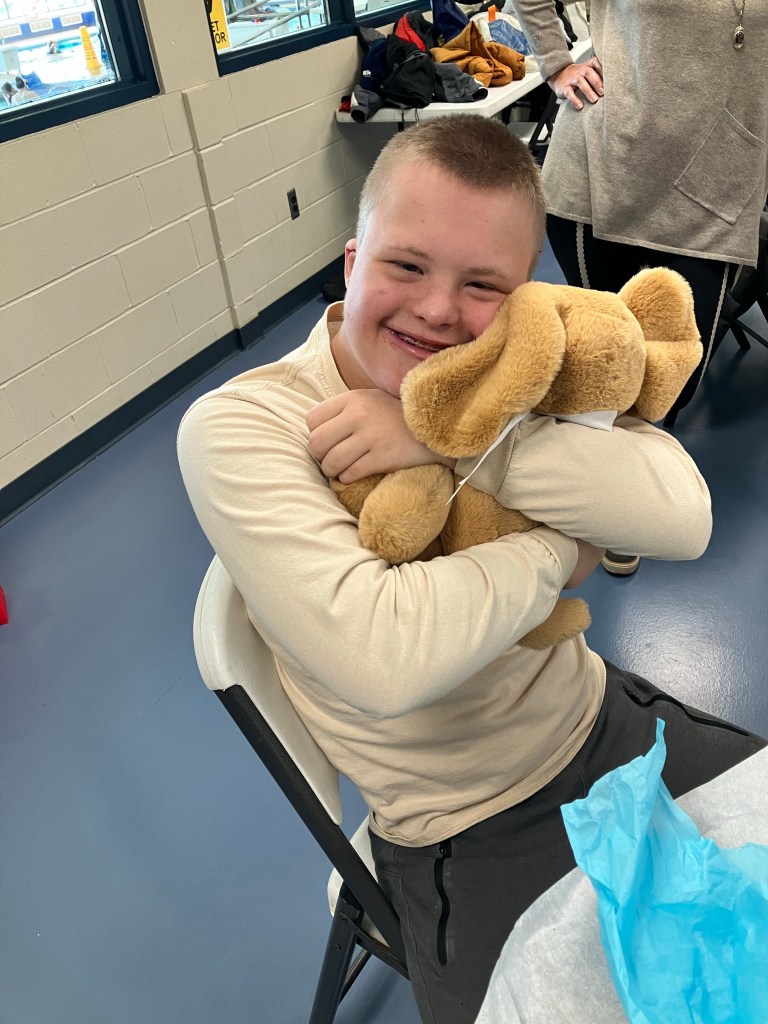
Independence Takes a Village with Dependent Children

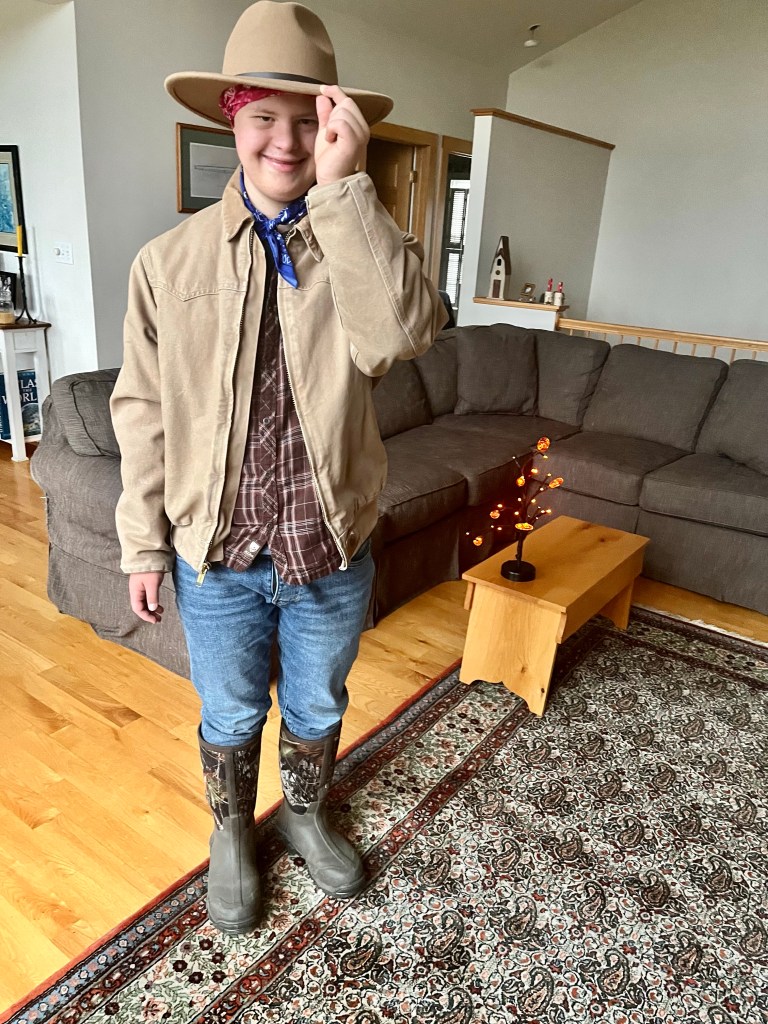
I have recently gotten back in the pool (after a year 😅) thanks to our friend, Dawn, taking great care of Wil after school and honing in on his life skills learning.

While I swam Monday, Dawn’s husband came over to have a guitar jam session with Wil 🎸

When you have a dependent child, your schedule revolves around that child’s schedule. It takes a lot to find someone you fully trust, and that matches your schedule, so you and your child both can enjoy needed independence time.

Wil is my buddy, and he is so much fun! I’m thankful he’s not flying from this nest for some time to come. And yet, Wil is almost 19. He deserves someone other than mom all the time to expand his young adult life.

When I mention respite care outside of our disability circle, I receive a blank stare in response. That likely wouldn’t have been in my vocabulary either! But independence doesn’t happen without it when you have a dependent child.

When you meet someone with a dependent child, know that they most likely love having their child home, but at the same time, both parent and child need time to spread their wings, and that doesn’t happen without an extra set of loving, caring hands.

Our lives always include extras, and that extra includes extra special people with extra special hearts. 💕

The Bright Side

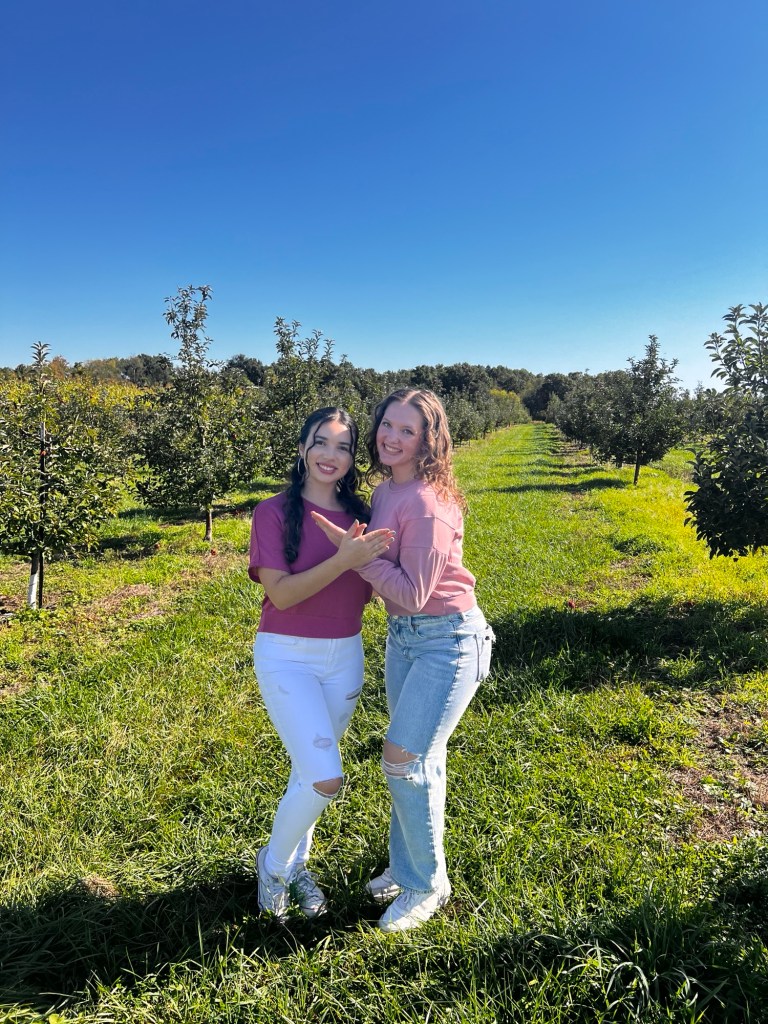
Elizabeth sent me this picture of her and her sorority sister, Isabelle. They were visiting a cider mill and enjoying the day with their sisters.

I love to see her big heart and smile, and loving life on her own. She has more than earned this time. She and her twin sister, Katherine, are great big sisters to Wil. Having a brother with a disability has impacted them. How couldn’t it?

Elizabeth is a sophomore in college studying to be a Physician’s Assistant. Since her senior year of high school, she’s worked as a Certified Nurse Assistant. She’s currently working at the local hospital as a CNA with a full rigorous academic load. As a CNA, she’s worked in many challenging situations, but no matter how challenging she treats each person with dignity. Every story she shared with me shows concern about the person underneath the challenging behavior.

Growing up with Wil, which requires patience and many times schedules built around his timing, plays a big part in this. Yes many times his needs come first. I think many believe this is a burden for siblings. But there is a flip side, there always is. And that flip side is growing a deep compassion within yourself for how others think, feel and operate. This understanding for others is grown strong by living it every day.

I love to see Lizzie in pics like this enjoying time and living life for herself. She deserves time that is all about her and all about her dreams. And with that, she also always carries with her the knowledge and compassion of what it means to care about another. There is always a flip side 😊

Inclusion: Reason to Care

I’m no born-natural. I’m not made to raise a child with Down syndrome.

But here I am. And working as a paraprofessional, no less. I have a lot to offer, we all do. But I have a lot to learn; that’s exactly why am I where I am. Not because I was born with a special gift. I’m here because I have reason to care. And I do care; I care a lot.

The children I work with now have very different skill sets than Wil. Navigating these little humans’ ways of processing their world has been a great challenge and a great joy. I have good days and I have bad days. The bad days are hard. I beat myself up, and I’m working on that within myself. But I’m working with humans, and when I make a mistake it hits me personally. The upside is this is a high motivation for me to learn more – I’m always trying to figure out how to do things better the next time.

Raising a child with a disability I have come to learn one truth: life does not move in a straight line. When you think you’ve got one strategy down, you get thrown back 3 feet the next day. It reminds me of a game my Grandpa used to play with my sister and me as young kids. He’d sit on the back porch, leaning back in a cushioned chair blowing out smoke rings from a Viceroy cigarette. My sister and I would stand all the back at the end of the yard. He’d call out if we were to take small or giant steps forward and back. If we forgot to ask “Mother May I” we’d have to go all the way back to start.

Some days there is this invisible trigger within these children that I trip, and just like forgetting to say Mother May I, I get sent all the way back to start. But I get smarter, and I learn more and forget less. And finally, when I’m able to help one of these children through their emotional distress and they open up in communication, and they look up and smile at me, I float higher than one of my Grandpa’s smoke rings that I loved jumping up and catching on those long, summer days.

My work is hard. Raising Wil is hard. But so is just about everything else that we at first do not understand. Seek first to understand. Within those four wise words is enrichment in life. I’ve never lived so deeply as when I fully accepted my son. I still revert at times. I still go back to wanting the kids I work with to just do it my way. It’s easier that way – for me. But it’s not their way. It’s not the way their brains were made to work. And it’s also not all about everyone having their own way either. It’s about learning to work together.

Wil and I are recovering from Influenza A. He was all excited to get out of the house, but when it was time he got stuck. I sat down with him. I asked him what his upset was. Wil takes time to process and time to share. So I just sat there for 5 minutes. Not because I’m made for this, but over the years I made myself for this. And we unwound his wound-upness and we left the house without further issue. No one pushed anyone. We both had our say. It’s just time.

That’s what I am navigating now with the kids I work with. I’m learning again like I learned with Wil. I’m learning their way of doing things. Their way of thinking. And when I find that patience within myself, and I give these kids the space they need, it’s the most enriching experience ever. But sometimes it’s really, really hard to get there. Sometimes I’m just worn out from a 45-minute bout of emotional deregulation with still no progress and I walk away in tears. Because this is a human being and I’m disappointed in myself for not finding a way, and I’m tired and frustrated. Again, I’m not made for this but I’m finding my way because it’s so worth it. But like that game with my Grandfather, even though it can feel like it’s a setback, it’s really a setup for growth. A setup for being made for this. I get smarter, and I do better for these kids.

Inclusion is not easy, but it’s not evil either. On paper, it looks beautiful, and there are many proponents of inclusion that are more in love with the thought of inclusion than the reality of it. On the flip side of the paper, I still hear people say they “don’t want my kids with those kids.” Both stances are ignorant. Inclusion takes work. Inclusion takes listening and understanding what our kids with disabilities need just as we do for typically developing kids. It’s a game of Mother May I. When Wil had his first behavior plan in middle school, the first thing the educators told me was that it was a very fluid plan. We knew where we wanted to go, and we set parameters to get there, but the exact timeline and the exact steps would have to be navigated and adjusted along the way. What mattered most was that everyone at that table cared. We cared a lot. And that is what got us all through Wil’s puberty years to successful high school years.

No one is special and we all are special. We all belong together, no matter how pretty or messy it is and how many steps it takes and in how many directions we have to go.

The only requirement is to care. And that I know is natural within all of us. We just need reason to find it.

Disability Invisibility Goggles

We historically do not like people who think differently than we do. We want things to work out the way we want them to and we surround ourselves the best way we can so things work out the way we want them to. When things don’t work out the way we want them to we get upset. We may blame ourselves, we may blame others, or we may blame God.

People with disabilities don’t work out the way we want them to. Think on how people with disabilities have been treated through the years. Disability is not seen as a part of the human condition. Disability has been explained away as a curse, a burden; shamed, hidden, tucked away. A therapist once asked me if I blamed myself for Wil’s birth. Hmmm, she didn’t ask me if I blamed myself for Katherine and Elizabeth’s birth.

Wil doesn’t fit into the definition of “things working out the way we want them to.” Sure, you could argue nothing really does, but did people celebrate your baby’s birth or tell you they were sorry? Wil lives outside of the above definition no matter how broad, wiggly or faint that line is.

There is a 5-year-old boy with autism that I work with. When we are out in the hallway transitioning from the classroom to a special, he likes to pretend he is a chameleon. He’ll push himself up against the wall and tell me he’s invisible; that I can’t see him. It’s a stall tactic, of course. I play along, asking where he went. I ask passerby’s in the hall if they can see him. The passerby’s smile, look back and forth down the hall and put their hands up. “I can’t see him anywhere.”

One day I thought of circling my fingers around to my thumb and placing my circled hands up to my eyes like glasses. I twisted my hands saying, “Click-click-click. I’m adjusting my invisibility goggles. Ahh, that’s better, now I can see. Hey, there you are!”

Raising Wil is like wearing invisibility goggles. I never knew this whole new way of seeing things was always available to me until I had a reason to care to see it.

I made my way through life, thinking the thoughts I did, defining things the way I did, without much further thought. I’d look up, I’d look down, and if things didn’t work out the way I wanted them to, I’d make them conform to my definition of what worked for me. My definition of “right.”

But what is right? What is normal? According to whom? Even if we don’t want to, we all have innate definitions of what these words mean to us.

Now I believe a better question is, What is? What is right in front of me? Am I seeing it for what it is?

Click-click-click.

My answers to these questions will forever be limited by my own vision; my own versions of right, my own versions of what works for me. My answers, though, as limited as they are, always have room for expansion. My view is no longer static, but fluid. There is always another level to view, another perspective to consider, another evolution to realize.

Raising Wil, I quickly realized I had to be fluid in my learning or I’d go crazy. The perspective I had at the time of his birth was not conducive to raising a child with Down syndrome. But here I was. It didn’t work for me, but I needed to make this work for me.

I realized then that I had a pair of invisibility goggles burning a hole in my pocket waiting for me to notice them. When I did, I never looked back. Invisibility goggles don’t work in reverse. The just look deeply inward, and expand outward.

Click-click-click.

Inclusion

I am enmeshed in the world of people helping people; of making inclusion work. Personally and professionally. I am on a high learning curve, always, with both Wil and the children I work with. Down syndrome looks much different than other disabilities, and of course, no matter the disability, each individual is their very own person. There is always more to learn, to know, to understand, and new research and new ways of navigating situations. This world I’ve enmeshed myself in is both a challenging and beautiful place to be.

I recently heard an anti-inclusion comment. It hit me emotionally, like a pierce through the heart. It wasn’t about my son, but I felt it deeply personally. I was so saddened and I couldn’t shake it. I kept rolling it over in my mind. Though I know there are still people out there with these beliefs, it’s so outside the realm of where I am. The feelings were hard, but I didn’t want them to harden me. And thankfully, I had the perfect experience that very evening to put my perspective back in place.

Wil had his first music therapy. He was very excited and packed his acoustic guitar. As we walked into the building where Wil was to have music therapy, a mother and her daughter — her daughter had a disability — were walking out. We quickly assessed one another and shared smiles. An instant feel-good chemistry fills the atmosphere in such meetings of strangers. No matter how unique our paths are, we share a strong bond in the pursuit of unity. We know the path can be arduous, but we have chosen to walk it fully, and in that, we are conjoined warriors in the cause for the good of our children. We don’t slam doors, we open them. That’s what we do in any and every way we know how.

The music therapist welcomed us. As it was evening, her eyeliner was slightly smeared from a long day (as I’m sure mine was) and she had a pleasant, welcoming demeanor. Wil entered her room while I sat outside of it in a cushy black vinyl chair, happy for the rest. Wil and his music therapist instantly started a jam session. On the other side of the door, I heard her beautiful voice rise; I felt my whole body relax and rise in energy at the same time. She gave Wil gentle instructions on notes with his guitar. He sang his favorites, and then she sang hers.

When Wil and his music therapist emerged 45 minutes later, she had a glowing smile on her face. He is such a joy, she said, and by the way she said it, I knew she meant it. Both were high on joyous shared music and energy. And by proximity, so was I.

While I’m not thankful for the door slammer, I’m thankful for the eye-opener that the door slammer brought. To feel the sadness but not allow myself to be hardened by them; rather to rise higher with the good that surrounds us. I was reminded, right on time, of my deep gratitude for the high energy and joy of the door openers. No matter how high our learning curves, how many times things may change, or how exhausted we all may be at the end of the day, we always know, deep in our souls, that what we are doing matters. And it matters big. We are opening doors and creating shared atmospheres of inclusion no matter how unique each of our lives may look.

Blooming Naturally

Opening minds to acceptance need not be negative. My journey with Wil’s diagnosis is likened to a flower blossoming through a crack in the concrete, unfolding, stretching, growing, reaching, and opening fully to the sun. At first unbelievable, then freeing, and now a natural part of life.

Disability is a natural part of the human condition. Yes, you can argue I will get trampled again and again. Yes, I will be under the concrete again finding a new space to grow. But herein lies the difference. The concrete is real, but I don’t have to stare at it. I now know there is always a crack in the concrete somewhere because I have experienced it.

I’ve experienced bumping my head multiple times in search of the sun. I know that bumping my head — now in a progressive way — is simply part of the process in reaching a glorious opening to expand with the sun.

It hurts no less to continually bump my head. But I know, very deeply within me, that the more flowers I bloom, the more the natural human condition of people with disability will be recognized as a beautiful, natural part of life, and to be appreciated as such.

There is room for all of us to grow, but only when we open ourselves to fully supporting this growth that blossoms in its own natural way and time.

Take Another Think

We may believe our thinking is correct; or it is good—that we are good people.

Even those of us that call ourselves open-minded may find we have unwittingly closed off our minds when spending time with individuals with disabilities.

Why is this?

Because we have to see it their way first to understand. And many times — in some cases most of the time— their way is not easily readable. So we push our agenda on those with disabilities.

Individuals with disabilities’ way of communicating may be very different, or even non-existent in a verbal sense, so actions must be carefully observed. And even then we may remain clueless. It takes too much patience, and so we, even unconsciously, push our way on them, or we ignore them.

Our own belief system must be suspended to decipher theirs. We must let go of trying to be “good” or “helpful” because our version of what is good or helpful may not be for them. This very fact is likely the most challenging, and yet the most empowering process, in our very own lives.

When we suspend our own belief system in order to understand theirs, something shifts within us. Something bigger, something higher — spiritual even.

This process has no end. In fact, in 16 years I’m only just beginning. I’m stronger than I’ve ever been in trying to understand Wil, and understand the world’s reaction to him. I’m learning as a parapro to understand many differing abilities. It’s challenging and I need the expertise of those around me, because again what I think of as being helpful may not be helpful to them.

But it’s also so amazing to understand what in some ways may never be understandable. It wakes up something in me. Not because I’m trying to be a good person; it is because I truly want to understand what these kids are trying to say.

Those with disabilities are true gifts to us all—and yet this population is so very ignored and misunderstood. We must first forget ourselves, in full effort to understand another, and in that we find a stronger constitution of our own selves within.

Let Us Embrace Our Vulnerable Population

In embracing our vulnerable population we embrace our own vulnerabilities.

We crave Love. Love is the base of all things. Love is survival. We crave, live and breathe for Love.

In embracing individuals that we previously misconceived as having lesser value, we find in fact their value is greater than ours as theirs is the truth-pathway to LOVE. In embracing those we do not fully understand; we must find within ourselves a deep patience and seek to view life in new and fresh way. It is in this way we find Love — a love deeper than we knew existed. A love that touches and speaks of God. We feel God and His Presence even if we are not religious; even if we are non-believers. Whatever we believe, we cannot deny what we feel. We call it Love. And yet it matters not what we call it. It only matters that we FEEL it.

Once we are touched by that feeling, we crave more. This Love lifts us, lights a fire within us. We find it hard to believe it was something we closed ourselves to. But we did not know we were living behind a closed door until our child with a disability; or our experience with individuals with disabilities opened the door for us. The blast of fresh air is what alerts us once we open our minds. It blasts us with a gust, not unlike a hurricane; it forces us out of our closed mind so far that we can never go back. We never want to go back. In fact all we want to do now is pound on closed doors in our desire that those behind the closed doors know this Love.

We see the fear, and know the difficulty to get past that fear. But once you feel the blast of fresh air in your face you cannot but want more of it, and want more of it for others. And so you advocate for your child, but it is so much more than equal rights and acceptance. It is a Love, a Love for all that lays hidden. A Love that is locked away inside of us. We are scared of it’s immensity. But in the fight for your child you release it. You must, for their sake more than yours. And you find in this unlocking a Love greater than you ever knew existed but it does exist in immensity all around you. And when you breathe it in fully it grows and grows and grows. There is no end to it, and though it is bigger than you could ever conceive, even a small slice of it breathes new life into. You cry in the sheer love that you feel. And you know you can never run out of that love because it is always there, it is bigger than anything your mind can conceive.

You must re-open yourself to this Love every day. Recharge yourself with it. When the doors start to shut due to habit or other’s actions — your child opens the door for you with a kiss on the cheek, a simple gesture, or a silliness. And when you try to describe this type of grand simplicity that has the power to open a door, those behind closed doors see only the simplicity of the gesture, as they have not opened themselves to the grandness. They refuse to open the door to this Love, staying in a sheltered space they know. Fully unaware that the immensity of Love is available to them if they only unlock the door. But when we don’t know, and what we only know is behind the door there is great security in that. There is great control in that. And we think we are thriving when really we are not. We have created a life that feels good behind the closed door. Even when it doesn’t feel good, it is what we know — how terrifying to go outside of what we know.

When we spend time to truly know and understand our vulnerable population, oh, what LOVE. It is open, it is free. Our children never tire of opening the door; it is their nature. It is on us to open ourselves to them.

You will know when you feel the Love. This Love is yours, it is all of ours. It is in endless supply. Let us circulate it. Let us ventilate closed doors. Let us embrace our vulnerable population.

Unsuspected Connections

Yesterday, checking out at the grocery store, the grocery clerk commented on the cupcakes I bought. I said the cupcakes were for my son’s classroom for his birthday.

The grocery clerk asked how old my son was. I replied that he was my baby, and it was hard to believe he was already 16 years old. I shared that he has Down syndrome and his Life Skills class really enjoys birthday celebrations. She nodded her head silently and continued to check my items without another word. Ugh, I thought, I overshared.

After that pregnant pause she said her baby was 35. She went on to say her son was recently diagnosed with Schizophrenia. But he didn’t believe he had Schizophrenia; that everything happening to him was real. He was in the hospital, so at least they could be sure he took his meds, but when he got out, she’d be the one to ensure that.

Wow, you just never know what people are going through. Here I thought I shared too much with the grocery clerk; but rather unknowingly created a vulnerable space for her to share what was heavy on her mind. Though it was heavy, in a way we were both lifted by that encounter with one another.

We All Have Hard Stuff

Yesterday, I just didn’t have it in me. Yesterday, I did not have the patience that on somedays I find miles of.

Some days I wish Wil would just get up and get in the car when I ask him to. Some days I wish I could say, “We are leaving in 20 minutes,” and he’d go get his hat and shoes, and then we’d be on our way. But it doesn’t work like that.

Every time we need to go somewhere it’s a process. I start 30 minutes ahead of time with Wil. I ask him to get his shoes and pick out the hat he wants. Then I check in 10 minutes later. He may have moved closer to his destination, or he may not have. There is more coaxing. And then, eventually, he is ready to go. Or not. This is not once in awhile. This is all the time.

Yesterday Katherine and Elizabeth had driver’s education at 6pm, and that means we needed to leave at 5:30pm. I was making dinner and realized it was already getting past 5pm. It was time to let Wil know it was time to get ready to go.

I walked downstairs and told Wil it was time to go. “Ok, Mom. Hugs.” This is all normal. He’s big on hugs. I’m big on his hugs. That’s the beauty of not being in a hurry with Wil. You never forget to give and receive hugs.

After our hugs, I asked Wil to get his Crocs and pick out the hat he wanted to wear. He said ok and I went back upstairs to continue with dinner. Ten minutes later I didn’t hear any noises from him getting ready to go. I went back downstairs and he was sitting on the floor. He had been good-natured so I wasn’t sure what this resistance was about. With more hugs and coaxing, I told him it was time to go. He refused to budge. As I didn’t understand the reasons behind this particular refusal, I wasn’t sure how to talk him through it. It may have been a simple case of being a teenager and exerting his independence.

At times, Katherine or Elizabeth are able to get him moving. Katherine came downstairs. “Wil, can you get up and hold my hand? I really need a hug.” Wil looked at her and considered this, then ducked his head down. Not a good sign.

At this point, we were running out of time. “Wil, we need to go,” I said. “This is not fair to your sisters. You had plenty of time to get ready, and it’s time to get up.” He looked at me and looked back down. “Come on, one last hug. Can you get up and give me one last hug?” I hugged and tried to lift him up, which sometimes works. He resisted strongly. At this point, we were on the verge of being late. I asked Katherine for help. She asked Wil for another hug, but he sunk down deeper.

Elizabeth came downstairs to see what was happening because it was time to go. We literally had minutes left. I don’t like lifting Wil against his will, but I also don’t like sending him a message that this behavior is ok. We all need to work together – and that’s what we did, well at least three of us. Sometimes you have to do things you don’t want to do. After all of our coaxing and hugging, Katherine, Elizabeth and I lifted him up.

Wil is over 100 pounds, has low muscle tone so can wiggle out of your grip like a noodle, and he was unwilling. We made it up half of the steps to the landing and set him down. I again asked Wil to get up on his own.

“Don’t carry me. I’m not a baby.” Wil said.

“You are right Wil. You are not a baby. You are 13 years old. You are very big. So let’s stand up on your own and walk to the car like a big, grown up 13 year old does.”

No response. We picked him up again and made it to the door. Again, he refused to walk on his own. So we picked him up and made it to the car. Again, he refused to get in on his own. We picked him up again and got him in the car.

This whole process was physically and mentally exhausting for all of us. Wil was withdrawing in the backseat of the car, and I was doing all I could not to break down in a full out ugly sob. I hesitate to use the word traumatic, as that is quite extreme, but in that moment that is the best word I had to describe what I felt. It was a very heavy feeling. I just hated lifting him up like that and making him do something so against his will. But he also needs boundaries and to understand that we need to go and do things when he doesn’t feel like it; that’s just part of life. How to do that, how to balance that, I don’t know. I’ve learned a lot raising Wil, but I have a lot more to learn. And gosh does it hurt sometimes.

He was upset for some time in the car, understandably so. Katherine and Elizabeth seemed like they were fine, and we talked it out. I don’t like that they have to go through this either. This is part of their everyday life too. We never just get in the car and go. For them, everything is a process, and much of it revolves around Wil. Surely it has created great compassion and strength in them that many will never understand fully. I just don’t want this to cause resentment toward their brother. At this point, I’ve certainly seen loss of patience, which all siblings have, but thankfully no signs of resentment, and I’d like to keep it that way.

On the drive home, while Katherine and Elizabeth were at driver’s training, I asked, “Wil, do you know why we lifted you up in the car?”

“Hmph.”

“Wil, your refusing to leave was being very inconsiderate of your sisters. They cannot be late to this class and your refusing to leave almost made them late. When you have somewhere to go your sisters are very considerate of you. I’m asking you to be considerate of them, too.”

“Mom, I’m not listening to you.”

I stifled a laugh – this was so pure, typical teenager. I’m balancing Down syndrome and typical teenager with Wil. On one hand, this comment is a milestone for him; using his words in this way to express his emotions. On the other hand, the mother of a teenager in me was thinking, “Oh yes you will be listening to me.”

After I had picked up Katherine and Elizabeth from driver’s training and we had made it back home, Wil had recovered and was bouncing around in his happy state. Me, not so much. I still felt the deep turmoil in the pit of my stomach. Do you ever have this deep sob within you and it just needs to come out? That’s what I had and I was trying to hold it down in my stomach and process through it piece by piece to make sense of it. Sometimes I can do that. As I process each emotion and what it means, it eases the pain, bit by bit, until the sob has dissipated. This time though, the turmoil remained jumbled up in my stomach and I just couldn’t find the state of mind to unravel it.

Later that evening, we were all sitting on the couch and Matt asked Elizabeth how driver’s training was.

“Well, we were almost late thanks to Wil. But we made good time.” Elizabeth responded.

“What happened with Wil?” Matt asked.

Elizabeth told Matt what happened. I confirmed and filled in a few details.

“It looks like he’s fine now.” Matt said.

“He was upset for some time,” I said. “I hope the message sunk in. It was so hard. I know he’s bouncing around now, but he was really mad at me for a while.”

“Mad at you?” Elizabeth said and looked at me. How did that girl get so smart? She has amazing perspective for her age. Looking at her, and feeling how grateful I am for how both Elizabeth and Katherine roll with those tough times, and take it in stride, the sobs came up to the surface before I could even process what was happening. There was no stopping them then. I didn’t want the girls to see me like that so I went to my bedroom and I let it all out.

Matt came in and hugged me. I was so thankful to have him to hold on to. I sobbed my heavy sobs and held on to him around his waist.

We talked a little bit. I told him how I feel lost with Wil sometimes. That I don’t know the right thing to do when he’s like that. I don’t know if the message was received by him. I don’t like to force him, but reasoning with him is not always an option. And we talked some more. We are also raising two fifteen year old girls and that has its own challenges. There are days I feel like I’m failing, and this was one of them. Then Matt stood up and picked up this little note I keep Elizabeth made years ago that said, “Best mom ever.” He handed it to me. I loved him so much at that moment. More tears.

He said to me, “Everyone has their stuff, Christie. It might look different, and they might not always talk about it, but everyone has hard stuff they have to deal with. This is some of our hard stuff.”

And that’s why I’m writing this now. What compels me the most is for you to see the big picture on raising a child with Down syndrome. Some see our kids as happy all the time. They are not. Some see raising a child with Down syndrome as an always challenging journey. It is not. It’s a mix of everything, just like everyone else’s life. We all have hard stuff, even if it looks different and we don’t always talk about it.

This morning on the way to Wil’s swim lesson, he was jamming to his favorite Luke Bryan songs. The sun was shining and his high spirit was contagious. I couldn’t help but sing with him, as we ventured forward into a fresh, new day.
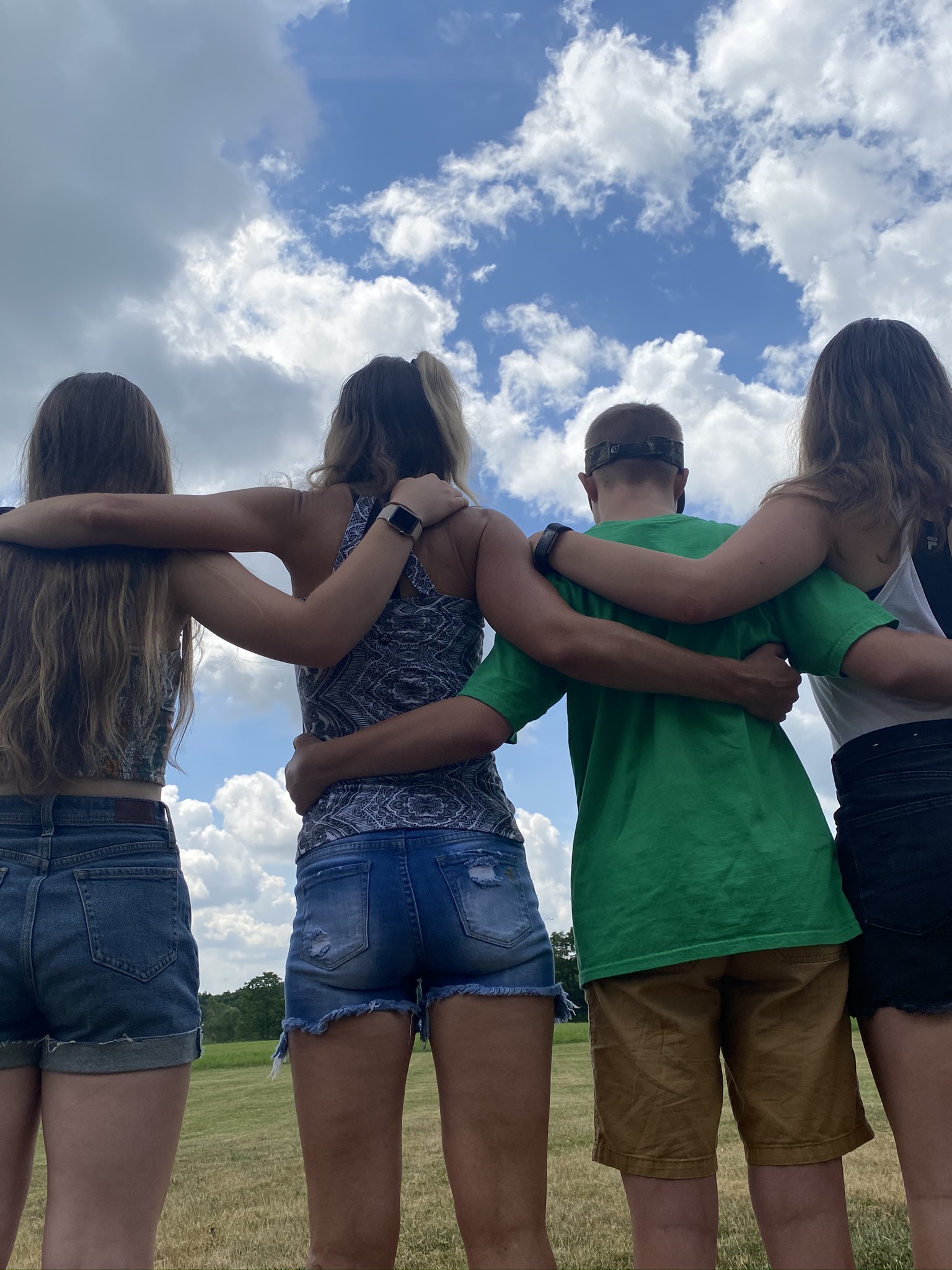
2E78851E-14F9-4486-9A9F-FE38B66BC1EB