A singular new word Wil calmly adds to his vocabulary, in a such a way that only I — or his closest educators — would hear stands out like a stacatto flashing me back in time to a movie reel loop when he was 5 or 7 or 10, working a skill on a repeat loop that at the time I couldn’t see beyond.
But here I stand, still marveling at one added word, one added achievement, one added milestone, taking me back and pushing us forward seemingly in flow but full of staccato moments.
I’m not who I used to be raising Wil, yet I’m closer to who I am at my core.
I must pave ways for Wil and yet must leave space for him to create his own. He has a high level of vulnerability and yet has an inner strength many desire.
Wil has grown in me a patience I never knew I had, and yet also has grown an immense impatience to grow more; to learn more; to expand borders.
I have learned many stereotypes are hysterically true; and many are heretically innaccurate. Wil’s sisters called him, “Wil ‘the snail’ Taylor” every time they followed him as he two-stepped up and down the stairs. I’ve shared many laughs with fellow Ds mommas over stereotypes and shared many tears with these same mothers over stereotypes. Stereotypes can bind or separate. You need to walk the walk to know which is what.
And friendships. He has some deep ones. He also has many cheerleaders we’ll never see again once he leaves this school. But the impact his presence has made, and theirs on him, is undeniable.
Raising Wil is a paradox; surface friendships that leave a lasting impact, single breakthrough words that flash back to a former time loop on repeat, patience that creates a relentless drive, stereotypes that create binding laughs in their known truths, and stereotypes that create pain in their ignorance of the truth.
I now stand beside Wil with great hope of what’s ahead, pure enjoyment of where we stand right now, bouyed by the memories that brought us here, and on occasion flash me back.
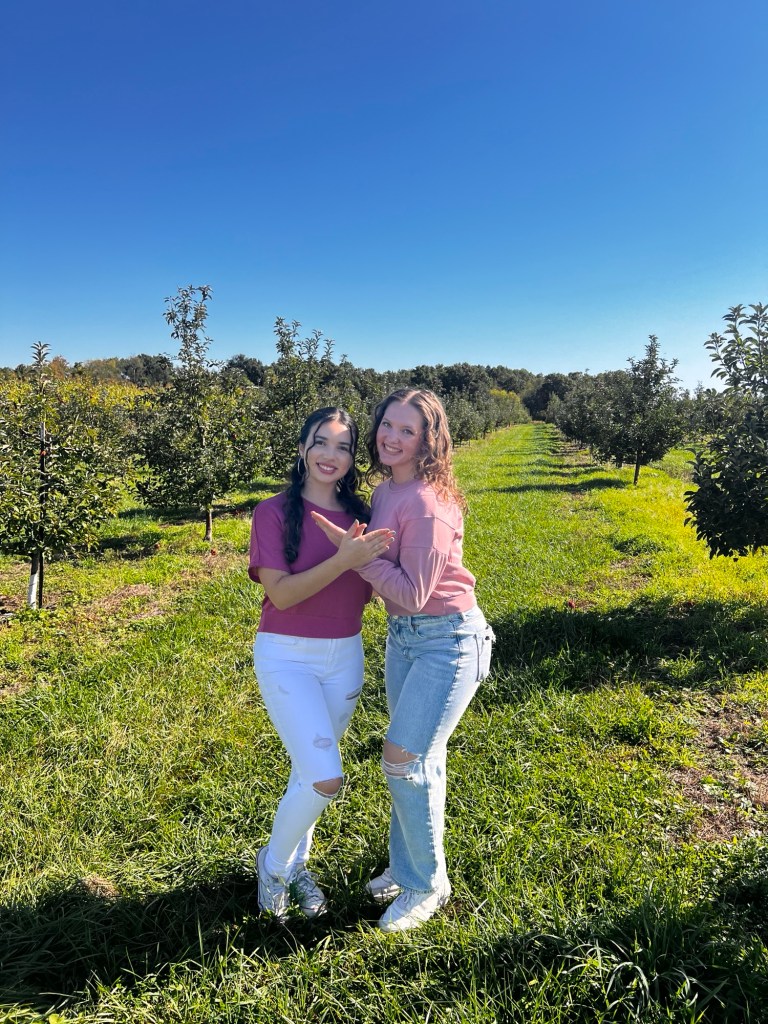
Elizabeth sent me this picture of her and her sorority sister, Isabelle. They were visiting a cider mill and enjoying the day with their sisters.
I love to see her big heart and smile, and loving life on her own. She has more than earned this time. She and her twin sister, Katherine, are great big sisters to Wil. Having a brother with a disability has impacted them. How couldn’t it?
Elizabeth is a sophomore in college studying to be a Physician’s Assistant. Since her senior year of high school, she’s worked as a Certified Nurse Assistant. She’s currently working at the local hospital as a CNA with a full rigorous academic load. As a CNA, she’s worked in many challenging situations, but no matter how challenging she treats each person with dignity. Every story she shared with me shows concern about the person underneath the challenging behavior.
Growing up with Wil, which requires patience and many times schedules built around his timing, plays a big part in this. Yes many times his needs come first. I think many believe this is a burden for siblings. But there is a flip side, there always is. And that flip side is growing a deep compassion within yourself for how others think, feel and operate. This understanding for others is grown strong by living it every day.
I love to see Lizzie in pics like this enjoying time and living life for herself. She deserves time that is all about her and all about her dreams. And with that, she also always carries with her the knowledge and compassion of what it means to care about another. There is always a flip side 😊
I’m not a patient person. But I’ve been called patient a lot since raising Wil. And I started to believe I grew in my patience. It’s possible I did.
Last weekend Wil got stuck, and we had a very important wedding to get to. As the clock ticked I grew very frustrated. I wasn’t feeling patient at all. You could say I lost my patience, but it was that very loss that a new realization within me occurred. Patience is not a driving force.
It is a desire to understand.
It’s that simple. And it’s that hard sometimes.
When I was pressed for time, I may have lost my patience, but more importantly is that I lost my desire to understand where Wil’s resistance was coming from. Standing there with the patience of Job wouldn’t have helped any of us without a desire to understand. I thought for a minute.
“Do you want to wear your new outfit in the car?”
Wil looked up at me and nodded.
“Ok, it’s a 2 hour drive and you’ll get all wrinkled. We are stopping at Grandma and Grandpas on the way. How about you change there?”
“Mmhmm,” he agreed. And that was that.
Sometimes it’s not that quick. But sometimes it is. Most importantly, who doesn’t want to feel heard, especially when they can’t find or process the words?
I may have to find patience within, but the desire to understand is what leads the way.
I sat in my seat as Wil walked up on stage to receive his school honors. He needed no support or assistance. He, like his peers, walked from his seat to the stage and back to his seat.
As he returned to his seat, I waved so he could find me, but he didn’t need my wave. He didn’t even look up at me as he made his way back. He knew where he was going without me.
Last Tuesday while in a class I’m taking, I watched a Youtube about people with physical and cognitive disabilities living on their own with support. If I was at home, I would have had a full-on sob. I consciously held myself together the best I could. Tears silently escaped the corners of my eyes that I discreetly brushed away.
What I was watching is fought hard for. These individuals’ independence, and the supports required for their independence, is what’s right and what these individuals fully deserve. And yet, this terrifies me for my own child at the same time. Wil will always have a level of vulnerability. I have to put a helluva lot of trust in someone else’s hands if he does choose to live independently with outside support.
And yet, here I am, the one who has worked so hard for his independence for the last 17 years, waving for him to find me. In many ways it’s we parents of our vulnerable kids who can’t let go. Our hearts are just as vulnerable as we navigate impending adulthood for our kids.
I was in the living room. Wil was sitting in his bedroom adjacent to the living room.
Wil often talks to himself – many of us do. It helps us better process our thoughts, and it’s the same for Wil and for many people with Down syndrome. I quite like eavesdropping on Wil to better understand what is on his mind. Every morning he has a back-and-forth conversation with himself on what to wear: “Wear the blue shirt? Yeah, yeah, the blue shirt. Ok, the blue shirt.”
His exclamation about the marble though, was no back-and-forth conversation with himself. He wanted me to hear it. He was waiting for my response. Wil’s sister Katherine was home so he didn’t have my full attention as he’s grown used to since his sisters went away to college.
His attention-seeking strategy was effective. I went straight into his room.
“Wil did you really swallow a marble?”
“Hmph.”
“Wil, please tell me as this could be serious. I need to know. Did you swallow a marble?”
“Yes.” Then a moment later, “No.”
I actually had no idea if this was serious or not. I quickly googled swallowing a marble and found that it was quite common in young children. As a marble is round and smooth, most pass without issue. I sighed relief. But I didn’t want Wil to think he could add marbles to his diet.
I sat down next to him. “Wil, if you did swallow a marble, it’s very important that you tell me if your stomach hurts right away. Ok?”
“Ok.”
“So, did you swallow a marble?”
“No.” Then, “Yes.”
He was getting the attention he wanted from me and was holding tight to it.
“Ok, how about we go watch Olaf’s Frozen Adventure,” I said. Wil loves Frozen, and I love Olaf, so this was a show we both have watched together multiple times, which is why I chose it in this moment.
“Yes!”
I still have no idea whether he swallowed a marble or not. Wil does not outwardly lie. I’ve never heard him lie, and I don’t think he even knows what lying is. In this case he wanted my attention.
Other times, if I ask a question and he doesn’t know the answer, he will throw out a yes or no just to answer me, or whomever is asking. His eye exams can be quite challenging as this happens a lot.
But yesterday, he took one of his friend’s phones as a joke, and his teacher let him know this was no joke. His teacher then Facetimed me, with Wil, about this so we could all talk it out. Wil then understood the seriousness of taking other’s possessions. When Matt and I talked about this incident with Wil after school, he was very honest. As he always is with these types of questions.
After about 5pm every day, Wil will blurt out a detail about his day. This is a quieter time at home, or when we are in the car on the way to a therapy or the grocery store. He’ll blurt out, “Chocolate chip cookies!” Or, “Omelets!” Which is what he made in cooking class that day and then we can talk about it. But if I ask too soon, he won’t tell me. Wil shares on his own timeline when he’s had time to unwind and process his day. Then, he’s an open book.
Sometimes I don’t understand what he’s saying, so I’ll ask him to spell it. Yesterday I asked him what he did in choir.
“Whales.”
“Whales?”
“Yes, whales.” He said. Thinking I misunderstood him I asked what letter it started with.
“W.”
“Oh, ok.” Now realizing I heard him correctly, but the context was out of place for me, I then asked, “Did you watch a movie about whales?”
“Yes!”
It’s really interesting how breakdowns in communication can happen. I did hear what Wil said, but as I didn’t connect whales with choir, I thought I misunderstood him. I’m not the best listener, but with Wil I am because I have to be.
I used to say, “Oh, I’m not that kind of person.” But I quit doing that, because raising Wil I’ve had to be many kinds of people that I didn’t think I was.
Many think raising a child with a disability is a burden. But in fact, my experience has been that Wil has brought so much freedom in my life, in altering the way I think, hear and see the world.
We historically do not like people who think differently than we do. We want things to work out the way we want them to and we surround ourselves the best way we can so things work out the way we want them to. When things don’t work out the way we want them to we get upset. We may blame ourselves, we may blame others, or we may blame God.
People with disabilities don’t work out the way we want them to. Think on how people with disabilities have been treated through the years. Disability is not seen as a part of the human condition. Disability has been explained away as a curse, a burden; shamed, hidden, tucked away. A therapist once asked me if I blamed myself for Wil’s birth. Hmmm, she didn’t ask me if I blamed myself for Katherine and Elizabeth’s birth.
Wil doesn’t fit into the definition of “things working out the way we want them to.” Sure, you could argue nothing really does, but did people celebrate your baby’s birth or tell you they were sorry? Wil lives outside of the above definition no matter how broad, wiggly or faint that line is.
There is a 5-year-old boy with autism that I work with. When we are out in the hallway transitioning from the classroom to a special, he likes to pretend he is a chameleon. He’ll push himself up against the wall and tell me he’s invisible; that I can’t see him. It’s a stall tactic, of course. I play along, asking where he went. I ask passerby’s in the hall if they can see him. The passerby’s smile, look back and forth down the hall and put their hands up. “I can’t see him anywhere.”
One day I thought of circling my fingers around to my thumb and placing my circled hands up to my eyes like glasses. I twisted my hands saying, “Click-click-click. I’m adjusting my invisibility goggles. Ahh, that’s better, now I can see. Hey, there you are!”
Raising Wil is like wearing invisibility goggles. I never knew this whole new way of seeing things was always available to me until I had a reason to care to see it.
I made my way through life, thinking the thoughts I did, defining things the way I did, without much further thought. I’d look up, I’d look down, and if things didn’t work out the way I wanted them to, I’d make them conform to my definition of what worked for me. My definition of “right.”
But what is right? What is normal? According to whom? Even if we don’t want to, we all have innate definitions of what these words mean to us.
Now I believe a better question is, What is? What is right in front of me? Am I seeing it for what it is?
Click-click-click.
My answers to these questions will forever be limited by my own vision; my own versions of right, my own versions of what works for me. My answers, though, as limited as they are, always have room for expansion. My view is no longer static, but fluid. There is always another level to view, another perspective to consider, another evolution to realize.
Raising Wil, I quickly realized I had to be fluid in my learning or I’d go crazy. The perspective I had at the time of his birth was not conducive to raising a child with Down syndrome. But here I was. It didn’t work for me, but I needed to make this work for me.
I realized then that I had a pair of invisibility goggles burning a hole in my pocket waiting for me to notice them. When I did, I never looked back. Invisibility goggles don’t work in reverse. The just look deeply inward, and expand outward.
Wil had a very hard morning. He would not get out of bed. Would not budge. Usually I tickle his feet. He laughs, sits up and says, “Hug Mom!”
He loves high school so even if he’s tired he is typically happy to get up and go. This morning was a throw back from the middle school years when hormones were running high and he had feelings he could not process or communicate at the time which lead to many new behaviors. But we emerged from that time; even if he has a slow start now, he can talk to me and work through it on school mornings.
I racked my brain as to the causes of his demeanor. My guess is a cold is brewing within him as I’m sick, plus he had Social Group Wed night and Music Therapy last night; he’s probably just plain tired.
As he laid in bed, he grew increasingly upset with himself for not moving, which ironically kept him in the “feeling stuck” loop. A wise special education teacher, Mrs. Hancock, shared with me that on these situations it’s about responding not compliance. I thought Matt, being a fresh person in the scenario, would help break him of this stuck loop.
I called my husband Matt at work on speaker phone. Wil shared with Matt that he was “upset.” I felt my heart jump up and cut through my stress with elation. For Wil to share his emotions in his current emotional state was a very important advance. After talking to Matt, Wil was able to unwind whatever was wound inside him and turn it around.
Wil started to get dressed but was still teary. I asked if he needed a hug. He gave me a tight one then I felt him loosen up. I knew then that he would be okay. I texted his teacher to let him know the situation and Wil may needed a calmer start to his day. I’m thankful he begins each school day in the life skills room rather than gen ed so he can go his pace to start and then gain momentum for choir, PE and art.
Our friend, Kate, had previously offered to drive Wil to school that morning, so again a fresh person always helps Wil’s demeanor and he adores Kate. When she walked in the door, she said she had his favorite songs ready to go in the car. Music to his ears (and mine)!
I was very rushed at that point — I hadn’t even brushed my teeth yet as I’d been trying to motivate and give Wil the time and space he needed for the last 30 minutes. I quickly made him his breakfast request to go — 2 turkey dogs with peppers, mustard and relish.
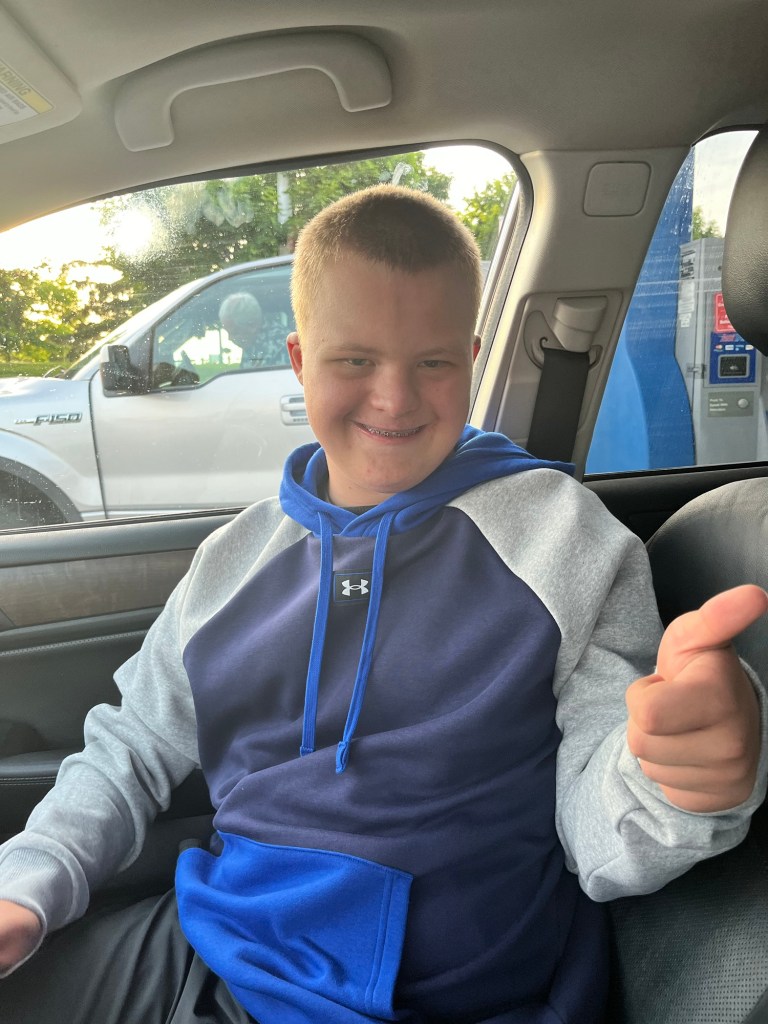
After he’d been in school for about 2 hours, I received a text from Jessica, whom I work with as a paraprofessional, forwarded a picture taken by Ashley who is working in his classroom. Seeing Wil smile big with his classmate buddies made me 🥹🥹🥹.
This morning was very hard, but as Mr. Rogers wisely said, “Look for the helpers. You will always find people who are helping.” ❤️
I am enmeshed in the world of people helping people; of making inclusion work. Personally and professionally. I am on a high learning curve, always, with both Wil and the children I work with. Down syndrome looks much different than other disabilities, and of course, no matter the disability, each individual is their very own person. There is always more to learn, to know, to understand, and new research and new ways of navigating situations. This world I’ve enmeshed myself in is both a challenging and beautiful place to be.
I recently heard an anti-inclusion comment. It hit me emotionally, like a pierce through the heart. It wasn’t about my son, but I felt it deeply personally. I was so saddened and I couldn’t shake it. I kept rolling it over in my mind. Though I know there are still people out there with these beliefs, it’s so outside the realm of where I am. The feelings were hard, but I didn’t want them to harden me. And thankfully, I had the perfect experience that very evening to put my perspective back in place.
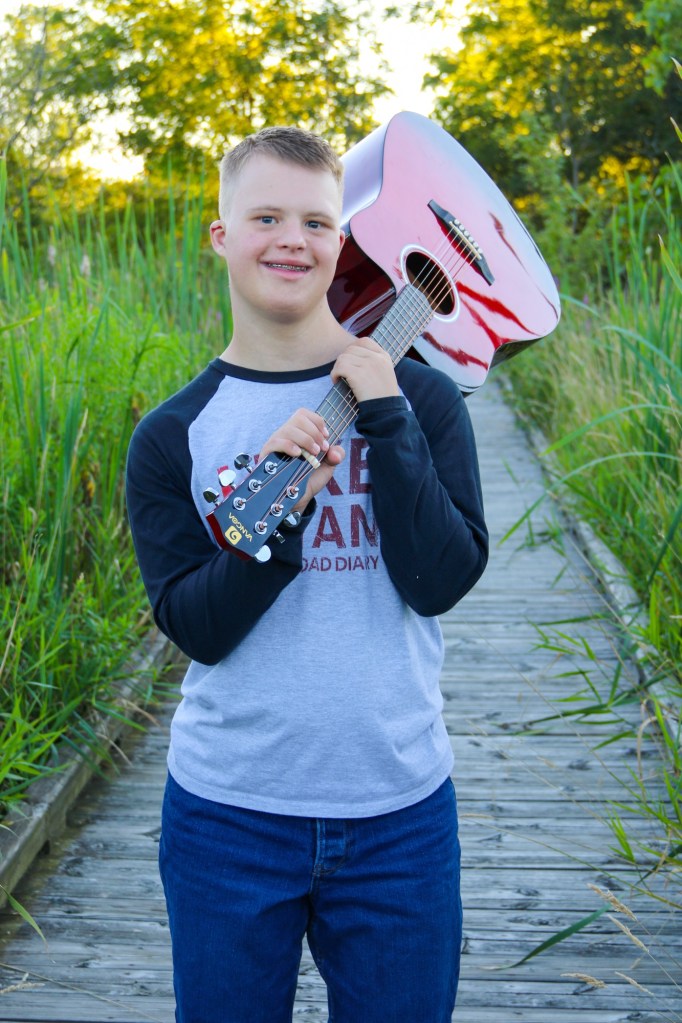
Wil had his first music therapy. He was very excited and packed his acoustic guitar. As we walked into the building where Wil was to have music therapy, a mother and her daughter — her daughter had a disability — were walking out. We quickly assessed one another and shared smiles. An instant feel-good chemistry fills the atmosphere in such meetings of strangers. No matter how unique our paths are, we share a strong bond in the pursuit of unity. We know the path can be arduous, but we have chosen to walk it fully, and in that, we are conjoined warriors in the cause for the good of our children. We don’t slam doors, we open them. That’s what we do in any and every way we know how.
The music therapist welcomed us. As it was evening, her eyeliner was slightly smeared from a long day (as I’m sure mine was) and she had a pleasant, welcoming demeanor. Wil entered her room while I sat outside of it in a cushy black vinyl chair, happy for the rest. Wil and his music therapist instantly started a jam session. On the other side of the door, I heard her beautiful voice rise; I felt my whole body relax and rise in energy at the same time. She gave Wil gentle instructions on notes with his guitar. He sang his favorites, and then she sang hers.
When Wil and his music therapist emerged 45 minutes later, she had a glowing smile on her face. He is such a joy, she said, and by the way she said it, I knew she meant it. Both were high on joyous shared music and energy. And by proximity, so was I.
While I’m not thankful for the door slammer, I’m thankful for the eye-opener that the door slammer brought. To feel the sadness but not allow myself to be hardened by them; rather to rise higher with the good that surrounds us. I was reminded, right on time, of my deep gratitude for the high energy and joy of the door openers. No matter how high our learning curves, how many times things may change, or how exhausted we all may be at the end of the day, we always know, deep in our souls, that what we are doing matters. And it matters big. We are opening doors and creating shared atmospheres of inclusion no matter how unique each of our lives may look.
Opening minds to acceptance need not be negative. My journey with Wil’s diagnosis is likened to a flower blossoming through a crack in the concrete, unfolding, stretching, growing, reaching, and opening fully to the sun. At first unbelievable, then freeing, and now a natural part of life.
Disability is a natural part of the human condition. Yes, you can argue I will get trampled again and again. Yes, I will be under the concrete again finding a new space to grow. But herein lies the difference. The concrete is real, but I don’t have to stare at it. I now know there is always a crack in the concrete somewhere because I have experienced it.
I’ve experienced bumping my head multiple times in search of the sun. I know that bumping my head — now in a progressive way — is simply part of the process in reaching a glorious opening to expand with the sun.
It hurts no less to continually bump my head. But I know, very deeply within me, that the more flowers I bloom, the more the natural human condition of people with disability will be recognized as a beautiful, natural part of life, and to be appreciated as such.
There is room for all of us to grow, but only when we open ourselves to fully supporting this growth that blossoms in its own natural way and time.
If I were to sum up my writing surrounding Wil in 7 steps it would be:
Wil wants and deserves to be treated as you’d treat anyone. As the individual he is.
But, 47 chromosomes has an impact on Wil.
To respect him for who he is, you cannot have an idealized view of what disability is. When you work closely with people with disabilities it is challenging. And here’s why…
You have to step back and try to understand what is driving the behavior. This is the single most challenging aspect. Whether we realize it or not, we impose our thoughts on others. To step back with an open mind and analyze the situation is incredibly challenging at times. Especially if it’s reoccurring, or you are in a hurry, or there is no answer you can discern due to communication barriers.
But here’s the glory—- when you do step back, when you do suspend your own thoughts and open your mind to what may be happening, it’s like a boulder blocking your heart was shifted. You are lighter but stronger. A view of life opens that you didn’t even know existed. It’s an awakening.
But this shift is so challenging, many of us — including me — need someone with a disability to personally impact their life. As much as it pains me to say that, it’s true.
Without the personal impact, views of individuals with disabilities are either seen with feel-good idealism or not thought of much at all.
Don’t idealize away the challenges. They are exactly what gives us strength to move boulders and see an elevated view of humanity that sadly many of us won’t do until we have to. I thank God every day that I “had to” because I love this elevated view I never knew existed. 💙




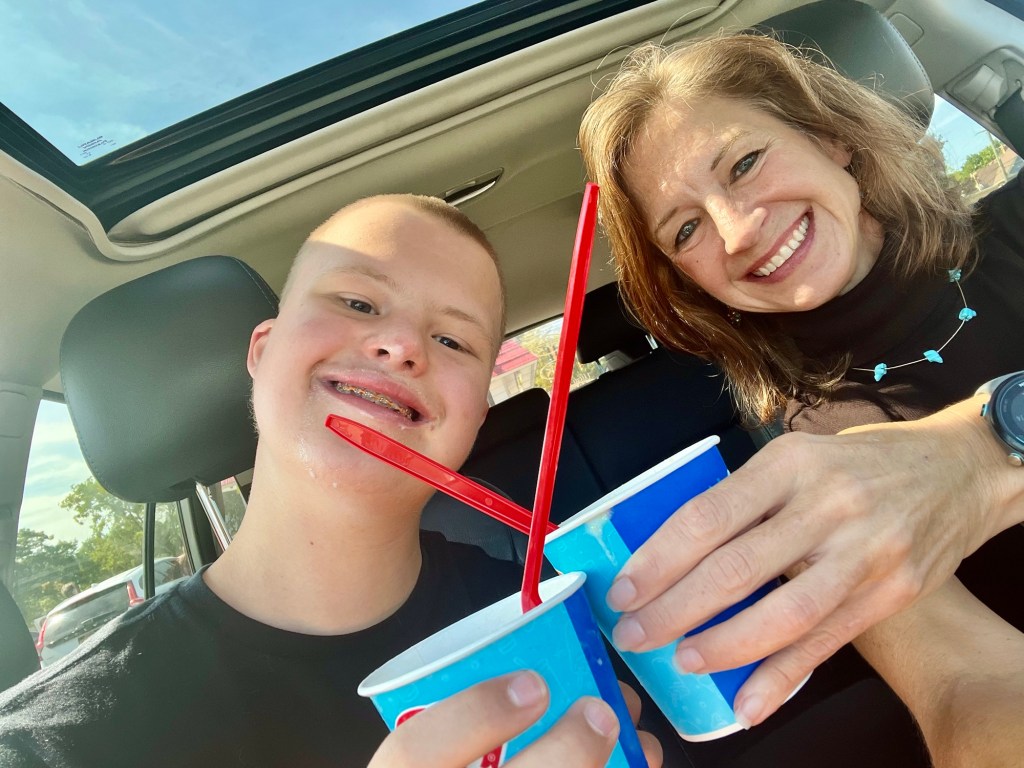


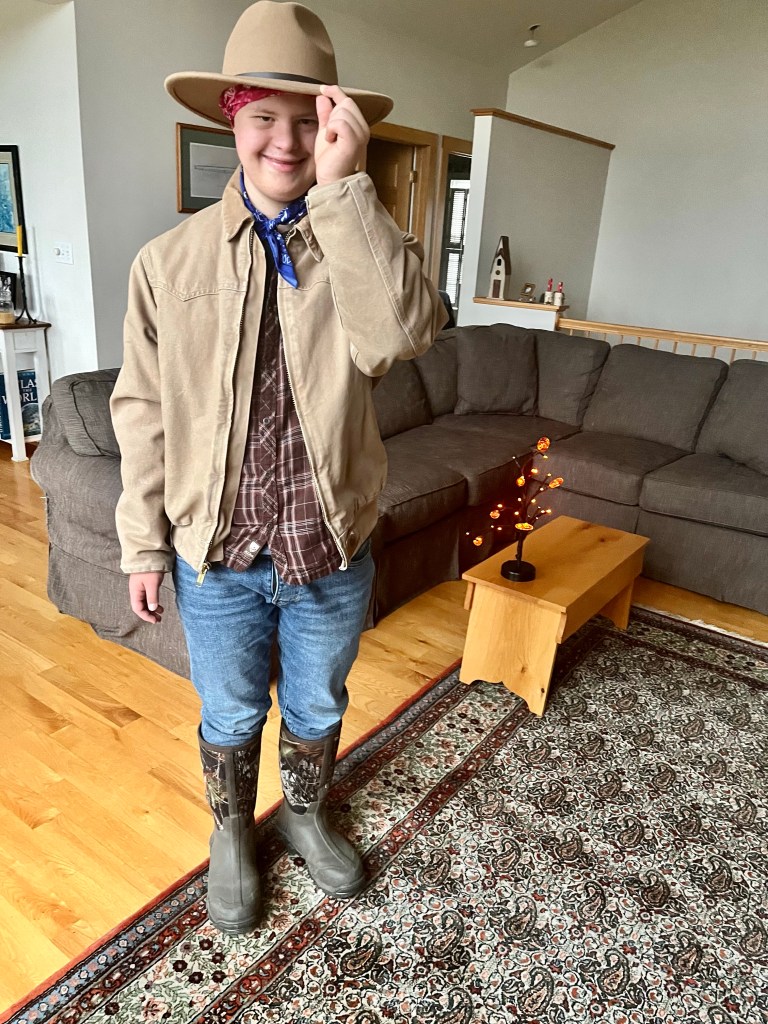


 'WIL'ingness = Willing to Embrace Extra in Life