Perpetual Student

“On page 65 and 66, you said you used creativity and silliness to encourage Wil to do things. How did you think of using silliness?”

“From Wil,” I answered. “He’s the master of silly. He uses it all the time. It’s an incredible motivational tool…for me too!” 

I was the guest author of a book club meeting. The book being discussed was, “Stories of Wil: Puberty Part 1.” Upon answering the question, I realized something I had known but never consciously registered — almost everything I do to motivate Wil was originated by him. 

As I grew into adulthood, much of my silliness faded. It was revived by raising Wil. He adds silliness to nearly everything he does. And so I learned to do the same. Just last week, Wil refused to brush his teeth. I knew if I pressed the issue he would dig his heels in deeper. The night before, Elizabeth showed our family a salsa dance she learned in Spanish class. So I grabbed Wil’s hands and said, “Let’s salsa!” We salsa danced from the living room to the bathroom while I sang, “Let’s go brush, brush your teeth,” to the tune of “La Cucaracha.” The song and dance flipped a challenging morning into a joyful one.

“On page 92,” a reader from the book club stated to me, “you said that ‘I may be missing a lot of clues that someone from the outside looking in could see plainly.’ I find that astounding, that when you were struggling like you were with Wil’s behaviors, that you could step back like that and have perspective.” 

This process of stepping back, too, I learned from raising Wil. Wil’s behaviors, at times, can be challenging and difficult to identify the underlying triggers. When Wil was born, I felt the most stuck I ever have in my life. I knew I needed to take a step forward, but I didn’t even know which way forward was. So I reached out to people who were already living this life, and though the road stretched out long before me, I was guided by those who had a much wider perspective than I did at the time.

On the occasion the reader referred to, Wil was knee-deep in puberty. I was navigating new behaviors I had never seen from him before. Neither his teachers nor I knew what to do. I was receiving almost daily calls from the school. After one such phone call, I pulled into the parking lot at work and broke into tears. I knew Wil was hurting, I was hurting and his teachers were hurting. I was in that stuck place again and didn’t know a way out. I had to go into work so I took a series of deep breaths to calm myself down. I reminded myself there was a solution, I just didn’t see it yet. With each deep breath, I repeated to myself, “there is a solution, there is a solution.” A name popped in my head. Julie Feldkamp. She has been Wil’s teacher consultant since preschool. I called her quickly and she soothed my nerves immediately. She said I was not alone, she had worked with many students with varying behaviors, and we would get through this. We still had a long road ahead of us, but her words pulled me out of the abyss and placed us on the road of progress. 

At the end of the book club, the readers shared how much they learned through Wil’s stories. “As I have, too,” I said.

I may be the author, but Wil is the teacher. 

True Nature

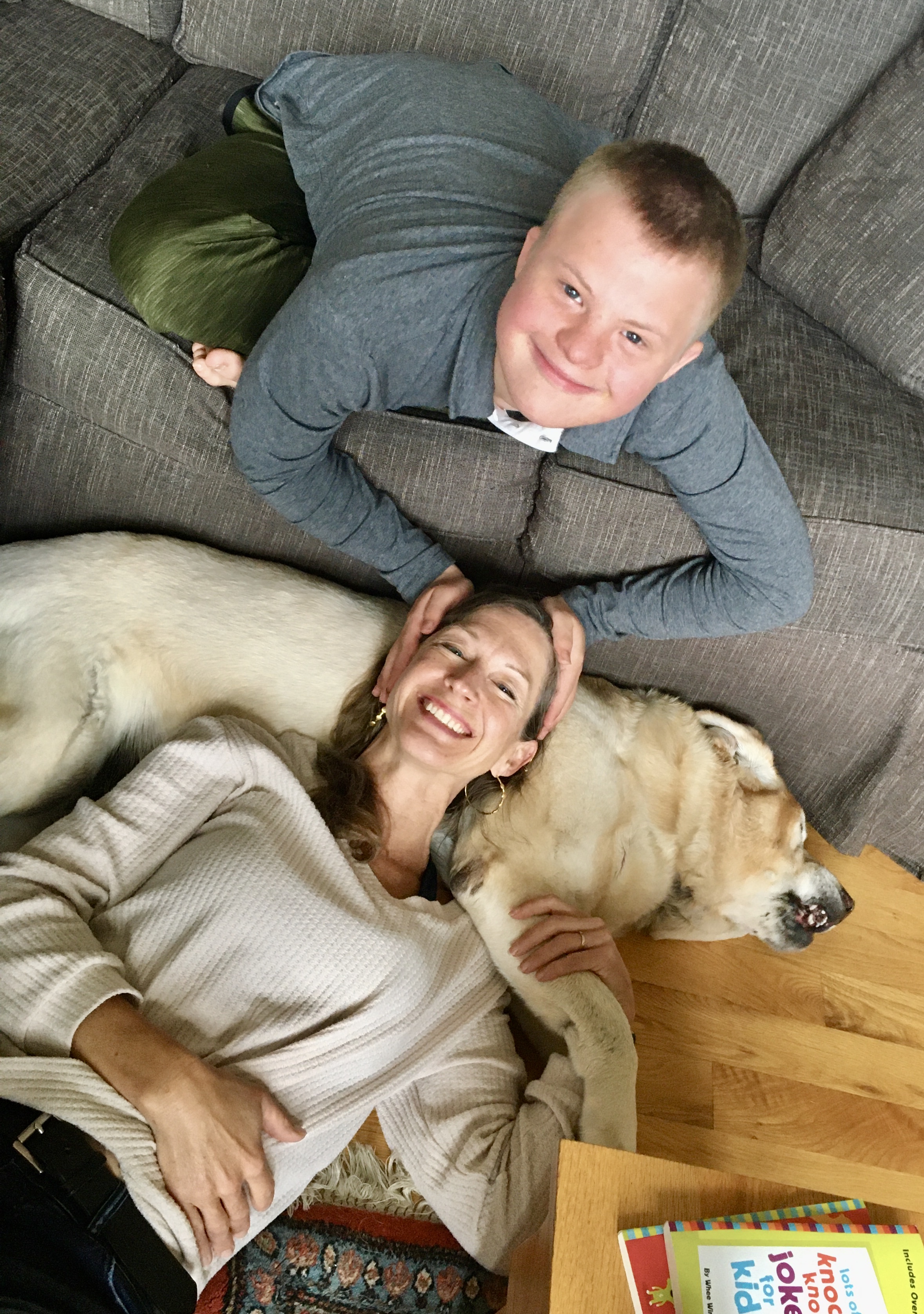
When Wil said, “Walk to the river, Mom,” I left my phone on the countertop, took off my watch and grabbed our mud boots. With the constant tug of a virtually agenda-driven world, I was more than ready to leave behind the volitional tools that bound me to it. Woody, our yellow lab, perked up his ears at the word “walk” and was quickly on our heels as we hurdled out the door.

It was late April and the temps had recently warmed so the bugs were sparse. We reached the tree-cover and squished through mud over imprinted deer tracks. Deep puddles and fresh, bright green undergrowth lined the path. We could now hear the river and it sounded cold. Woody ran ahead and plunged in as if it were a hot summer day. He plodded around the shoreline looking for water bugs that weren’t yet existent, then swam out to the center of the river. He paddled against the current like he was on a treadmill; running hard but getting nowhere. He eventually grew tired of the grind and veered off to the other side of the river and played along that bank. 

Wil slid down a muddy embankment and stretched his legs into the river. His muck boots filled with water. “It’s cold, Mom!” He got his footing and waded out until the water reached the bottom edge of his shorts. Then he reached down into the river and pulled out a smooth, black rock. He held the rock up to admire its sheen, then threw it in the air. “Catch Woody!” 

Woody swam back across the river, even as the rock sank to the bottom; his loyalty to Wil’s call. Wil reached down for another rock, again admired its smooth surface, and tossed it. “Go get it, Woody!” Wil found a few more smooth rocks, taking a moment to admire each one, tossed them, and Woody swam toward each splash. Wil moved on to tossing sticks, which were retrievable for Woody, but watching the two play this game, I saw that winning was not about retrieval. The win for both was in the play.  

A red-headed woodpecker flew across the river, landed on the side of a tall tree, turned his head toward us and called out. He then silently stared at us for a moment, decided we were not a threat, hopped up the tree and went on with his business. 

I sat down on a low, flat rock and breathed in the earthy smell. Green buds popped out on branches all around me. The scene was picture-perfect; and yet I was thankful I had no means of taking a picture as it would steal the nature of the moment.  

Thank you Wil, for leading me on this winding, earthy, budding, flowing, green and boundless path, where there is always something found to admire and the win is in the play. Your true nature always circles me home to mine.

With Chocolate chips on top

“Well, you have enough challenges raising Wil.”

I write about the challenges raising Wil, so it’s expected to frequently hear that, and I’m thankful. I used to hear, “well, he’ll always be happy.” To wrap Wil into one emotion both undermines who he is as a person, and the value of what it means to be his mother. 

There are few constants raising Wil; I live in a guessing game of interpreting his thoughts and ambitions. He very well knows, but he doesn’t always have the words to communicate his thought processes. So I am left hypothesizing, considering, deducing, reaching in and reaching out. One common saying in our Down Syndrome Support Team is: “What worked today may not work tomorrow!” To place Wil in a happy corner is laughably simplistic. He is fully, frustratingly, beautifully, imaginatively, ubiquitously challenging. Aren’t we all in our own multi-dimensional ways? 

I am in daily awe, however, of one constant in Wil’s life. That is how open and loving he lives it. His friends find a level of peace with him. He will never judge them, and that provides an internally settling feeling few other emotions can match. Wil will never grow jaded. Wil remembers slights and hurts, but he doesn’t hold on to them. He travels light. I’m ever the student when it comes to Wil.

Last Thursday night, I sat on the edge of Wil’s bed as I tucked him in and we had a conversation. His school was going virtual again and he’d just had his last day of in-person school for what we hope only lasts 2 weeks. He was feeling sad about not seeing his friends and teachers so we talked it out. Then suddenly he changed the subject. “Mom, pancakes.”

“You want pancakes for breakfast?” 

“No, made pancakes.”

“Oh, you made pancakes in school today?”

“Yes, with Kennedy.” Rachel Kennedy is Wil’s resource room teacher. Sometimes he refers to his teachers by their last names: Campbell, Kastel, Kennedy. 

Then he smiled and held up two fingers. “I made two. With chocolate chips.” 

My heart leapt with joy. That smile of his was for more than just pancakes. It was a smile of connection. A connection made through his own self-initiated words that invited me into his world.  

In Wil’s early school years, there were few words. He would get frustrated, the tears streamed, and he couldn’t tell me why. I could only ask questions, hoping I’d strike something with some accuracy that he would nod to. At times he would nod for the sake of nodding. He desperately wanted to say yes to something. To connect. So I would hug him and hide my tears, aching for the day he could express his own thoughts. You don’t know the value of a word until you know what it’s like to wait to hear just one, please just one word, that tells me what you are thinking.

I used to believe I knew what optimism meant, but I confused it with positivity. Positivity is rather one-dimensional, as is slapping someone, or something, with a happy label without care to delve deeper. Optimism lengthens with patience. Optimism holds on tight with faith. Optimism searches, reaches, climbs, knowing there is an answer, it’s simply not ready to appear yet. Optimism feels sadness but never stops believing. Optimism rejoices as optimism knows it grows through the challenges.

Yes, I have enough challenges raising Wil; as is the reason I brim with optimism. He’s grown my heart to believe with every part of my being…with chocolate chips on top.

Flipping the Coin

“Mom walks very fast,” Wil said.

I looked behind me, and smiled at Wil. “I do walk fast, don’t I? Would you like me to slow down?”

“Yes, please.”

I stopped, my head turned his way as he walked up and stood next to me. I slipped my hand in his, and we walked forward. I was careful to keep pace with him, and not the other way around.

His hand was soft, his smile was sweet, the lights above brighter, and I felt brighter inside, too. All around me life felt softer, higher, more enjoyable. I breathed it in. Wil noticed my breath, and he mimicked my large inhale. We both broke up laughing. I vow to enjoy this pace more often.

Wil flips the coin every day. While some see his pace as a detriment to his quality of life, I’ve come to know his pace as a great asset in absorbing the multiple qualities of life all around us — at any given time or place.

Of Mice and Squirrels – Defying Categories

“Look at me, Mom.” Wil held a sandwich close to his mouth and nibbled bit-by-bit.

“Look at you. Such a cute, little mouse.”

“Ugh, Mom, no. I’m a cute, little squirrel,” he said emphatically, then rolled his eyes upward. Wil is an expert at merging the aspects of childhood with the antics of teenage-hood.

Wil’s voice has grown deeper, there is the faintest hint of peach-fuzz on his upper lip, and he has a huge crush on Luke Bryan’s wife, Caroline (ask Wil what he wants to be when he grows up and he’ll answer, “married”). Wil has a mean left-handed golf swing, he knows every word to no less than 100 songs (99% of which are country), and he gives a hug that melts the grumpiest heart. 

Wil recently ditched watching his favorite show, Doc McStuffins. “It’s a baby show, Mom.” Yet if Sesame Street is playing on PBS, he stops in his tracks for Elmo. It’s the music that moves him, no matter the age it’s intended for. Play anything from Hairspray to FrozenHigh School Musical to Sing, and you’ve got his attention.

I’ve been asked on many occasions what “mental age” Wil is. I think it’s a way for people to understand his abilities. But it’s not a question I can answer. Wil’s interests and skills are much too broad to categorize him under a singular mental age. To understand Wil is to understand his individual interests and skills. And even those could change tomorrow. Except country music — that lives in his soul.

In our Down Syndrome Support Team, we parents share insights on our children’s learning styles in reading, math, and social studies. We exchange stories on their sports, hobbies, and friends. We laugh and cry over the challenges of puberty. Topics most parents discuss. However, many of our stories are elongated and can be quite in-depth. What works today may very well not work tomorrow. There may be a stand-still in progress for what seems like an eternity, then one ordinary day the floodgates of progress fly open. In our world, no day is ever ordinary. Every day holds a surprise gift waiting to be hand-delivered. We know the gift is coming, the surprise is in not knowing exactly how or when. 

Each of our children cross the bridge to a milestone on their own timeline and in their own way. Some bridges have a few extra planks built-in, others circle back to wind forward, and a few crisscross with one another. It’s nearly impossible to speak of our children in linear terms, nor do we want to. I find it highly ironic how often our children are categorized when they defy the boundaries of most any category they are placed in. 

I would know. Just this morning I had mistaken a cute, little squirrel for a mouse. And so life grows…

Lightweight

Think being light-hearted doesn’t hold weight? Even in serious matters? Just ask the fly who won the vice-presidential debate.

Just ask an elementary school teacher how a whisper quiets an entire classroom.

Just ask a parent of a child with Down syndrome.

When Wil is feeling heavy, he has a hard time getting out of his own way. Even in serious matters. He’s decided, in the middle of the Saline post office parking lot, that he could not take another step. He sat down, cross-legged, half-way between our car and the post office door. Smack dab in the middle of the parking lot. Reminding him of the dangers held no weight. It was my singing to him that elevated his attention. It was Elizabeth’s offer of a piggyback ride that lifted him off the asphalt.

Wil can be equally heavy in the morning. No reminders of being late for school hold any weight. It is laughter that puts a new spin on the morning. But then there are the mornings when I’m not feeling the laughter. How do I share it if I’m not feeling it? And yet, every morning Wil demands my laughter or he falls heavier into his pillow.

After our hugs last Thursday morning, I tried a few familiar tactics to lift Wil, but nothing worked. Wil remained heavy in his bed. My reserves were empty. But I knew I had to dig deeper. I had to find something to cut through the heaviness. Somehow, from somewhere, I found myself talking to Wil in a new language: “Wharbargargrrrr, Wil! Grrrarrberrrargh!”

Wil sat up. “Wharbargargrrrr!” He replied.

“Time to – warrgarrrberrgarr – get – brrrgarrr – dressed!” I said.

“Ok – wharargrrrrrr – Mom!” he said. Yes! I thought.

I walked into the kitchen to make his breakfast and hollered back to his bedroom, “Whargarbrrrrgrrr, Wil!” He peaked his head around the edge of his doorway and yelled back “Wharbarrgrrr, Mom!” I laughed and thought to myself, I had not only busted through Wil’s heavy walls this morning; I busted through mine too.

Elizabeth was sitting at the kitchen table, eating an English muffin. “Are you talking Taz?” she asked, meaning the Tasmanian devil cartoon.

“Umm, yep!” I replied. (I guess it wasn’t my language after all. Thanks Taz!).

Though at times I wish lifting Wil were easier, I find myself thankful for the times that he’s not. It is in these times I have learned that somehow, from somewhere, even when I’m not feeling it, I can bring forth a light-heartedness. Once released, it creates a forward-moving momentum powerful enough to bust through the walls of heaviness.

Just ask Taz. He tornadoes through the boulders every day. “Whargarbrrrgrrr!”

Greater Than

“I made my call. I did my charity service for the day.”

Charity, in its truest form, is an act of unselfish love toward another that is less fortunate. In the quote above, however, the act of charity is about the doer rather than the receiver; time out of our day to do “good” for someone we have put in the “less fortunate” category (even if they do not belong there).

In Wil’s eyes, I could be less fortunate than him. Let’s face it, I’ve got one less chromosome than he does and it’s unlikely I’ll gain another. I do judge others; Wil never does. I do hold grudges; Wil never does. I get too busy for hugs; Wil is never does. In fact, he refuses to get out of bed without one. Thank goodness. Wil never forgets to stop and smell the roses. He never forgets to stop and smell the dandelions, either. To Wil, roses and dandelions are equally beautiful flowers.

Aside from my faults, Wil loves me as I am. He never places me in the less fortunate category, though I have much to learn. The closest he’ll get to it is saying, “Oh, you are silly mom,” or “Whoops.” He gives me permission to laugh and start again. His love for me is unselfish, despite my less fortunate ways.

It’s all too easy to look at the world through our own lens. To do “feel good” things for our own good, when we could open ourselves to “lesser things” that bring greater good. I never would have known the beauty of a dandelion if I had not seen them through Wil’s eyes.

What is a weed if only your perspective of a weed? Who has ever experienced the joy of making a wish upon a dandelion fluff and watched your dreams float upon the breeze?

We only value what we see as valuable. And what we see as valuable is a matter of perspective. To open your perspective, you must open yourself to something “lesser” yet higher.

1% by 1%

Last night, there was a story on the news about a young man with Down syndrome training for a full ironman. Yes, a FULL! I fanned my hands in front of my eyes. Just freaking WOW!

His motto was 1%. Every day do 1% better than the previous day. That’s something we can all commit to. A very smart and dedicated man.It’s a feel good story for sure. And it’s a barrier breaker. It’s likely getting shared all over, as it should be. These stories are powerful not only for individuals with Down syndrome, but for all of us. Who knows who just needed that 1% nudge and decided to take it after this story.

I love these front stage stories. But as a parent of a child with Down syndrome, I also want to pull back the curtain. I want to talk to his parents. Beyond the typical questions that are asked. This is how they go: We were very concerned that my child had Ds. But what a blessing! Look what he/she can do now. These are success stories, and we can relate. I know I can.

But I want to go deeper. What is the day to day like? In many ways, our kids need some support. So in giving Wil independence, he’s not always aware of dangers. How did his parents give their son independence? How did that look over time? When did they push? When did they step back? Who put the Ironman idea in his head? Did he discover it? How was he made aware of it? Was it a fitness progression over time? That is the 1% I want. What were the 1%’s each day that added up to this place for your son?

I’m not asking because I want Wil to do an Ironman. If he wants to, more power to him. But my question is more 1%. I want to know the day to day for Wil to reach the highest level of independence he is capable of. I want to know the ideas to open him up to that. I want to know the parts they opened for their son to discover on his own. All the pieces that add up to the whole, whatever that whole may be.

Last night as Matt and I watched this show, Wil was out in the back field collecting sticks. He got cold, so came in grabbed a hat then dug through the glove bin. He picked out one glove and one mitten: one fit the right hand, one fit the left. No time to find a match, there were sticks to be collected. He flew out the back door, grabbed his wagon and pulled it up to the sticks he had piled. He hefted up one after another, stacked them across the top of the wagon (they were too long to fit in the wagon). Then he pulled his wagon down the hill to the fire pit, stopping a few times to retrieve a large stick that would slide off the pile.

I didn’t want to interrupt his busy work, but I also wanted to know where he was. So I went to our master bathroom window, that has a view of where the firepit is. I watched as Wil carefully unloaded each stick into the pit. Some weren’t quite right, so he put them back in the wagon. I yelled out “Good job!” from the window.

“Oh, hi mom! Look, we can have a fire!” Then he marched back up the hill with the remnant sticks and piled them all up on our back porch. I’m not sure of their intentions as they are still there today.

Wil walked in the house, nose pink and declared, “It is time for a 4-wheeler ride now, Mom.” I was nice and snug inside. It was a grey day and dusk. I really didn’t want to go on a 4-wheeler ride. I wanted to get under a blanket on the couch. But that wasn’t happening. I’m so thankful how active Wil is and I want to keep it that way. I don’t want him to get lulled by the couch. Activity for Wil is incredibly important for his health. He has low muscle tone and low thyroid, and his independent activity keeps him fit and energized. So I wasn’t going to put the stop sign on the 4-wheeler ride. Out we went. We zipped around the back field, then up and down the hill about 1,000 times in front of our house. Oh that fresh air! It woke me up, and I felt vibrant. Wil yelled out, “Giddyup Yeehaw!” every time we sped down the hill.

Wil picking up sticks is so much more than that. It’s 1% toward whatever goals he wants to achieve in life. But he needs my support. He needs the people behind the curtain. Every 1% adds up to the whole. It’s so much more than a feel good story; it’s about adding up the 1%’s. Next time you see an inspiring story like this, take a moment to look behind the curtain. To wonder what it took to get to that place. It’s more than an inspiring story, it’s about learning. It’s about growing 1% better every day. And when you do that for someone else, you do it for yourself too. It’s about us ALL being better.

What Grows Us

We all have experiences that “grow us.” We move along in life, doing what we do, thinking what we think, then, whoomp, there it is. The something that “grows us.”It’s impactful enough to rethink the way we think. To resee what we thought we saw. To listen again to what we thought we heard.

What “grows us” changes us, in both perceptible and imperceptable ways. Its a deeply interesting question to me in what “grows us.”

Was it uncomfortable and unwelcome? Was it deeply beautiful? What is something that began as unsettling that turned beautiful? Or the reverse? How did it uproot familiar ways to facilitate such a change?

What opens our eyes to what others are blind to? What drops us to our knees and causes us to look up in thanks, while others cry why me? What song brings a joy to our heart where others hear only noise? What “grows us” opens us to a different level of perception for its impact. What we believe we know for certain — there is always another level of perception to learn from.

Life is forever interesting in the way that it “grows us.”

We All Have Hard Stuff

Yesterday, I just didn’t have it in me. Yesterday, I did not have the patience that on somedays I find miles of.

Some days I wish Wil would just get up and get in the car when I ask him to. Some days I wish I could say, “We are leaving in 20 minutes,” and he’d go get his hat and shoes, and then we’d be on our way. But it doesn’t work like that.

Every time we need to go somewhere it’s a process. I start 30 minutes ahead of time with Wil. I ask him to get his shoes and pick out the hat he wants. Then I check in 10 minutes later. He may have moved closer to his destination, or he may not have. There is more coaxing. And then, eventually, he is ready to go. Or not. This is not once in awhile. This is all the time.

Yesterday Katherine and Elizabeth had driver’s education at 6pm, and that means we needed to leave at 5:30pm. I was making dinner and realized it was already getting past 5pm. It was time to let Wil know it was time to get ready to go.

I walked downstairs and told Wil it was time to go. “Ok, Mom. Hugs.” This is all normal. He’s big on hugs. I’m big on his hugs. That’s the beauty of not being in a hurry with Wil. You never forget to give and receive hugs.

After our hugs, I asked Wil to get his Crocs and pick out the hat he wanted to wear. He said ok and I went back upstairs to continue with dinner. Ten minutes later I didn’t hear any noises from him getting ready to go. I went back downstairs and he was sitting on the floor. He had been good-natured so I wasn’t sure what this resistance was about. With more hugs and coaxing, I told him it was time to go. He refused to budge. As I didn’t understand the reasons behind this particular refusal, I wasn’t sure how to talk him through it. It may have been a simple case of being a teenager and exerting his independence.

At times, Katherine or Elizabeth are able to get him moving. Katherine came downstairs. “Wil, can you get up and hold my hand? I really need a hug.” Wil looked at her and considered this, then ducked his head down. Not a good sign.

At this point, we were running out of time. “Wil, we need to go,” I said. “This is not fair to your sisters. You had plenty of time to get ready, and it’s time to get up.” He looked at me and looked back down. “Come on, one last hug. Can you get up and give me one last hug?” I hugged and tried to lift him up, which sometimes works. He resisted strongly. At this point, we were on the verge of being late. I asked Katherine for help. She asked Wil for another hug, but he sunk down deeper.

Elizabeth came downstairs to see what was happening because it was time to go. We literally had minutes left. I don’t like lifting Wil against his will, but I also don’t like sending him a message that this behavior is ok. We all need to work together – and that’s what we did, well at least three of us. Sometimes you have to do things you don’t want to do. After all of our coaxing and hugging, Katherine, Elizabeth and I lifted him up.

Wil is over 100 pounds, has low muscle tone so can wiggle out of your grip like a noodle, and he was unwilling. We made it up half of the steps to the landing and set him down. I again asked Wil to get up on his own.

“Don’t carry me. I’m not a baby.” Wil said.

“You are right Wil. You are not a baby. You are 13 years old. You are very big. So let’s stand up on your own and walk to the car like a big, grown up 13 year old does.”

No response. We picked him up again and made it to the door. Again, he refused to walk on his own. So we picked him up and made it to the car. Again, he refused to get in on his own. We picked him up again and got him in the car.

This whole process was physically and mentally exhausting for all of us. Wil was withdrawing in the backseat of the car, and I was doing all I could not to break down in a full out ugly sob. I hesitate to use the word traumatic, as that is quite extreme, but in that moment that is the best word I had to describe what I felt. It was a very heavy feeling. I just hated lifting him up like that and making him do something so against his will. But he also needs boundaries and to understand that we need to go and do things when he doesn’t feel like it; that’s just part of life. How to do that, how to balance that, I don’t know. I’ve learned a lot raising Wil, but I have a lot more to learn. And gosh does it hurt sometimes.

He was upset for some time in the car, understandably so. Katherine and Elizabeth seemed like they were fine, and we talked it out. I don’t like that they have to go through this either. This is part of their everyday life too. We never just get in the car and go. For them, everything is a process, and much of it revolves around Wil. Surely it has created great compassion and strength in them that many will never understand fully. I just don’t want this to cause resentment toward their brother. At this point, I’ve certainly seen loss of patience, which all siblings have, but thankfully no signs of resentment, and I’d like to keep it that way.

On the drive home, while Katherine and Elizabeth were at driver’s training, I asked, “Wil, do you know why we lifted you up in the car?”

“Hmph.”

“Wil, your refusing to leave was being very inconsiderate of your sisters. They cannot be late to this class and your refusing to leave almost made them late. When you have somewhere to go your sisters are very considerate of you. I’m asking you to be considerate of them, too.”

“Mom, I’m not listening to you.”

I stifled a laugh – this was so pure, typical teenager. I’m balancing Down syndrome and typical teenager with Wil. On one hand, this comment is a milestone for him; using his words in this way to express his emotions. On the other hand, the mother of a teenager in me was thinking, “Oh yes you will be listening to me.”

After I had picked up Katherine and Elizabeth from driver’s training and we had made it back home, Wil had recovered and was bouncing around in his happy state. Me, not so much. I still felt the deep turmoil in the pit of my stomach. Do you ever have this deep sob within you and it just needs to come out? That’s what I had and I was trying to hold it down in my stomach and process through it piece by piece to make sense of it. Sometimes I can do that. As I process each emotion and what it means, it eases the pain, bit by bit, until the sob has dissipated. This time though, the turmoil remained jumbled up in my stomach and I just couldn’t find the state of mind to unravel it.

Later that evening, we were all sitting on the couch and Matt asked Elizabeth how driver’s training was.

“Well, we were almost late thanks to Wil. But we made good time.” Elizabeth responded.

“What happened with Wil?” Matt asked.

Elizabeth told Matt what happened. I confirmed and filled in a few details.

“It looks like he’s fine now.” Matt said.

“He was upset for some time,” I said. “I hope the message sunk in. It was so hard. I know he’s bouncing around now, but he was really mad at me for a while.”

“Mad at you?” Elizabeth said and looked at me. How did that girl get so smart? She has amazing perspective for her age. Looking at her, and feeling how grateful I am for how both Elizabeth and Katherine roll with those tough times, and take it in stride, the sobs came up to the surface before I could even process what was happening. There was no stopping them then. I didn’t want the girls to see me like that so I went to my bedroom and I let it all out.

Matt came in and hugged me. I was so thankful to have him to hold on to. I sobbed my heavy sobs and held on to him around his waist.

We talked a little bit. I told him how I feel lost with Wil sometimes. That I don’t know the right thing to do when he’s like that. I don’t know if the message was received by him. I don’t like to force him, but reasoning with him is not always an option. And we talked some more. We are also raising two fifteen year old girls and that has its own challenges. There are days I feel like I’m failing, and this was one of them. Then Matt stood up and picked up this little note I keep Elizabeth made years ago that said, “Best mom ever.” He handed it to me. I loved him so much at that moment. More tears.

He said to me, “Everyone has their stuff, Christie. It might look different, and they might not always talk about it, but everyone has hard stuff they have to deal with. This is some of our hard stuff.”

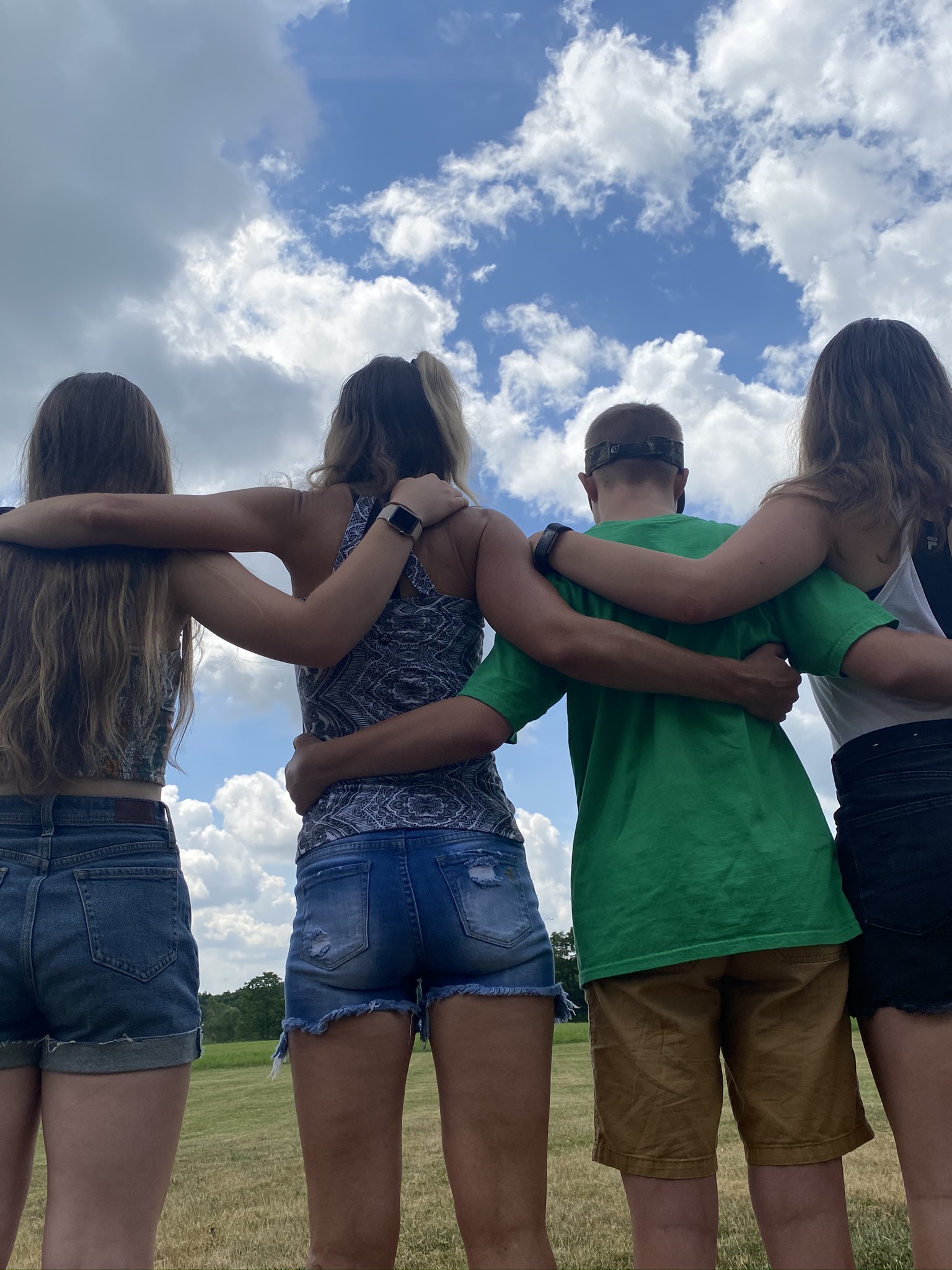
And that’s why I’m writing this now. What compels me the most is for you to see the big picture on raising a child with Down syndrome. Some see our kids as happy all the time. They are not. Some see raising a child with Down syndrome as an always challenging journey. It is not. It’s a mix of everything, just like everyone else’s life. We all have hard stuff, even if it looks different and we don’t always talk about it.

This morning on the way to Wil’s swim lesson, he was jamming to his favorite Luke Bryan songs. The sun was shining and his high spirit was contagious. I couldn’t help but sing with him, as we ventured forward into a fresh, new day.
2E78851E-14F9-4486-9A9F-FE38B66BC1EB