Time after Time

Wil was an easy-going baby. I had to wake him to eat or he would have slept right through his feeding time. Which makes me chuckle now because his favorite subject is “what’s for dinner.”

Picking up his first Cheerio with a pincher grasp took miles of work. I still remember the day he picked up a singular Cheerio not with his fist, but between his index finger and thumb. Each time Wil picks up a pencil, holds a sheet of paper, or places his fingers on a keyboard, I’m brought back to the celebration of a singular Cheerio.

Wil smiled a lot as a baby, and he still does. He is quick to laugh and I know there is a silly bone in there somewhere. Many of his frustrations, and mine, are in his speech delays. When it was quiet and relaxed at night, just before bedtime, I’d sit on the edge of his bed and we’d talk about his day — which consisted of me asking questions and he’d nod or offer one-word answers. On certain occasions, the tears would flow. It was hard for both of us. He simply couldn’t tell me what hurt him, and the best I could do was guess and give him lots of hugs. Now, when he jumps in the car after school and says, “I had a good day, Mom!” and opens up about his day, it’s as if a tidal wave hurls me back in time to the success of a singular word or a head nod.

Wil’s best-loved school assignment is to write his own stories. Getting him to focus can be a task, but when writing or reading his own story, he’s all about it. And you can be sure each story contains a dose of silly. Wil’s most recent story is about an evil bunny who stole a jack-o-lantern. The evil bunny’s name? Luke Bryan, of course.

When I hear Wil read his own stories, a golden rope grabs hold of my wrist. It pulls me back, twisting, turning, weaving through the memory of stories built before this one. There is no place on this intertwining journey forgotten or unrecognized. Each story has been faithfully pieced together, one upon the other, to stand firmly where we do now.

When Wil finished reading his evil bunny story, he knew the next part of his assignment was to type it. “It’s so long, Mom.”

“It is, Wil, but you can do it. One word at a time.” And so he started, one word at a time. Soon he was in the flow of the story, pausing to laugh at his own words.

Nearly finished typing his story, Wil looked at me astounded and said, “Look how far I’ve come!”

Word-by-word, faithfully written, with pauses to laugh; these are the stories that draw you in, indelibly, time after time.

The Ghost of Pain

Not too often, but every once in a while, and it happens when Wil is doing something active like playing basketball or fishing, a transparent form of Wil superimposes himself over the real Wil.

The transparent Wil moves and plays in perfect time with the real Wil. The only difference is the transparent Wil’s limbs move fluidly, and are slightly longer and lither; his eyelids rounder, his ears higher, his hair wavier.

Just like a ghost from the past, the transparent Wil never announces his arrival. I’m both struck with shock and familiarity when he shows up.

I used to question myself when these transparent visions would appear. Deep down I know my acceptance of Wil’s diagnosis. I took the very steps to full acceptance myself, because no one can take those steps for you. You can be supported, lifted up, and cheered on, but it is you who must cross that very finish line on your own two feet.

I crossed the acceptance finish line long ago. So why do these visions appear? They don’t come often, but shouldn’t they have long faded into the past?

But that’s not the way it works. When Wil was a baby, and I was on my journey to acceptance, I would stare at his almond shaped eyes, cup my hand over his short-stubby fingers, and find myself falling in love with all the features that initially terrified me. The features that are considered “markers” for Down syndrome.

But even with acceptance, sometimes the brain just wonders. When I see these superimposed visions, they are not filled with longing. They are not filled with pain. They feel more like observations. And that is why I can accept the visions too.

I’ve learned so much with this acceptance process. Acceptance always starts with a deep pain. A pain surrounding something you did not expect. A pain that wants to make a home in the pit of your belly and never leave.

Sometimes, though, you have to sit with that pain in your belly for a while. Let it burn down deep. Let it light it’s fire until it’s too painful for you to let it stay. And there will be so many well-meaning people saying to call out for help, and though you desperately need help, you don’t exactly know what kind of help you need. So you have to sit with it. Feel it. Assess it. Journal it. Hold a friend’s hand while feeling the fire. Share what the fire feels like. Don’t paste over it – don’t try to make it look prettier than it is. Don’t stuff it down, don’t cover it. It will burn its way back up with a fury. Just don’t sit with it too long. Or the pain will become part of you. It will hurt, but it will be habit. And you owe yourself more than that. When we find our way out of the fire, it’s never in the same place where it was set.

When I see the transparent Wil, he doesn’t threaten my acceptance. Because I sat with him when he was a fireball of pain. I felt my loss for him. I held my friends’ hands and talked about him. I made peace with him. And I let him go.

I’m not sure our pains ever leave, but how we look at our pain is what changes. Now when I see transparent Wil, he is a reminder of how far I have come on this journey. How I can sit with the pain. How I can let it go, even when it comes back.

What They Can’t Tell You

Wil ran up to me, then reached into his pajama pants pocket. He pulled out an adhesive mustache and stuck it under his nose. “Look at me, Mom!” He leaned his face so close to mine that I saw double.

“You are so close I can’t see you!” He stepped back, his mustache upside-down, the edges tickling his cheeks. He smiled at me with that upside-down mustache and I thought, this is what they can’t tell you.

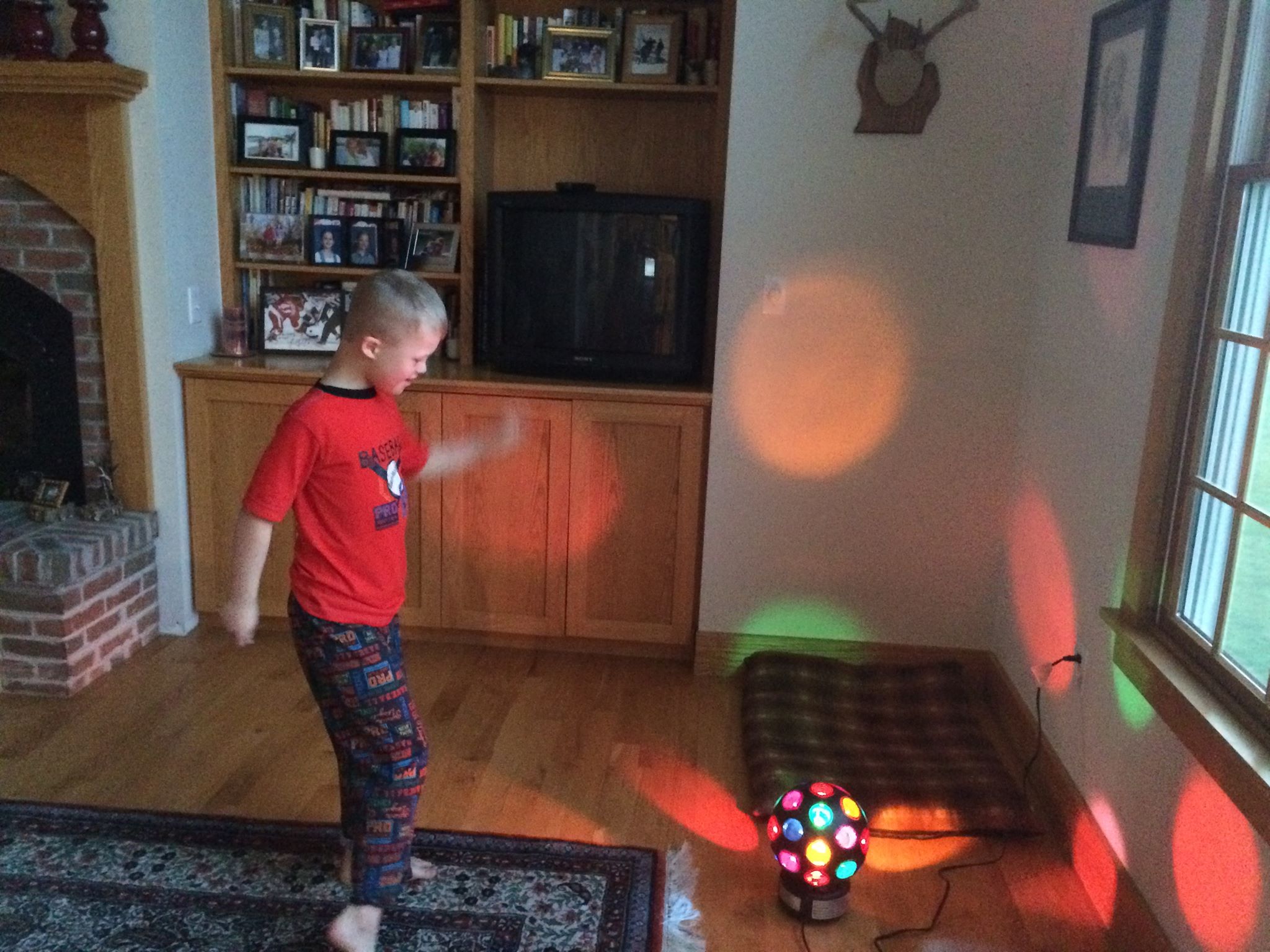
The silliness started at about 7:30 that morning. Wil busted out of his bedroom, in his stripe-legged pajamas, the music from his CD player trailing behind him. He placed his hands on the living room floor and kicked his bare feet up in the air. “Look at me, Mom!”

“Look at you, Fancy Pants! Nice moves.” Though I’m a coffee drinker, there is no amount of caffeine that can lift me higher in the morning than Wil’s dance moves. It’s like being handed a fistful of balloons and feeling your feet leave the ground.

Sadly, I had to bring us back to earth. It was time to log in to school. “Wil, you look very handsome in your mustache. How about you show off your mustache in class? You are going to be late if you don’t log in now.”

“Ugh, Mom, no.” He flopped himself on the floor then laid face-down.

I dropped to the floor, laid on my belly and put my face close to his head. In a deep, sing-songy voice I said, “I see you! Time to log in to school, Wil.”

He lifted his head, leaned his forehead into mine and mimicked my deep sing-songy voice, “Ok, Mr. Mom.” Then he started laughing. When Wil laughs, he laughs with his whole body. I thought, this is what they can’t tell you.

They can’t break through your tears, into your hurt heart, after you learn your child gained one extra chromosome, and explain how a smile under an upside-down mustache, a leg-kicking pajama dance, and a body-racking belly laugh on the floor will make you feel like you hit the jackpot.

Because you did. You just have to live it to know it.

Open Book Ice Cream

My high school science teacher was amazing. And I had very little interest in science. He practically leapt off the floor explaining the periodic table. It was like someone just put this amazing hot fudge sundae in front of him and he couldn’t wait to dig in.

What amazed me the most was that he taught this same lesson again and again, year after year. Yet every single day, he brought the excitement. To that same old periodic table. Everything fit in this nice, little box. The combinations, even if dynamic, were predictable. No surprises. I was bored out of my mind. But I loved my teacher. He almost made me want to love science, just because I loved his enthusiasm for the subject. 

Then, in college I discovered blue book tests. I could scrawl my thoughts, in glorious freehand, across the blissfully empty white pages with pale blue lines. An empty white page to me is one of the most beautiful sights there is. And to take your own pen and feel the flow under your own hand, now we are talking digging into rich, luscious hot fudge sundaes!

And I could make it a different sundae every day! Carmel on smooth, groovy days. Strawberry on fresh, sticky, summer days. Pineapple when I was feeling prickly and tart. Blue books were so beautifully, uniquely open-ended — there were no predictable combinations when interpreting a book or poem, even if the character’s names never changed. Every person is full of surprises!

When Wil went from preschool to kindergarten, he was able to string beads — big beads with big strings. But he had to take a test to evaluate his skills. In the test, he was to string a small bead with a small string. He couldn’t do it. There were only two boxes to check. A yes box and a no box. 

As a result, Wil entered kindergarten testing at a 6 month old fine motor skill level. He was well beyond that. The test failed, Wil didn’t. The same thing happened when Wil went to his 1st endocrinologist. Wil didn’t fit in the predictable boxes. As soon as I checked the “no box” that he hadn’t achieved a certain skill, I was told to skip to the next page. “But, wait, he can do some of the other skills on this page.” “No, he can’t.” Was the answer I received. Where was the blue book for me to fill out about my unpredictable son?

Upon the news of Wil’s kindergarten testing results, his speech therapist spoke up and said that there will be very open communication between Wil’s preschool teachers and Kindergarten teachers. That though the test measured certain skills, it will be the open communication that determines where Wil will start with his ability level. I felt the beautiful, crisp new pages open upon her words. 

I also found a new endocrinologist. I knew she was the one because when I told her of our experience, she handed me a blank sheet of paper along with the test. She said to write down all the skills the test does not cover and we’d go from there. Hot fudge sundae, anyone?

On February 5th, 2007, I learned first-hand that you can change just like that. That the person you were one second can change in the next. I couldn’t force Wil to be a typical boy. My choice was to learn what all of this meant and to write our own pages with it. That is why I’m deeply offended by any claims to “cure” Down syndrome. He is a beautifully, varied and valuable human being and his story is just beginning to be written. Why burn the pages when being part of the story is so much more meaningful?

I loved my science teacher even though I never grew a love for science. What I learned most from him is we all have our different passions. And not a single one of us fits in a perfect, little box. That may be why he felt the love for his periodic table. How everything had an answer when life didn’t. And for that, I love my blue book pages. Where I can scrawl out, in long free-hand, the ever changing and evolving interpretation of what’s around me. As long as we can make our life new every day, be it by the periodic table or a blue book, then it will be a place we can’t wait to dig into…and we get to choose the topping! 

Yippy!

Wil was sandwiched between Katherine and Elizabeth in a 3-seater row. At 10 years old, Wil had made this flight to visit his grandparents nearly as many years. Though nestled between his sisters, Wil reveled in his independent position across the aisle from me.

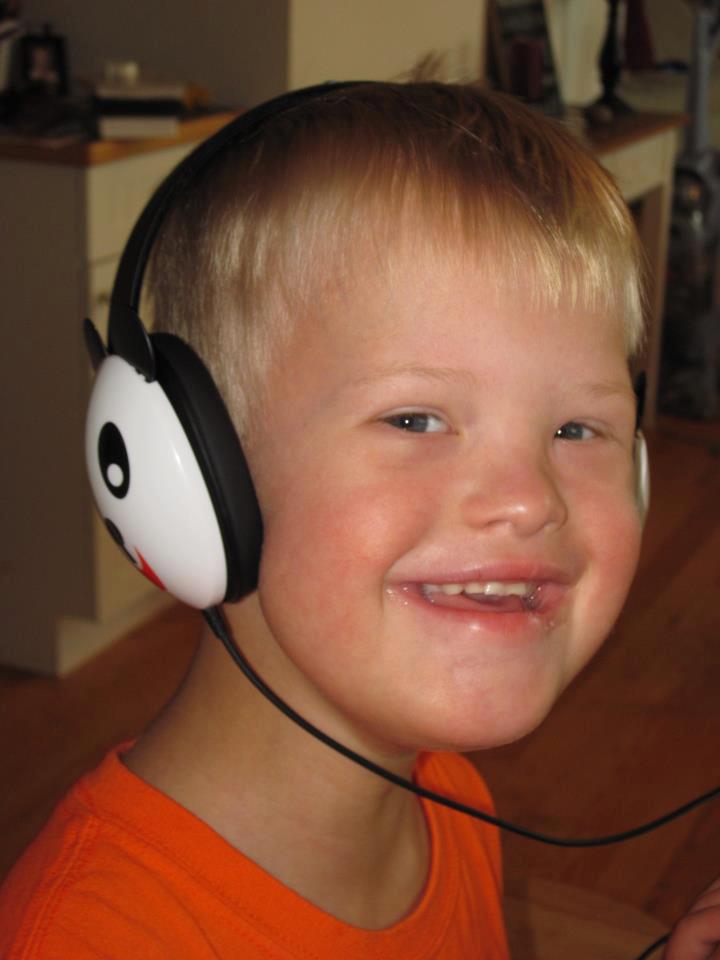
The first two hours of the flight were without incident. Then a high-pitched yipping sliced through the last hour of our flight. Wil immediately clamped his hands over his ears and folded himself in half (a hypotonic trick), his chest directly on top of his legs. A tiny dog, seated in the row directly in front of him, would not let up its rant. Elizabeth snapped her head in my direction. I read her mind instantly: Where were Wil’s noise-cancelling headphones? I thrust my finger at Wil’s carry-on bag in front of his seat. She grabbed the headphones and placed them over Wil’s ears.

Have you ever watched a movie barely noticing a curse word, but when you watched the same movie with your kids you were shocked at how many curse words there were? That is how loud noises are when I’m with Wil. I know they can pop up unexpectedly, even in familiar situations, and I need to have noise-cancelling headphones at the ready.

Wil was in such an agitated state from the tiny dog’s yipping, that the headphones didn’t calm him. I pulled him up from his seat and sat him on my lap across the aisle. While soothing Wil, I was startled by a flight attendant standing near my seat. She stood in such a way that she blocked Wil’s view from the yipping dog. She handed Wil a packet of pretzels, then discreetly showed me a snack size Milky Way bar. I nodded my head.

“Here, Wil,” she said, handing him the Milky Way bar. “This is what you do. Take a bite of pretzel, then a bite of chocolate. It’s the best.”

I couldn’t tell if Wil was marveled by this idea or by seeing a new, friendly face. Either way, he was blissfully distracted from the yippy background noise. Marcie introduced herself then asked Wil how old he was, his teacher’s name and what he liked to do for fun. Wil made a few sideways glances past Marcie toward the yippy dog, then she’d draw back his attention by asking another question.

When the pilot announced our plane’s descent, I knew Wil would need to return to his seat. Marcie smoothed the way with two extra Milky Ways (“for later,” she said with a wink). She also gave Katherine and Elizabeth a few Milky Way bars for being the best sisters.

Wil made his way back to his seat, nestled again between his best sisters, all richer for their Milky Way bars and for knowing Marcie.

To this day, 3 years later, I could swear I saw a hazy band of light following Marcie as she made her way down the aisle.

Lightweight

Think being light-hearted doesn’t hold weight? Even in serious matters? Just ask the fly who won the vice-presidential debate.

Just ask an elementary school teacher how a whisper quiets an entire classroom.

Just ask a parent of a child with Down syndrome.

When Wil is feeling heavy, he has a hard time getting out of his own way. Even in serious matters. He’s decided, in the middle of the Saline post office parking lot, that he could not take another step. He sat down, cross-legged, half-way between our car and the post office door. Smack dab in the middle of the parking lot. Reminding him of the dangers held no weight. It was my singing to him that elevated his attention. It was Elizabeth’s offer of a piggyback ride that lifted him off the asphalt.

Wil can be equally heavy in the morning. No reminders of being late for school hold any weight. It is laughter that puts a new spin on the morning. But then there are the mornings when I’m not feeling the laughter. How do I share it if I’m not feeling it? And yet, every morning Wil demands my laughter or he falls heavier into his pillow.

After our hugs last Thursday morning, I tried a few familiar tactics to lift Wil, but nothing worked. Wil remained heavy in his bed. My reserves were empty. But I knew I had to dig deeper. I had to find something to cut through the heaviness. Somehow, from somewhere, I found myself talking to Wil in a new language: “Wharbargargrrrr, Wil! Grrrarrberrrargh!”

Wil sat up. “Wharbargargrrrr!” He replied.

“Time to – warrgarrrberrgarr – get – brrrgarrr – dressed!” I said.

“Ok – wharargrrrrrr – Mom!” he said. Yes! I thought.

I walked into the kitchen to make his breakfast and hollered back to his bedroom, “Whargarbrrrrgrrr, Wil!” He peaked his head around the edge of his doorway and yelled back “Wharbarrgrrr, Mom!” I laughed and thought to myself, I had not only busted through Wil’s heavy walls this morning; I busted through mine too.

Elizabeth was sitting at the kitchen table, eating an English muffin. “Are you talking Taz?” she asked, meaning the Tasmanian devil cartoon.

“Umm, yep!” I replied. (I guess it wasn’t my language after all. Thanks Taz!).

Though at times I wish lifting Wil were easier, I find myself thankful for the times that he’s not. It is in these times I have learned that somehow, from somewhere, even when I’m not feeling it, I can bring forth a light-heartedness. Once released, it creates a forward-moving momentum powerful enough to bust through the walls of heaviness.

Just ask Taz. He tornadoes through the boulders every day. “Whargarbrrrgrrr!”

Drop It To The Floor!

When Wil drops himself on the floor, there are times when someone who doesn’t know him well will step up and say, “Let me try.”

“Have at it,” I say. Then I sit back and observe what I already know is going to happen. I can’t always predict the exact words, but I do know the tune with which the words are played. It’s a sweet tone; syrupy sweet. The notes tilt up as they go, the sentence always ending in higher notes.

I know this tune, I’ve used it before. But it’s not getting him off the floor. Though the tune is sweet, the words are still based in someone else’s agenda, not his. And he knows that. If the Pied Piper came to town, Wil would be the sole remaining child. Unless, of course, the Pied Piper was well-versed in Luke Bryan. Then Wil would fall into step.

If it’s not his tune, he’s not budging. Though he may appreciate the sweetness of the notes, underneath it he knows it for what it is. Your tune, not his. No amount of syrup is going to slide him in your direction. Unless of course, it’s in a bottle of Sprite. Then you’ll be singing his kind of song.

At home, if I want more of a cool, calm vibe, I’ll ask Alexa to play “Van Morrison Station.” Wil will throw his head back and holler out, “Ugh, Mom! Alexa play Luke Bryan Station!” Then he’ll start breaking out his latest dance moves. “Watch this, Mom!”

It’s not that hard to get Wil off the floor, unless, of course, you aren’t playing his tune.

An Evil Queen’s Observation on Acceptance

I am often placed in the position of being teacher. Not by trade. Not by degree. But by raising a child with special needs.

My favorite way of learning is through storytelling. Allow me to introduce you to the cast:

Grumpy: Lila

Happy: Ashley

Sneezy: Seeger

Sleepy: Sarah

Doc: Olivia

Dopey: Lillian

Bashful: Rebecca

The Prince: Wil

The Evil Queen: Yours truly

I, the Evil Queen, trailed 10 feet behind the Prince, Grumpy, Happy, Sleepy and Doc (we’d join Dopey and Bashful later). The Prince’s red cape billowed behind him as he ran with his knit-capped friends of varying personalities. Grumpy created the route; it was one she had carefully constructed over the years that yielded top candy output. The friends fanned out in the side streets, then narrowed 2×2 down the sidewalks– Sleepy ran ahead to talk with Happy; Happy later dropped back to put her arm around The Prince; Grumpy sped up to catch Doc, Sleepy shared a story making Doc laugh. They were a letter swapping word game; switching it up, creatively making sense in any order.

The Evil Queen lingered behind, careful not to put a kink in the easy moving chain. The Evil Queen’s role this Halloween night was to walk the Prince back to Grumpy’s house when he showed signs of tiring. Other than that, she was merely the observer.

As the friends made the climb up to Chi-Bro Park, the Evil Queen saw it was time for the Prince to take a rest. The Prince received a round of hugs from his friends, and he and the Evil Queen made their way to Grumpy’s. (This particular Prince is a fan of Luke Bryan, so he and the Evil Queen jammed out until the rest of the crew returned.)

When Sneezy, Grumpy, Happy, Sleepy and Doc returned to meet up with the Prince and Evil Queen, they all headed to Sneezy’s house for a haunted woods walk and bonfire. There they met up with Dopey (Bashful joining in via zoom). The friends banded together and each carried a flashlight, that doubled as a whistle, to survive the scares from the Evil Queen, Sneezy’s parents and any other spooky spirits that hid in the haunted woods.

Having successfully survived the haunted woods, the friends sat around the bonfire. They flashed their flashlights and blew on their whistles in between conversation. As the pitch of the whistles increased, the Prince became overwhelmed as he is sensitive to loud noises. Without warning, the Prince jumped up out of his lawn chair and disappeared into the dark.

In perfect unison, Sneezy, Grumpy, Happy, Sneezy, Sleepy Doc and Dopey lifted out of their chairs and banded together. Flashlights in hand, they ran together into the dark: “We are so sorry, Wil! We just forgot.”

“That’s ok,” was the reply I heard from the dark. The Prince and his friends began a new game in the dark with their flashlights, but not the whistles.

One afternoon at school, Wil became overwhelmed during the lunch hour. He got out of his chair and bolted. He was chased by a few students and teachers. When he reached the hallway, he plopped himself down on the floor. The well-meaning students and teachers that followed him tried their best to coax him back up. He wouldn’t budge. Seeger (aka Sneezy) stepped up and asked that Wil be given some space. She explained that he needed to feel back in control of his environment. How did she know this? Because she read “Stories of Wil: Puberty Part 1.” She wanted to read this book to better understand her friend. How cool is that for a 13-year-old? Sure enough, Seeger’s suggestions got Wil off the floor and back in the lunch room.

There are buddy programs in schools that pair typically-developing students with students who have special needs. While many of these programs are viewed as teaching typical kids how to have a better understanding of those with special needs, they are really about creating an understanding that we all have differing needs. And that can change on a daily basis, especially when you are in middle school! We all are a multi-letter swapping word game that requires creativity in putting the pieces together. Wil and his friends do not play by their differences, they play by their understanding.

Though I am often placed in the position of being a teacher, in this story I am the observer. Grumpy put me there. She asked that I be the Evil Queen. Grumpy knew that if the Evil Queen was available in the background, the Prince could join his friends for a night of trick-or-treating. Grumpy not only mapped the trick-or-treating route, she also creatively put the pieces together.

I hope you have learned as much from the story of Grumpy, Happy, Sneezy, Sleepy, Doc, Dopey, Bashful and The Prince as I have. May you find yourself in one of them (or maybe a few of them depending on the day). Play by understanding. Shuffle the pieces. Get creative. You never know who may be learning from your story.

Greater Than

“I made my call. I did my charity service for the day.”

Charity, in its truest form, is an act of unselfish love toward another that is less fortunate. In the quote above, however, the act of charity is about the doer rather than the receiver; time out of our day to do “good” for someone we have put in the “less fortunate” category (even if they do not belong there).

In Wil’s eyes, I could be less fortunate than him. Let’s face it, I’ve got one less chromosome than he does and it’s unlikely I’ll gain another. I do judge others; Wil never does. I do hold grudges; Wil never does. I get too busy for hugs; Wil is never does. In fact, he refuses to get out of bed without one. Thank goodness. Wil never forgets to stop and smell the roses. He never forgets to stop and smell the dandelions, either. To Wil, roses and dandelions are equally beautiful flowers.

Aside from my faults, Wil loves me as I am. He never places me in the less fortunate category, though I have much to learn. The closest he’ll get to it is saying, “Oh, you are silly mom,” or “Whoops.” He gives me permission to laugh and start again. His love for me is unselfish, despite my less fortunate ways.

It’s all too easy to look at the world through our own lens. To do “feel good” things for our own good, when we could open ourselves to “lesser things” that bring greater good. I never would have known the beauty of a dandelion if I had not seen them through Wil’s eyes.

What is a weed if only your perspective of a weed? Who has ever experienced the joy of making a wish upon a dandelion fluff and watched your dreams float upon the breeze?

We only value what we see as valuable. And what we see as valuable is a matter of perspective. To open your perspective, you must open yourself to something “lesser” yet higher.

I AM NOT GRATEFUL

November is the month of gratitude, so I thought it timely to share this previously written post on why…

I AM NOT GRATEFUL

I was not grateful when I learned Wil had Down syndrome.

I am not grateful my marriage was challenged by our differing timetables of acceptance.

I am not grateful my relationships with certain teachers have been strained by differing ideas of how to approach Wil’s behaviors.

I am not grateful that I’m entering an era of hormones, girlfriends, and widening gaps within Wil’s peer group.

I am not grateful for the stereotypes and ignorance my son will experience.

I do cry. I do get angry. I do get frustrated. I do things I regret. I am not grateful for these things.

I am grateful for a deeper level of acceptance I would not have known if Wil didn’t have Down syndrome.

I am grateful my husband and I now share a deeper bond and respect for the challenges we worked through.

I am grateful that each day, month, and year, I learn more about special education laws, advocacy, and the fact we are human and make mistakes.

I am grateful for second chances.

I am grateful that I have come to know a strong group of proactive parents I can laugh with and learn from. I am grateful to call these strong, compassionate people my friends.

I am grateful these experiences have compelled me to widen my perspective.

I am grateful for the advancement of acceptance so my son may have increased opportunities for a fulfilling life.

I am grateful I can contribute to the advancement of acceptance and increased opportunities.

I do smile. I do rejoice. I do feel joy. I do things I am proud of. I am grateful for these things.

I am grateful my gratitude creates a deeper well for the times I am not grateful.