Girl Time

Wil sat down on the bench. I sat next to him and watched a droplet of sweat slip down the side of his forehead. It was 88 degrees and he’d already been walking for 90 minutes. Katherine was to our left crouched in front of a hyena. She snapped a few close-up photos. The hyena was belly up, legs splayed, mouth open in what I swear was a smile, pink tongue hanging to the side, with the cool earth on his back and the hint of a breeze ruffling his coat; just like our pet Labrador on a hot summer day. Elizabeth and my dad were to our right watching an anteater splash himself in a pond. 

I knew there would be a point when Wil abruptly declared himself done with the zoo. I was impressed, though, that he’d made it this far. Earlier that morning, Wil jumped out of bed, stripped off his pajamas, took his still damp swimsuit off the dry rack, and pulled it on as fast as you can pull on a damp swimsuit. He jumped in my parent’s pool and played for 2 hours forgetting all about breakfast, until I reminded him it was time to eat and head to the zoo.

Wil and I sat together on the bench talking; I knew the only place he’d go from there was the exit door. After about 10 minutes, Katherine, Elizabeth and my dad joined us at the bench. Katherine and Elizabeth wanted to stay for the safari show which was in 2 hours. We came up with a plan: my dad would take Wil out to eat while Katherine, Elizabeth and I completed a tour of the zoo and watched the safari show. After that, we’d meet my dad and Wil in the parking lot and head back to my parent’s condo.

It’s a balance raising typically-developing children and a child with Down syndrome, but not an equal one. If my dad wasn’t at the zoo that day, then Katherine, Elizabeth and I would have left after we coaxed Wil up from the bench. Or, I would have sat with Wil while Katherine and Elizabeth continued the zoo tour on their own, because when Wil is ready to go, there is little chance of convincing him otherwise. Katherine and Elizabeth are deeply patient, compassionate and understanding individuals for that fact. They haven’t been outwardly taught to be that way; it’s part of their daily lives and ingrained in who they are. 

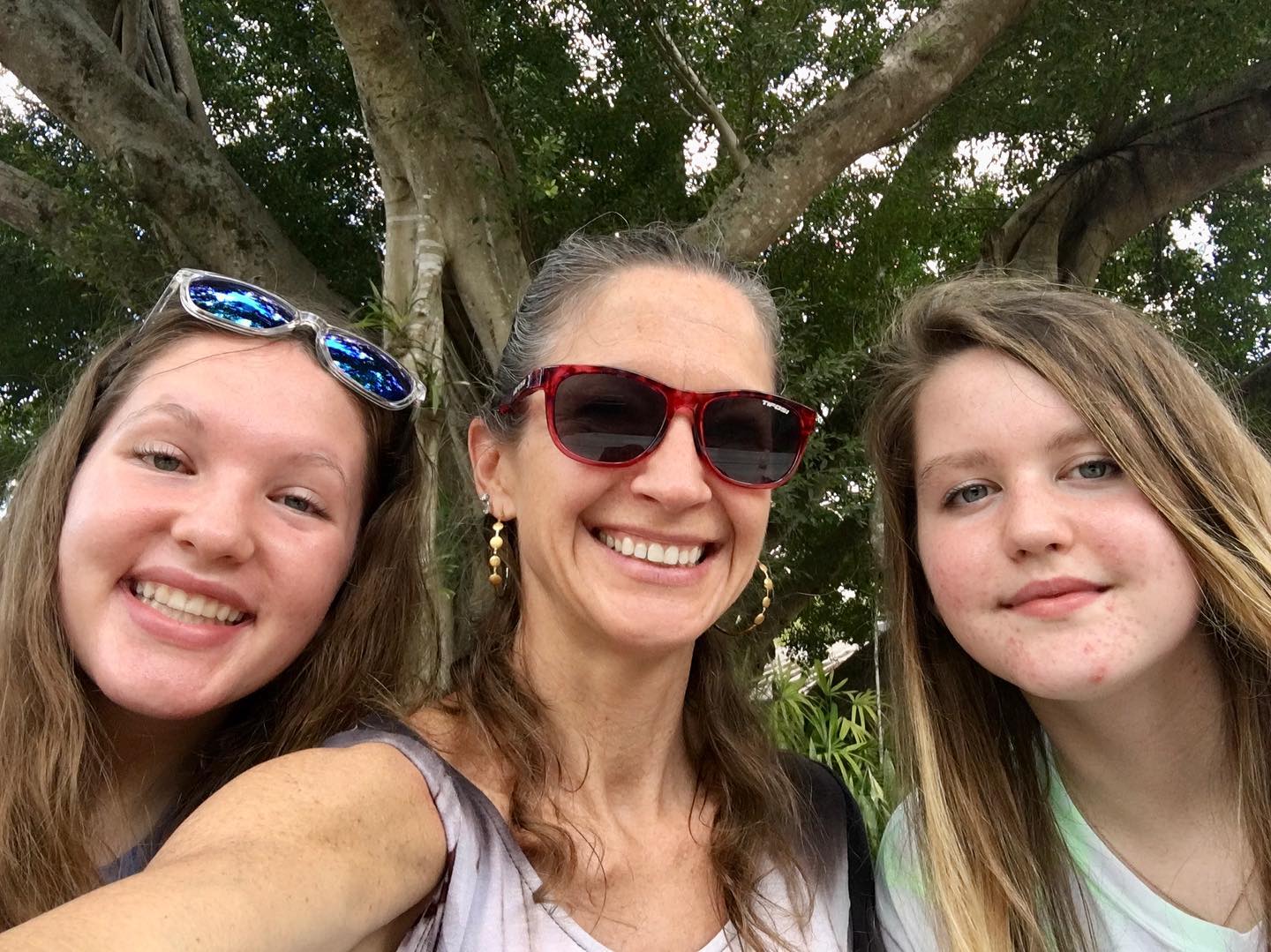
After my dad and Wil headed off to the car, Katherine, Elizabeth and I visited more animals, took pictures, browsed the gift shop, and watched the safari show — all on our own time, at our own pace, in our own way, just us girls. As we sat at a picnic table and sipped $4.00 lemonade under the shade of the Naples Zoo banyan tree, I took notice of the way the roots, stump and branches articulately wove together over time to create this magnificent tree. 

I sent a silent nod of reverence to the banyan tree, as we share the knowledge that balance is not always created in symmetry; that intertwining segments woven together over time form a foundation well-grounded. I looked my girls, and thought of sharing this, but they are teenagers and would have rolled their eyes. Instead I told them how proud I was of them, how thankful I was for this time together, and that one day they would also know their deep magnificence. 
Getting There

“I need him to hand me his boarding pass ma’am,” the security agent behind the podium said. 

“Wil, here, please just hand her this pass.” Wil turned away from me.

“Is it at all possible for me to hand it to you?” I asked the security agent. “Or answer any questions? I’m not sure if you can tell,” (Wil had his balaclava-style mask on) “but he has Down syndrome. Sometimes he gets stuck.” 


“He needs to hand me his boarding pass ma’am.” 

“Wil, buddy, you’ll be swimming in Grandma and Grandpa’s pool soon. Here, just hand her this boarding pass and we can go.” Wil didn’t move. “How about we hand her your pass together?” If I pushed further, I knew he’d be on the ground and then we’d have a real problem. I saw the same thought cross Katherine and Elizabeth’s faces. 

“Is that the mask he is wearing?” The security agent asked. “Well, he can’t wear that,” she said. “He has to wear one of these.” She handed me a blue surgical-style mask. I understand there are procedures to follow. I also know there is a time for grace.

“His ears are lower set and he has virtually no bridge to his nose,” I said, “so this style of mask isn’t very feasible for him.” I heard the security agent mutter an “oh.”

“We’ve flown with the mask he has on before without issue,” I said. I was starting to sweat. I knew I had a short amount of time before Wil was going to be immovable. Wil’s excitement about our trip to Florida was the cause of his overwhelm (he’s typically easy-going on flights home), so I forced myself to remain calm. 

And then grace happened – a security agent tending the line walked over and said to me, “It’s ok, go ahead.” She motioned to a security agent to our far right, who came over and said, “Come with me.” Wil thankfully followed her. As we walked away, I overheard the security agent in line say to the security agent behind the podium, “It’s ok, you were following the rules.” 

As we went through the security process, Wil refused to take off his backpack. The security agent told me I could empty the contents of his backpack, and he could walk through the scanner with it on. Wil felt the release of resistance, and he soon released his. We made it through the rest of the security process with few further hesitations. I gave the security agent a gratuitous thank you. 

At the gate, I made sure Wil didn’t sit down until we boarded the plane. I wasn’t about to lose our forward momentum! Once on the plane, Katherine, Elizabeth and Wil sat three-in-row; I sat directly across the aisle. The man seated next to me bumped my elbow to get my attention. He wore the same balaclava-style mask as Wil; I wondered if he was given issue for that. He lifted up his phone to show me a photo of a young girl with a bright smile and light-brown hair. She had Down syndrome. “She’s my niece,” he said. “She’s eight, the same age as my son. I love her like my daughter.” 

“She’s beautiful,” I said. 

“I know how it is,” he said, “some may not understand our blessings.” 

“Yes, for some it just takes more time to get there…”

A Love Story

The girl stood behind the hospital wheelchair and clasped the narrow top of the plastic seat. Her mother, standing beside her (both about the same height) grabbed a handful of the girl’s pale blue shirt, directly at the small of her back, and wrapped it tight around her fist. The girl stepped forward, wobbly and deliberate, landing each step on the outside edge of her shoes, with a deeper bend in her left leg. I would guess the girl to be fifteen or sixteen years old, not solely by her height, but by her desired independence – her mother’s expert grip allowing for this. 

Further down the hallway the mother asked, “Are you hungry?” The girl nodded. “Well, let me push you then.” The girl kept walking.

“I know you don’t want to sit,” the mother said, “but we can get to the car faster for lunch. Come on, we’ll play race car.” The girl conceded, and supported herself along the edges of the wheelchair to take a seat. The mother grabbed the black-capped wheelchair handles and sped forward. 

Just last week I left Wil home alone while I took his sisters to school. Wil was stuck on which hat to wear. He’d been sitting in front of his plastic bin of hats for 20 minutes. “Sorry, Wil, time is up,” I said. “I’m taking your sisters to school because it’s not fair to make them late. I’ll see you in a few minutes.” He looked up at me and back down again, but didn’t budge. 

On our drive to school Elizabeth asked, “How late do you think he’ll go to school today?”

“Your guess is as good as mine. When I get home he’ll either still be stuck on the floor, or blasting his iPad to Luke Bryan thinking he has the day off, or running away in the back field.” 

When I turned the car back into our driveway, Wil was seated on the porch steps. His coat and backpack were on – he had put them on himself. Wil’s morning, though wobbly and deliberate, was also deeply triumphant for these things. 

It is easy to grow impatient, as hesitations are built into our everyday – I understand the wheelchair race car game well. I was having coffee with my friend, Laura Walsh, whose son Manny is also a teen with Down syndrome. We were sharing stories about mornings with our boys. Manny was taking his time getting dressed. “Put your freaking shoes on already! I wanted to scream. But of course, I took a deep breath and was calm.” We laughed so hard over that. Our patience may seem supernatural on the outside, but some days our brain begs to put the pedal to the medal. 

Our stories have been looked on with pity or sorrow. Our stories have been dismissed with careless derogatory words. Our stories have been seen as reserved only for “special” people. But when you really take a moment to observe, though our stories of navigating independence with our children may look different, in our own ways we are all wobbly, hesitant, deliberate, impatient and holding on tight to what we love, even as we let go. 

The Dance

When Wil was born, I wondered on his differences. How would they separate him from making friends? How would his differences separate him from living a full life? What I didn’t know was Wil’s differences would become woven so deeply into our daily lives that they would be our norm.

One example is Wil’s dancing. When the mood strikes, Wil busts a move down the aisles of Target, Busch’s or Meijer. Wil gets jazzed going shopping with his sisters, because there are mirrors hanging everywhere to dance in front of. 

Chopping vegetables with me for dinner is always a hip wiggling activity for Wil, and a car ride another opportunity to belt a tune out the window.  

Wil’s had the music in him for so long, it’s ingrained in our lives. I forget that not everyone dances whenever the mood strikes, or bounces to the beat in their car seat, until a stranger gives Wil a smile as he rocks out to his own tune. I smile inwardly to myself, as I smile outwardly back to the stranger, how one-dimensionally I once viewed what differences meant. 

Wil’s dear friend, Sarah, is a ballerina. Sarah is graceful in every sense of the word. She is tall and lithe, and practically floats on air when she walks. Wil has low muscle tone so he lands flat-footed with a slight side-to-side gait. I love watching the two friends walk together, because they could not carry themselves more differently. Sarah, however, always makes a point to walk at Wil’s speed, and when he talks, she leans over so they are eye-to-eye. Then, I can almost predict at some point during their conversation, Sarah will throw her head back laughing at something Wil shared with her. And they always find time to share a dance. It’s been that way since preschool. 

On Wil’s 14th birthday, Sarah wrote in a beautifully-crafted handmade card to him: 

“I am so lucky to know you. You are so amazing and always make me laugh. Goodness, you’ve gotta be the funniest person on this Earth! Your laugh is so contagious. I always have fun walking around with you and talking about lots of things. Hope you have the best birthday bud!” 

As I read Sarah’s words, my eyes welled with tears. I now wonder, these 14 years later, how on earth did the differences I once so worried on become a true blessing? That this life, that such friends, have woven themselves into the dance of our lives as our norm. 

At one time differences stopped me in my tracks. Now, all I see are blessings in the dance. 

Struuuuuuuummmm!

As our school is in a hybrid format, the kids are home on Wednesdays. One of Wil’s assignments on Wednesday is to watch CNN10 (10 minute overview of news). In transition from one news story to another, there is a brief musical interlude. During one of the interludes, Wil joined in with some air guitar.

I thought to myself, who couldn’t use a little air guitar interlude in their day?

Rock your Thursday, friends! Compliments of your buddy, Wil. Struuuuummmm! 🎸🎸🎸

Extra-Awesome

It was 7AM. Wil was lying on his back with his chin jutted up and mouth wide open; soft snores were given free passage. I gently placed my hand on his shoulder. I felt his body give a quick shudder of awakening then his mouth snapped shut and he flipped his face to the wall, all without opening his eyes. He knew it was time to wake up for school.

Getting Wil out of bed is not the process it used to be. Last year some days could take thirty minutes of creative coaxing. And even that would not ensure a productive day at school. This year, however, his maturity has expanded. He’s had time to grow into his changing hormones that blossomed a year ago. He’s well into his second year at the middle school where the teachers, his paraprofessional and environment were all new to him. Consistency is everything to Wil. 

When in-person school was halted because of the pandemic last spring, Wil realized within himself the consistency he needed. Friday has always been Wil’s favorite day of the week and lunch has always been his favorite subject. How can you beat pepperoni pizza day? But lunch time is not just about the food, it’s about time with friends. Time with friends at school is what Wil missed the most during virtual schooling. Wil is just as excited for Fridays as he ever was, but now he’s excited for every other in-person school day too. 

Though our morning process has dramatically shortened due to Wil’s growing maturity and his boosted appreciation of in-person school, Wil is still, well, Wil. To motivate Wil, you must be on the same page as Wil. Force only sets you back; but an offer of a piggy-back ride may get you where you want to go. Negotiation falls flat; but bribes can be counted on. If he put the amour on tight that day, a sure-fire way to put a chink in the chains is through silliness. 

 “Waky, waky, Wil.” I started tickling him.

“Ok, ok,” he laughed, his head still turned to the side. “I’m up.” Then he fake snored. I laid across him perpendicularly, arched on my back, and let out some good ol’ cartoonish snores complete with a whistle (the only thing missing was a feather floating up and down).

“Hey moooom!” I kept snoring, ignoring him. Wil sat up in bed and pushed me off. “It’s time to get up!” I made a dramatic rolling fall to the floor. I knew now our morning was rolling in a forward direction.

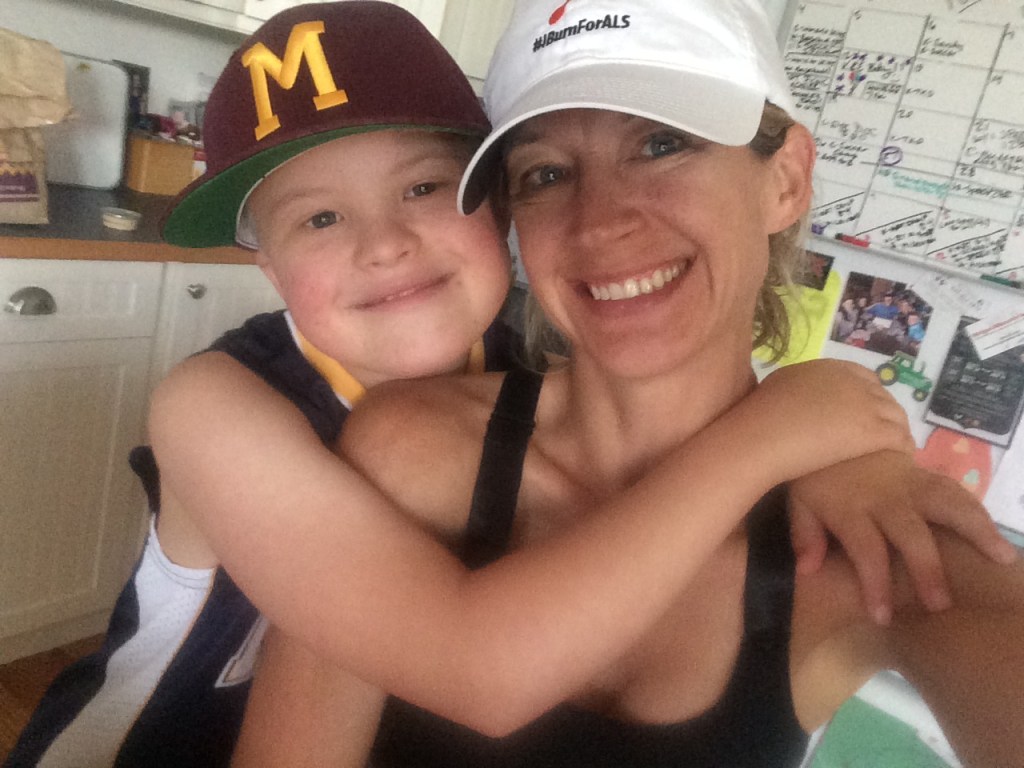
“Mom, hug!” Wil never gets out of bed without a hug. Wil insists on it, and I never want him to stop. Because it’s what makes me stop. 

Before Wil was born, I thought raising a child with an extra chromosome meant you were born with something extra, too. But that’s not the case. It’s in taking the time to understand Wil’s way of thinking, and jumping full-in, that adds extra value to my everyday life.  Complete with extra daily hugs to back up that extra-awesome fact. 

There’s Just Something in the Atmosphere

Over the years, I have found it less important how people approach Wil than how they have left an experience with Wil. Wil demands a shift of heart without demanding it at all.

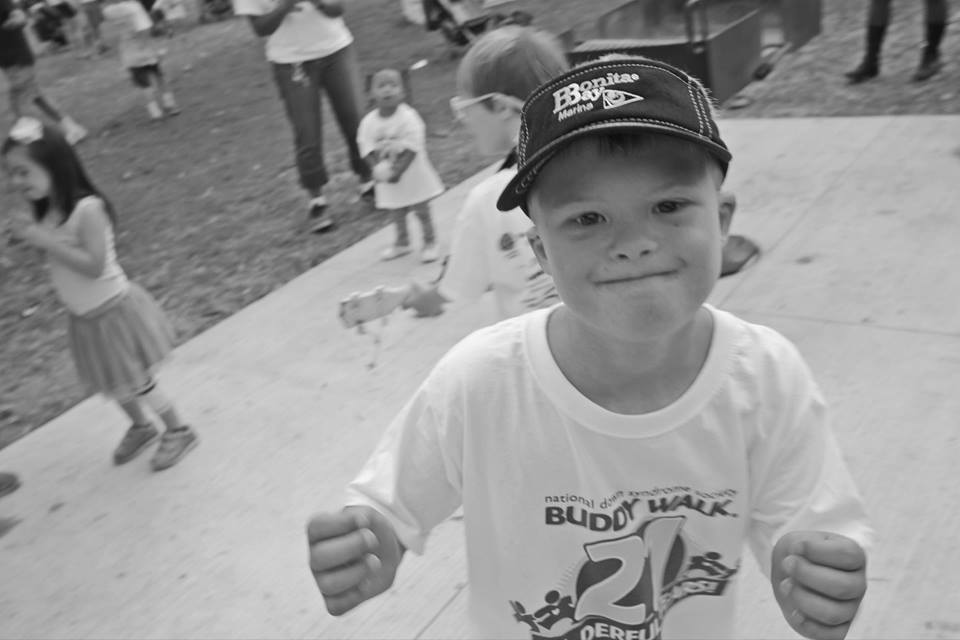
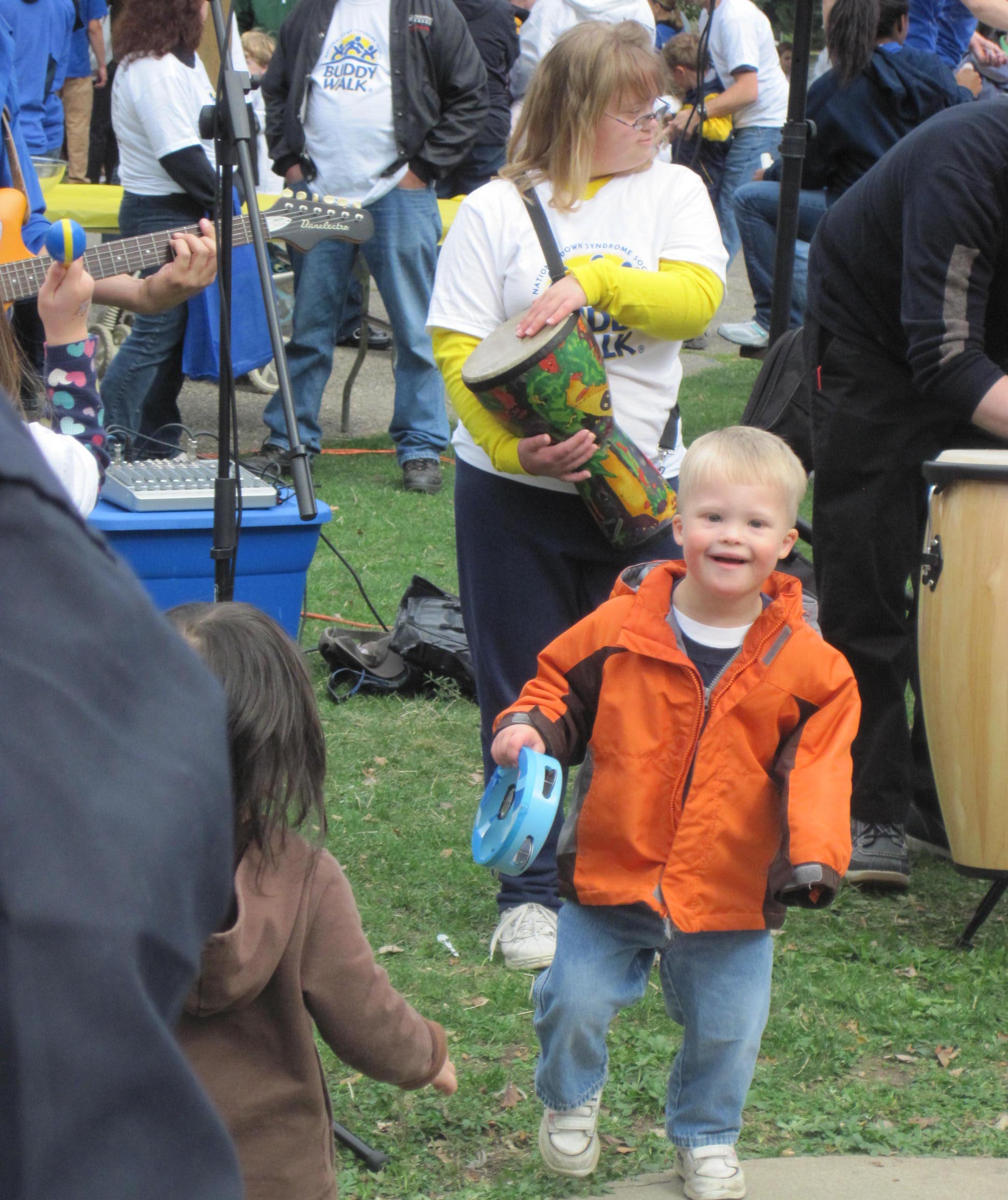
I’ve been involved in our Down Syndrome Support Team’s annual Buddy Walk since Wil was 7 months old. Many walkers who attend this event are long-time attendees such as myself. And it is no surprise why. When new friends attend, a look of awe crosses their faces at the sheer uplifting feeling of it all. You may say it’s the music from the band, mixed with excitement from the silent auction, heightened with a sugar-high from the cotton candy. But I know it’s something far less tangible than that.

I do not know with what expectations or intentions people walk into our event, but I do know the feeling with which they walk out. And that they will come back again. There are no strangers at the Buddy Walk. Each and every participant is folded in like family no matter where they have come from or why they chose to attend. Come as you are and you are accepted as you are, no matter your level of acceptance. Though a welcome banner announces the entry, it is the atmosphere that invites you in. You may have no musical talent but pick up a guitar, the bongo drums or a tambourine and you are part of the band. You may have two left feet, but you will meet a favorite dance partner as soon as you step foot on the dance floor if you aren’t pulled onto it first. You may have been part of the Buddy Walk for years or just walked onto the scene, but you will be received with open arms and a mighty hug just the same. It’s just how our loved ones with Down syndrome roll. 

The Buddy Walk lives on in whoever has attended the event. But you needn’t have attended the Buddy Walk to know of the atmosphere with which I speak. It is our loved ones with Down syndrome who create this atmosphere and live their lives in it. And like any atmosphere, it knows no boundaries.

I’ve seen kindnesses emerge from a multitude of strangers upon entering the atmosphere Wil lives in. I have literally felt the shift in people. Not once or twice, but on a daily basis. Tight-lipped strangers visibly loosen – their eyes become softer, their shoulders relax and my personal favorite is seeing an unconscious smile spread across their faces. As they walk past us their smile holds on. You can’t smile on the outside without feeling it on the inside. 

I can try to teach a belief system about acceptance of our loved ones with Down syndrome until I’m blue in the face. But the atmosphere created by our loved ones with Down syndrome meets everyone exactly where they are, accepts them as they are, and gives rise to a new level of understanding without a single teacher at the lector. Our loved ones with Down syndrome demand nothing less of us without demanding it at all.

Greater Than

“I made my call. I did my charity service for the day.”

Charity, in its truest form, is an act of unselfish love toward another that is less fortunate. In the quote above, however, the act of charity is about the doer rather than the receiver; time out of our day to do “good” for someone we have put in the “less fortunate” category (even if they do not belong there).

In Wil’s eyes, I could be less fortunate than him. Let’s face it, I’ve got one less chromosome than he does and it’s unlikely I’ll gain another. I do judge others; Wil never does. I do hold grudges; Wil never does. I get too busy for hugs; Wil is never does. In fact, he refuses to get out of bed without one. Thank goodness. Wil never forgets to stop and smell the roses. He never forgets to stop and smell the dandelions, either. To Wil, roses and dandelions are equally beautiful flowers.

Aside from my faults, Wil loves me as I am. He never places me in the less fortunate category, though I have much to learn. The closest he’ll get to it is saying, “Oh, you are silly mom,” or “Whoops.” He gives me permission to laugh and start again. His love for me is unselfish, despite my less fortunate ways.

It’s all too easy to look at the world through our own lens. To do “feel good” things for our own good, when we could open ourselves to “lesser things” that bring greater good. I never would have known the beauty of a dandelion if I had not seen them through Wil’s eyes.

What is a weed if only your perspective of a weed? Who has ever experienced the joy of making a wish upon a dandelion fluff and watched your dreams float upon the breeze?

We only value what we see as valuable. And what we see as valuable is a matter of perspective. To open your perspective, you must open yourself to something “lesser” yet higher.

Just Friends Being Friends

“I was just wondering if Wil wanted to be part of the 7 dwarfs. We were thinking he could be Snuggly, Giggly, Silly, or Smiley! Considering Wil has all those traits!” I received this text from Ashley about Halloween costumes. Ashley and Wil, now in 8th grade, have gone to school together and been friends since preschool.

I read Ashley’s text aloud to Wil. He jumped up and responded, “Yes!” Wil chose Smiley, then I received another text from Ashley: “Or Seeger was thinking he could be the prince if he wanted to.” (Seeger is another good friend of Wil’s from school.)

“The prince!” Wil said without an ounce of hesitation. Which is quite apt, as Wil’s friends, who are planning a Snow White-style Halloween, are all girls.

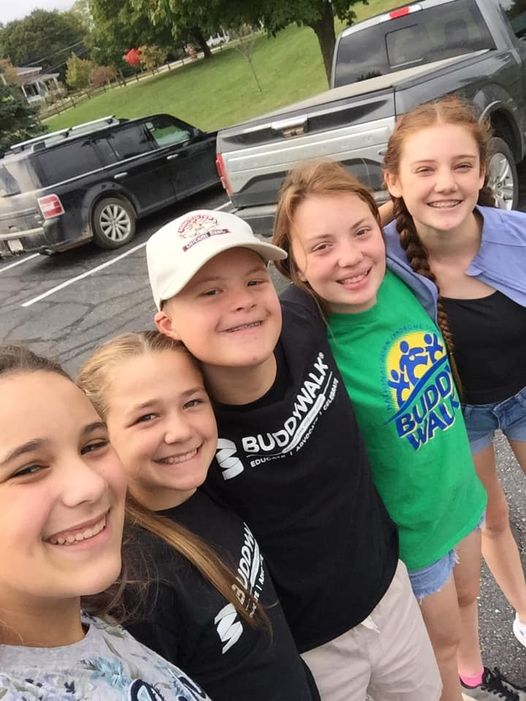
Our Down Syndrome Support Team holds an annual Buddy Walk the last Sunday of September to raise awareness and acceptance for individuals with Down syndrome. With the pandemic, the decision was to hold a virtual event. Wil and his friends were not to miss out, so we held a small, local walk to which about 30 friends participated in. Wil, of course, walked with his close buddies, Ashley, Seeger, Lila and Sarah. At one point during the walk, Wil decided he needed a break and sat down on the sidewalk. Wil’s friends stopped and cheered him on. With their encouragement, Wil jumped up and they all started running. The friends joked it was the “Buddy Run.”

Near the end of the walk, we climbed to the top of school bus loop. Once at the top, Wil’s friends ran down the steep, grassy hill along the side of the bus loop. Wil remained at the top, looking trepid. Once again, the cheering section arose. His friends’ cheers nudged Wil over the edge and he tore down the hill. Once united, the friends jumped, laughed and cheered in a circle. It’s just as rewarding to be the cheerleader as it is to be the cheered.

Last year, I was talking to Ashley after school. She told me about an activity in gym the group of friends enjoyed participating in together. Then she said Wil grew tired and laid flat out on the gym floor. She shrugged her shoulders, smiled and said, “That’s just Wil being Wil.”

When Wil doesn’t have the words, his actions are his communication. Wil’s friends understand his language. Wil doesn’t judge others or create drama; it’s simply not in his arsenal. In that way, his friends are fully free to be themselves. If you are sad, he accepts your sadness without question. If you are happy, he accepts your happiness fully. If you feel goofy, he’s more than willing to join you in the silliness. If you need a hug, he has one at the ready. If that’s your clothing style, then it’s cool. To Wil, that’s just you being you.

As a parent of a child with special needs, I know first-hand the fight for acceptance. I also know first-hand that acceptance is quite fundamental: It’s just friends being friends.