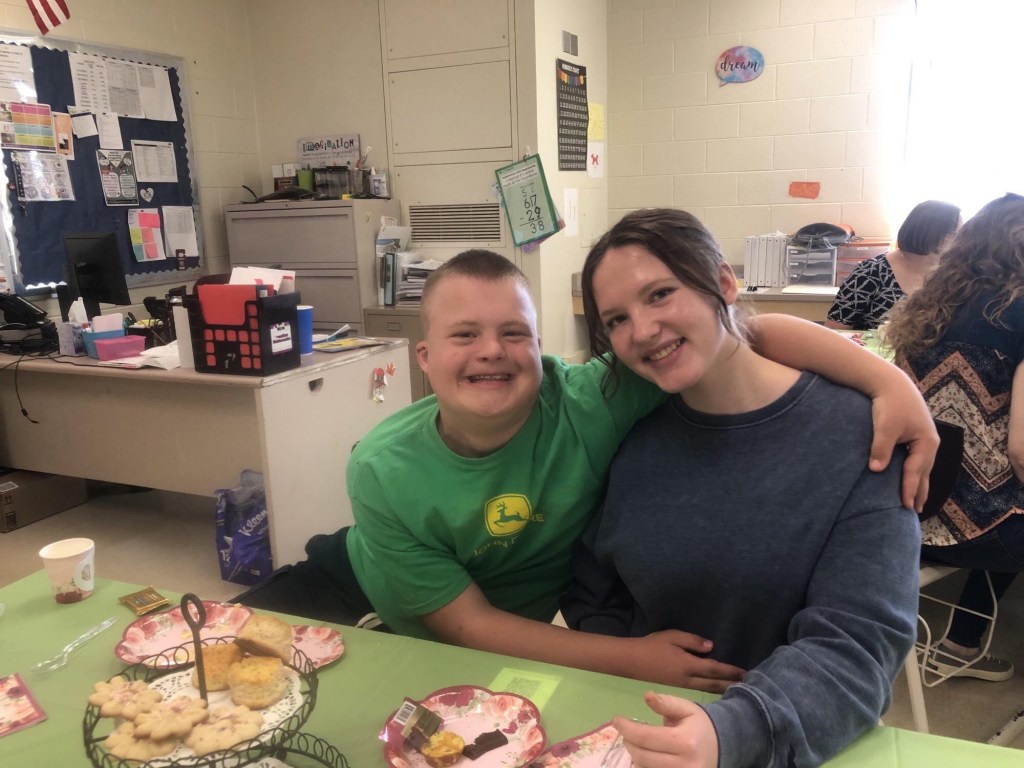
Turning the Tide: A Story of Growth and Inclusion

Growing up, Wil has loved boat rides with his Grandma and Grandpa. So when his sisters were invited on an impromptu trip around the lake with some of the neighbor’s kids, they jumped on — and Wil stayed back with his grandparents.

My dad noticed a shift in Wil’s demeanor. He didn’t say anything, but my dad could feel it — that quiet pause, the internal processing. He turned to my mom and said, “Wil wanted to go too.” They decided they’d take Wil out for his own boat ride to lift his spirits. So off they went, stopping at his favorite swim spots along the way. Wil jumped in the water as he always does, with my parents jumping in with him. It worked — his mood lifted (there’s good reason Wil adores his grandparents!).

But the moment they returned to the dock, Wil spotted his sisters and the neighbors hanging out in the yard. My mom said he couldn’t get off the boat fast enough to join them.

Whenever Wil turns a corner in maturity, I feel a sudden wave of sadness for him — and then, not long after, I’m chuckling at his light-hearted ingenuity.

This summer in speech, Wil is working on initiating conversations. He struggles with finding ways to insert himself — to say things like, “Hey! I want to go too!” It seems so simple, but that’s just not in his current arsenal. He wanted to go, but didn’t know how to insert himself. But eventually, he found his way.

Processing time may be slower for Wil, but that does not mean his ways are not effective.

I share this story because no one intentionally left Wil out. In the past, he’s always chosen boat rides with his grandparents — that’s been his comfort zone. If he had said he wanted to go, he would’ve been welcomed. So sometimes, inclusion isn’t about purposeful exclusion. It’s about learning how to speak up — and that’s exactly what Wil is learning to do now.

I’m curious now to see if Wil does start to speak up more. He’s entering a new season — he’s graduated high school, and he’ll be around new people who don’t know him as well. They won’t read his cues the way longtime friends have. That shift will come with challenges, but maybe also with opportunities.

Because often, inclusion really just begins with getting to know someone. And showing up — or speaking up — in a way that you can be known.
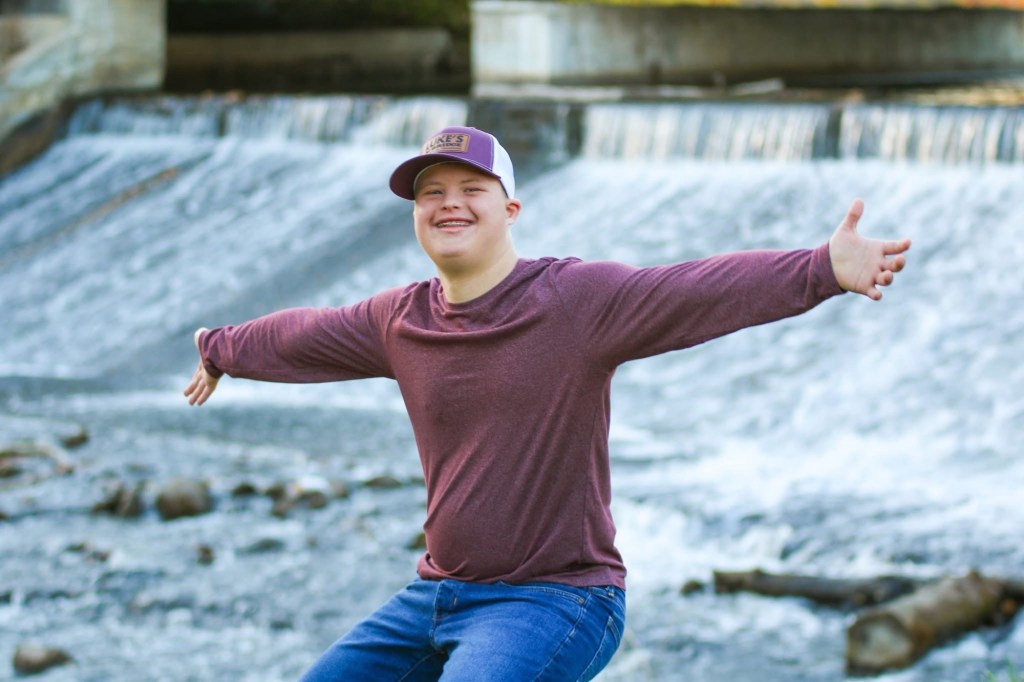
Paradoxical Path

A singular new word Wil calmly adds to his vocabulary, in a such a way that only I — or his closest educators — would hear stands out like a stacatto flashing me back in time to a movie reel loop when he was 5 or 7 or 10, working a skill on a repeat loop that at the time I couldn’t see beyond.

But here I stand, still marveling at one added word, one added achievement, one added milestone, taking me back and pushing us forward seemingly in flow but full of staccato moments.

I’m not who I used to be raising Wil, yet I’m closer to who I am at my core.

I must pave ways for Wil and yet must leave space for him to create his own. He has a high level of vulnerability and yet has an inner strength many desire.

Wil has grown in me a patience I never knew I had, and yet also has grown an immense impatience to grow more; to learn more; to expand borders.

I have learned many stereotypes are hysterically true; and many are heretically innaccurate. Wil’s sisters called him, “Wil ‘the snail’ Taylor” every time they followed him as he two-stepped up and down the stairs. I’ve shared many laughs with fellow Ds mommas over stereotypes and shared many tears with these same mothers over stereotypes. Stereotypes can bind or separate. You need to walk the walk to know which is what.

And friendships. He has some deep ones. He also has many cheerleaders we’ll never see again once he leaves this school. But the impact his presence has made, and theirs on him, is undeniable.

Raising Wil is a paradox; surface friendships that leave a lasting impact, single breakthrough words that flash back to a former time loop on repeat, patience that creates a relentless drive, stereotypes that create binding laughs in their known truths, and stereotypes that create pain in their ignorance of the truth.

I now stand beside Wil with great hope of what’s ahead, pure enjoyment of where we stand right now, bouyed by the memories that brought us here, and on occasion flash me back.

Age is Just All Numbers

Wil and I decorated the Christmas tree. It’s the first time we’ve done it just the two of us.

Usually the twins are here so he’ll hang a few ornaments, but then move on to singing or other activities around us.

As Wil was home sick, and we needed low-key activities to stave off boredom, I suggested we decorate the tree. The tree was up, we were just waiting for the twins to come home this weekend. But I said let’s do it.

That’s all I needed to say. Wil got the box of ornaments from the basement and we got to work.

As it was just the two of us decorating, he put up more ornaments than usual. He picked one area of the tree and put all the ornaments there. Fine motor skills are hard for him (such as pinching his fingers together), so when he got frustrated putting the ornament loops over branches, he just shoved the ornaments into the tree.

“Wil, take a break when you need to. I know this gets tiring for you. But watch this, if you hold it like this it’s easier. And feel free to spread out.”

He did take a brief break. Then he tried looping a few more ornaments but stuck to the same spot.

All of his ornaments in one spot, many shoved in, was so darn cute — like a younger child would do. But also mixed with the teenage defiance of “you can tell me what to do but I’ll do it my way.”

Tree decorated, we cleaned up pieces of sparkle and felt that had fallen off of older handmade ornaments.

Wil picked up a red piece of felt, held it under his nose and said, “Look Mom, a mustache!”

Wil is an expert at spontaneous joy. As frustrated as he gets at things that are hard for him, he always has a silly something up his sleeve. It’s these moments that have changed my life. How otherwise mundane tasks can be incredibly joyful in the simplest of ways.

Which is one of the many reasons I don’t like the question: “What mental age is he?”

Ummm, he’s 5, 10, 17, 25 all in one moment. What mental age are you?

Some of us, like Wil, have all our ages all bunched up together in one spot.

Sometimes we need some guidance to spread out, and other times we know exactly how to make the best of right where we are. ❤️

Life Beyond Definitions

He has delayed speech but he’s not delayed speech. Some of our traits carry deep meaning, and others just are what they are – we give them little thought. Or maybe they are fun to play with, like changing our hair color. It is our choice in what meaning we give to our various traits. And that can change over time with the experiences of our lives. But we are not the only ones who give meanings to our traits – there are others who may assign different meaning to who we are. For some, Wil’s delayed speech makes his person less valuable. Such limited thinking about who a person in is linked in fear. It gives our brain a certain satisfaction to categorize what we don’t understand, or more accurately what we don’t care to understand:

“That’s retarded. What?! It doesn’t mean anything. It’s just a joke.”

“He’ll always be happy. But it’s a compliment.”

“They are all angels.”

Whether the above is considered positive, negative, or otherwise, these are extremely limited definitions of who we all are as complex human beings, no matter how many working parts we have, no matter how many chromosomes we have, etcetera etcetera etcetera. None of us fit within a box, even an angelic one.

Who were you when you were 7 years old? When you were 12? 16? 25? 32? 41? 52? We are always flexing the margins of who we are due do internal and external circumstances.

My instinctual reaction to Wil’s diagnosis was full of limited thoughts. This is instinctual. Having fear protects us from the dangers of the unknown. Fight or flight. But it doesn’t have to be a way of existence. Though instinct may initially rule our brain, we can then take the next step to make different choices. Situation-by-situation learning opens more doors to new ways of thinking if we allow them to come in.

I don’t want to spend my life fighting for my son. There may be instances where I do. And maybe this writing I’m sharing with you is fighting for my son. But I don’t see it as combative. It’s a sharing of knowing him. I’m sharing with you what I have learned about my son, and how he has changed my life not in easy ways, but in profoundly simple ways. And that is simply getting to know him. Yes Wil has Down syndrome, but Wil is Wil. And Wil changes every day as we all do.

Yes, Wil needs speech therapy. Yes, Wil has moderate cognitive delays. Yes Wil does not understand certain dangers and concepts. Those things are different from me. And some of those things cause me concern. But I see them, I don’t hide from them. I don’t fight them. But they are different so sometimes I struggle with them. Sometimes I get jealous of seeing my empty nester friends have freedoms I do not. But that is just one window of the many I look through in life. I see life in so many different ways than I once did. Though some doors may not be as open to me as others, that is how life is anyway. I am open to opportunities around me, and I walk through those doors and I evolve with them. That is feeling life. That is knowing life. I don’t need to understand life, Down syndrome or many other things in a scietific way, but rather a relational way.

There was a school board member at our school that wanted to reduce special education staff. He went back to a statute in the 1970s to back his cause. If you went to school in the 70s, or even as I did in the 80s, there simply were no students with disabilities in our schools. Or if there were, they were in the basement or otherwise segregated. Inclusion as we know it now did not exist. If it did, that was a rare and very fortunate experience. I’ve read a lot of books on the civil rights acts and how obtuse politicians were about making changes for people with disabilities. It’s hard to read. Have you ever seen pictures of people in institutions? It’s abhorrent to even think of how people with disabilties were treated in the 70s and an antiquated law from this time was used as his reference. This particular school board member was invited to sit in the resource room to better understand what special education staff did. You guessed it – he never did.

All it takes to stop improving the world for our kids is to take a stand (to stand still) on a fear of unknowing.

All it takes to improve the world for our kids is to care enough to know more – then live, evolve, grow and share life beyond definitions.

Whale Starts with W

“I swallowed a marble.”

I was in the living room. Wil was sitting in his bedroom adjacent to the living room.

Wil often talks to himself – many of us do. It helps us better process our thoughts, and it’s the same for Wil and for many people with Down syndrome. I quite like eavesdropping on Wil to better understand what is on his mind. Every morning he has a back-and-forth conversation with himself on what to wear: “Wear the blue shirt? Yeah, yeah, the blue shirt. Ok, the blue shirt.”

His exclamation about the marble though, was no back-and-forth conversation with himself. He wanted me to hear it. He was waiting for my response. Wil’s sister Katherine was home so he didn’t have my full attention as he’s grown used to since his sisters went away to college.

His attention-seeking strategy was effective. I went straight into his room.

“Wil did you really swallow a marble?”

“Hmph.”

“Wil, please tell me as this could be serious. I need to know. Did you swallow a marble?”

“Yes.” Then a moment later, “No.”

I actually had no idea if this was serious or not. I quickly googled swallowing a marble and found that it was quite common in young children. As a marble is round and smooth, most pass without issue. I sighed relief. But I didn’t want Wil to think he could add marbles to his diet.

I sat down next to him. “Wil, if you did swallow a marble, it’s very important that you tell me if your stomach hurts right away. Ok?”

“Ok.”

“So, did you swallow a marble?”

“No.” Then, “Yes.”

He was getting the attention he wanted from me and was holding tight to it.

“Ok, how about we go watch Olaf’s Frozen Adventure,” I said. Wil loves Frozen, and I love Olaf, so this was a show we both have watched together multiple times, which is why I chose it in this moment.

“Yes!”

I still have no idea whether he swallowed a marble or not. Wil does not outwardly lie. I’ve never heard him lie, and I don’t think he even knows what lying is. In this case he wanted my attention.

Other times, if I ask a question and he doesn’t know the answer, he will throw out a yes or no just to answer me, or whomever is asking. His eye exams can be quite challenging as this happens a lot.

But yesterday, he took one of his friend’s phones as a joke, and his teacher let him know this was no joke. His teacher then Facetimed me, with Wil, about this so we could all talk it out. Wil then understood the seriousness of taking other’s possessions. When Matt and I talked about this incident with Wil after school, he was very honest. As he always is with these types of questions.

After about 5pm every day, Wil will blurt out a detail about his day. This is a quieter time at home, or when we are in the car on the way to a therapy or the grocery store. He’ll blurt out, “Chocolate chip cookies!” Or, “Omelets!” Which is what he made in cooking class that day and then we can talk about it. But if I ask too soon, he won’t tell me. Wil shares on his own timeline when he’s had time to unwind and process his day. Then, he’s an open book.

Sometimes I don’t understand what he’s saying, so I’ll ask him to spell it. Yesterday I asked him what he did in choir.

“Whales.”

“Whales?”

“Yes, whales.” He said. Thinking I misunderstood him I asked what letter it started with.

“W.”

“Oh, ok.” Now realizing I heard him correctly, but the context was out of place for me, I then asked, “Did you watch a movie about whales?”

“Yes!”

It’s really interesting how breakdowns in communication can happen. I did hear what Wil said, but as I didn’t connect whales with choir, I thought I misunderstood him. I’m not the best listener, but with Wil I am because I have to be.

I used to say, “Oh, I’m not that kind of person.” But I quit doing that, because raising Wil I’ve had to be many kinds of people that I didn’t think I was.

Many think raising a child with a disability is a burden. But in fact, my experience has been that Wil has brought so much freedom in my life, in altering the way I think, hear and see the world.

I Wonder, Wonder, Wonder

Wil talks all the time. He talks to me, he talks to friends, he talks to himself. I wonder at the time, listening to him today, how one hesitant word was cause to drop everything and celebrate. His verbalization today was once a distant, fuzzy dream. Like reaching for a cloud that my hands couldn’t quite grasp.

Wil does have a tendancy to stutter when he’s excited — his emotions overtake his ability to choose his words and his words get jumbled up. I get it; even the most poetic words could never fully describe an emotion.

When Wil sings, however, there is no stuttering. His emotions, paired with the words, are set free in song.

When Wil talks to himself, there is no hesitation in his words either.

“Lunch?” He’ll ask himself.

“Yeah, yeah, lunch.” Is his reply.

“What do you want? Hot dogs?” He prods.

“Mmm, hot dogs? Yeah, hot dogs.” He answers himself.

“With mustard and peppers. And relish. Mom! Lunch!”

When his self-talk first emerged, I worried. I remember when I first heard it. He was sitting on the floor of his bedroom in front of his closet. He had a back-and-forth conversation with himself on what toys to play with. It was also at this time that the gap in abilities with his peers was becoming very clear. So this timing had me wondering if he had created an imaginary friend because he felt lonely.

Wil has had the same peer group since kindergarten and they exemplify what inclusion is. Even so, I wondered how this gap in abilities that I saw expanding was affecting Wil emotionally. He didn’t act sad about it. He still talked about his friends in the same way. But there was this self-talk emerging and I didn’t know where it was coming from – other than Wil, of course.

I googled “self-talk Down syndrome.” I found this phenomenon is very common amongst individuals with Down syndrome. It’s simply a way to process thoughts. As Wil grew older and we spent more time with teens in our Down syndrome support group, I realized how typical this is. Now it’s just what Wil does. It’s just what is.

As Wil grows on the outside, I grow on the inside. The stigma of the outside disappears when I find understanding on the inside. I frequently look back and wonder at what I once wondered at. It’s an emotion beyond words.

<younger Wil and his longtime friend, Lila>

Wil Rode the School Bus Today!

Wil rode the school bus today.

In this house we take no such statements for granted.

In middle school, Wil riding the bus proved unsuccessful. He was already having a hard time transitioning to a new school with new educators and hormones were in full effect. The middle school years are challenging; then add in communication barriers and cognitive delays that a body’s progression into puberty does not wait for, and you’ve got behaviors. Every day was a new experience, and we were rewriting the plan over and again. Finally, I called “Uncle” on the bus riding as it was adding stress to Wil amongst all the other areas we were navigating at the time. It’s challenging to do that, as you never know if you are giving up at the right time, or too soon. But what I have learned is no matter what the success — or lack there of — looks like from the outside, there is groundwork being laid on the inside.

Wil is now in 11th grade. He loves being 16 years old. And he is fond of reminding me he will be 17 years old on his birthday. He wants to go to college like his sisters. We will cross that bridge — in this house we are very used to crossing bridges as they come. As he is growing into his indepedence and his maturity has blossomed, he told me he wants to ride the bus home. I joyously concurred.

Last spring, he did ride the transfer bus from his high school to the elementary school where I work. This was very successful, so I think it was the perfect nudge to riding the bus the full way home.

All was going smoothly until 2 weeks ago. Wil walked to the bus like he always did, but then just kept on a-walking. His teacher ran after him and walked him back to the bus. Wil refused to get on. So Wil and his teacher walked to the office. His teacher called me and I picked him up. This happened every day for a week.

All I could get out of Wil was that the bus was too crowded. He refused to sit up front where it was quieter. But he is in 11th grade, so why would he want to do that? I suggested his noise-cancelling headphones. Wil is very aware of his looks, and doesn’t want to look different. I want to make clear that he is in no way ashamed of his disabilty, nor should he be. And noise sensitivity is part of his disability. But Wil puts great importance on his appearance, and you know by now his deep affection for baseball hats, so noise-cancelling headphones would throw off his style; and his hat. (Wil only wears his headphones now if he is at the movies or a concert, but he’ll only go to these loud places if he really wants to be there.)

So, here we were. Wil refused to ride up front where it was quieter. He wanted to sit in the back with his friends. But it was too crowded. So it makes total sense that he would attempt to walk up to the bus, get nervous and keep going.

Just being able to make sense of things is HUGE!! When Wil was in middle school, he was not able to express to me his reasons for being nervous on the bus. His educators and I had to do our best detective work, but with so many factors at play, our best guesses were only that — guesses.

As Wil could now tell me the reason for not riding the bus, we could have a discussion about it. Now Wil had true ownership in his decision as we could have a conversation about his options as I knew what the struggle was.

Whether what we come up with works for the long-term or not is to be seen. But what is most important is that Wil has a voice in this, and that is something he’s always deserved to have, and we’ve worked hard for him to share it.

With this knowledge, Wil’s teacher created a chart to hang in the classroom. Each day Wil rides the bus he will get a sticker. Wil thrives on recognition so was immediately into this idea. Every 3 stickers, I will take Wil to the market to pick out a handmade sandwich of his choice and a drink. He also loves this type of adventure.

Today is day one of this plan. I went up to the school and parked in the lot just in case Wil refused (I parked out of Wil’s sight so he wouldn’t backtrack.)

Wil’s teacher walked with him, and he successfully made it on the bus!

In this house, we celebrate successes!

Today is one day, tomorrow will be another. And so will the next. Every day we cross a new bridge. Every day I will feel a tightening in my stomach at 2:45 with one eye on my phone. And every day it doesn’t ring I’ll release the butterflies in my stomach to fly in celebration.

In this house, every day is a new day. We never take such things for granted.

The Amazing is in The Choice

There is no magic formula to acceptance of our friends with disabilities.

Acceptance, in its essence, is very simple.

You don’t need to be a special person. You don’t need to be born kind or compassionate or patient.
You don’t need to be energetic or inspirational.

You don’t need to be anything other than willing to open your mind to acceptance.

That’s it. You don’t need anything else. It’s simply to be or not to be.

Once you truly open your mind to acceptance, the rest will come. The new ways of thought. The adventures you never considered. The new friends you wouldn’t have known otherwise. It’s the experience, once accepted, that delivers the specialness, the kindness, the compassion, the inspiration, the energy and the patience.

But if you keep your mind closed, then you’ll never know the amazing you are missing.

Acceptance is not a natural-born talent or a skill; it’s a choice. And that choice is up to you.

Take Another Think

We may believe our thinking is correct; or it is good—that we are good people.

Even those of us that call ourselves open-minded may find we have unwittingly closed off our minds when spending time with individuals with disabilities.

Why is this?

Because we have to see it their way first to understand. And many times — in some cases most of the time— their way is not easily readable. So we push our agenda on those with disabilities.

Individuals with disabilities’ way of communicating may be very different, or even non-existent in a verbal sense, so actions must be carefully observed. And even then we may remain clueless. It takes too much patience, and so we, even unconsciously, push our way on them, or we ignore them.

Our own belief system must be suspended to decipher theirs. We must let go of trying to be “good” or “helpful” because our version of what is good or helpful may not be for them. This very fact is likely the most challenging, and yet the most empowering process, in our very own lives.

When we suspend our own belief system in order to understand theirs, something shifts within us. Something bigger, something higher — spiritual even.

This process has no end. In fact, in 16 years I’m only just beginning. I’m stronger than I’ve ever been in trying to understand Wil, and understand the world’s reaction to him. I’m learning as a parapro to understand many differing abilities. It’s challenging and I need the expertise of those around me, because again what I think of as being helpful may not be helpful to them.

But it’s also so amazing to understand what in some ways may never be understandable. It wakes up something in me. Not because I’m trying to be a good person; it is because I truly want to understand what these kids are trying to say.

Those with disabilities are true gifts to us all—and yet this population is so very ignored and misunderstood. We must first forget ourselves, in full effort to understand another, and in that we find a stronger constitution of our own selves within.

Special Needs Siblings

These two young women have stepped up to the plate more than most realize; and they do it with love and grace.

That said, Katherine and Elizabeth treat Wil like any little brother — loving him, being annoyed with him, and standing up for him. Their life requires an extra level that is not easy to understand, unless you also have a sibling or loved one with a disability.

If you do, you are probably nodding right now. Here’s to you, and to the path you walk, and to what you give to this world.