I have recently gotten back in the pool (after a year 😅) thanks to our friend, Dawn, taking great care of Wil after school and honing in on his life skills learning.
While I swam Monday, Dawn’s husband came over to have a guitar jam session with Wil 🎸
When you have a dependent child, your schedule revolves around that child’s schedule. It takes a lot to find someone you fully trust, and that matches your schedule, so you and your child both can enjoy needed independence time.
Wil is my buddy, and he is so much fun! I’m thankful he’s not flying from this nest for some time to come. And yet, Wil is almost 19. He deserves someone other than mom all the time to expand his young adult life.
When I mention respite care outside of our disability circle, I receive a blank stare in response. That likely wouldn’t have been in my vocabulary either! But independence doesn’t happen without it when you have a dependent child.
When you meet someone with a dependent child, know that they most likely love having their child home, but at the same time, both parent and child need time to spread their wings, and that doesn’t happen without an extra set of loving, caring hands.
Our lives always include extras, and that extra includes extra special people with extra special hearts. 💕
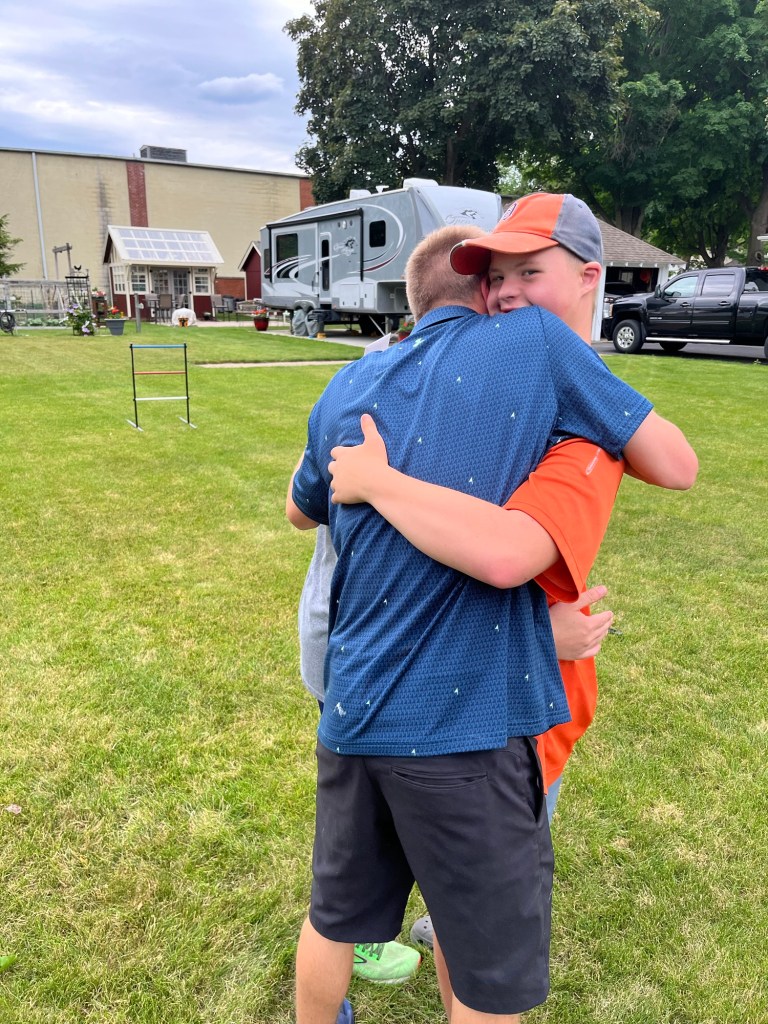
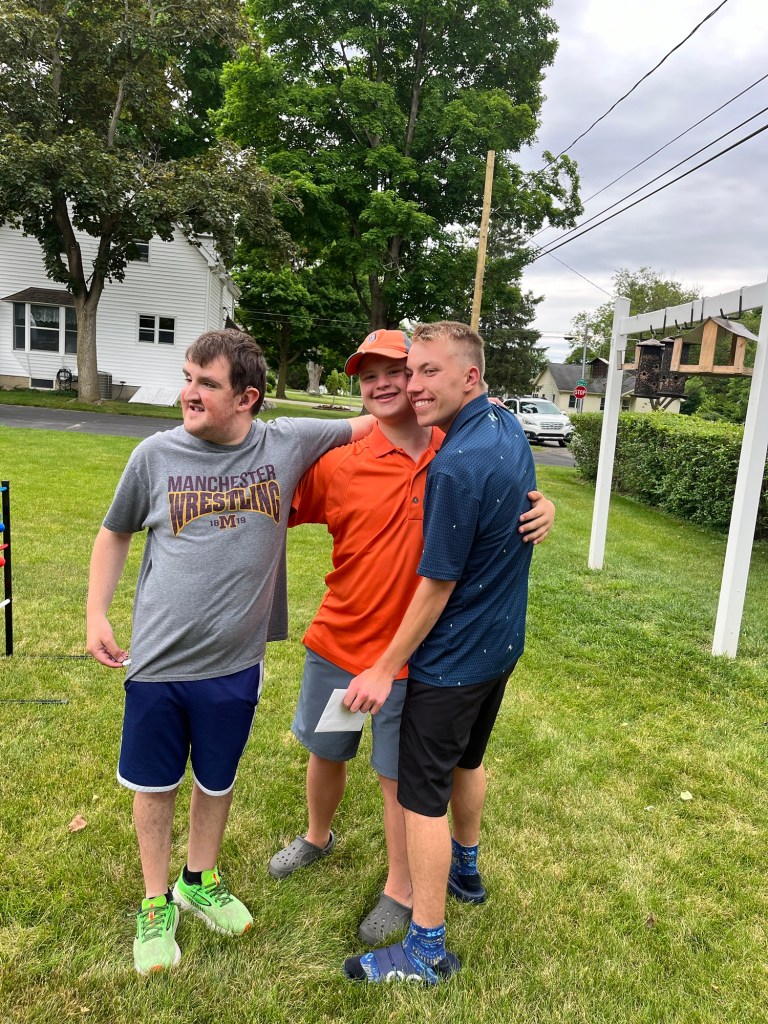
Just 2 years ago during graduation party time I needed an eagle eye on Wil. At one party he fled the party and would not leave the front porch. At another he ran to a side street and sat in the middle of it. Yesterday, at each grad party he hung with his buddies. And made new buddies. He played cornhole with known and new friends. He joined a basketball game with upper classmen from MSU. At each party, I only went to check on him here and there. A stark contrast from two short years ago.
He’ll be a senior next year, and then likely on to a young adult program. When he’s 20 he may have a whole new level of independence from what he has now. Time, opportunities, supports and his own will will tell.
Every individual is their own, no matter their disability. We cannot define nor predict their growth, but we can observe, we can open doors, and we can learn where to step in and offer supports, and as I’m currently learning, when to step back.
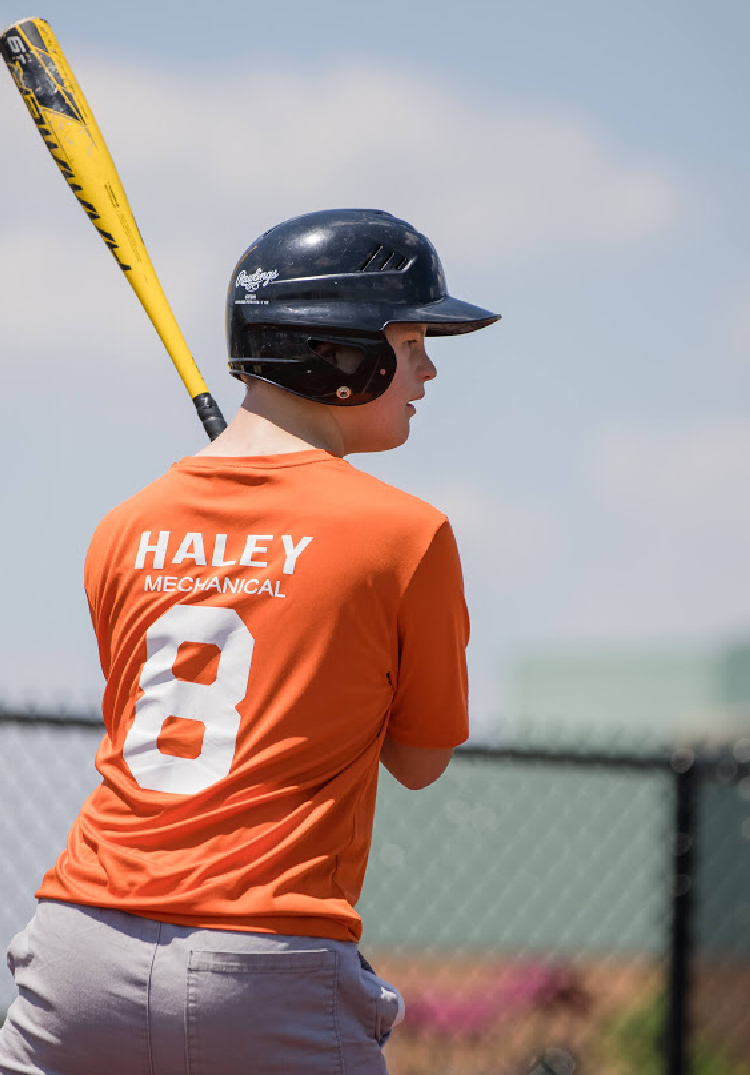
Wil sat down in the outfield. A bead of sweat slowly slid down the side of his pink cheek. The outfield was made of rubber; I’m sure it felt like a cushiony relief to him. Wil gets overheated very easily. I placed an icepack I had carried with me on the back of his neck.
At his previous Challenger baseball game, Wil played 2nd and 3rd base. The weather was cooler and my parents were spectating, so he had plenty of showing off to do. Wil ran after every ball and threw it to his coach on the pitcher’s mound without hesitation. (The coach is diligent about Wil stopping, taking a step and throwing. Wil is equally diligent about following those instructions.)
A batter in a wheelchair bunted the ball and her sister grabbed the handles of the wheelchair and ran her to first base. The next batter runs every base in a single hit, no matter where his ball lands. Sure enough, after he hit the ball, he tapped all the bases (passing those already on base), then sped across home plate. He raised his arms in success and the spectators cheered. The next batter stepped up to plate and the inning would continue until every player made it home.
When a strong hitter came up to bat, the coach asked everyone in the outfield to back up. Wil didn’t budge. A father, who had been standing near us with his son, walked over and crouched down to talk to Wil. The father then reached out his hand, Wil took it and stood up, then we all walked deeper into the outfield.
I thanked him and he said, “It’s always easier when it’s not coming from Mom or Dad. Music is the only thing that motivates my son. Some days I swear I have constant music playing on my phone.”
Last Sunday at our Down Syndrome Support Team picnic, Elizabeth and I walked by a boy of about 10 years old. He was walking backwards with his arms spread out wide. His younger sister, a cute blond with pigtails, was trying to run past the width of her brother’s arms and escape to the parking lot. Their parents were a few feet behind them packing up their belongings.
The boy smiled at us and said, “One thing I don’t like about Down syndrome is they don’t listen!”
Elizabeth and I laughed. “We know exactly how that is,” I said. “I think we’ve chased her brother at least one thousand times!”
I find it incredibly refreshing, rejuvenating actually, to be in places where our kids can be themselves without stares, sideways glances or need for explanation. No matter how diverse or similar our children’s disabilities are, there is an underlying understanding. Though you can feel it on the inside, on the outside, it is seen in gestures such as an outstretched hand, cheers for home runs (in any order), and laughs about siblings.
Kindness, I have found, looks quite “typical” in any place it is shared.
Wil was having a challenging day last Thursday. I drove up to the school anticipating driving Wil home. When I walked into his resource room, Wil was seated in his chair with his feet flat on the floor. His torso was twisted toward the back of the chair, his head tucked down. He reminded me of a sleeping flamingo.
“Hi Wil,” I said.
“Hi Mom,” was his muffled reply.
Kristi Campbell, Wil’s paraprofessional, showed me two ornaments given to him by one of his Connect friends, Alyssa. Alyssa had made ornaments for all the students in the resource room. She had delicately hand-painted snowy landscapes, elves, and other holiday pictures on circles of wood. Each circle of wood had a string inserted into it for hanging. Attached to each string was a felted red bow.
“Wil, these are very special ornaments. We’ll have to find a special place on our Christmas tree for them.” Wil lifted his head and a smile spread across his face. That is one of my favorite traits of Wil’s – his joy always finds a way to break through the surface.
“Do you want to go home?” I asked. He nodded. “Ok, let’s get your things and thank Mrs. Campbell.”
Wil came out of his reverie and stood up. He loves Kristi Campbell (as does our entire family) and wouldn’t miss an opportunity to say good-bye. Another educator in the resource room walked over to the microwave to heat up her lunch. Wil watched her.
“Are you hungry?” Kristi asked. Wil nodded. The lunch period had just started so Kristi and Wil talked it out and decided to head to the lunchroom. I hung close on the way to the lunchroom, just in case Wil changed his mind. Wil’s friend, Lila Harvey, was seated at a lunchroom table with her friends. She is a smart girl and knows Wil very well; so I’m sure upon seeing me, she pieced together what was happening. She waved Wil over to their table.
“Lila!” Wil said. After that, I doubt Wil even remembered I was there. He joined Lila and their friends at the table. Wil went on to have a Rockstar afternoon.
As I walked out of the school, feeling thankful for Kristi and Lila, I was reminded of another school morning exactly one week before. It was the first day back to in-person school after restrictions had been lifted for Kindergarten through 8th grade (Wil is in 8th grade). With the new re-opening, only the front door leading to the office was unlocked. When I dropped Wil off at the circle, he ran up to one of the many front doors that are typically unlocked in the morning. Discovering it was locked, he moved on to the next door. Locked. I pulled around the circle into a parking spot to be sure he got in. As I did so, I saw a taller boy walking up to the school. He motioned to Wil and opened the door that led to the office. The tall boy lifted his arm up high on the door to hold it open, and Wil walked under his arm through the door.
Over time, I’ve realized that inclusion has many meanings. And from what I’ve observed, so do kindnesses. Whether done in big or small ways, they all have great meaning in their own way.






 'WIL'ingness = Willing to Embrace Extra in Life