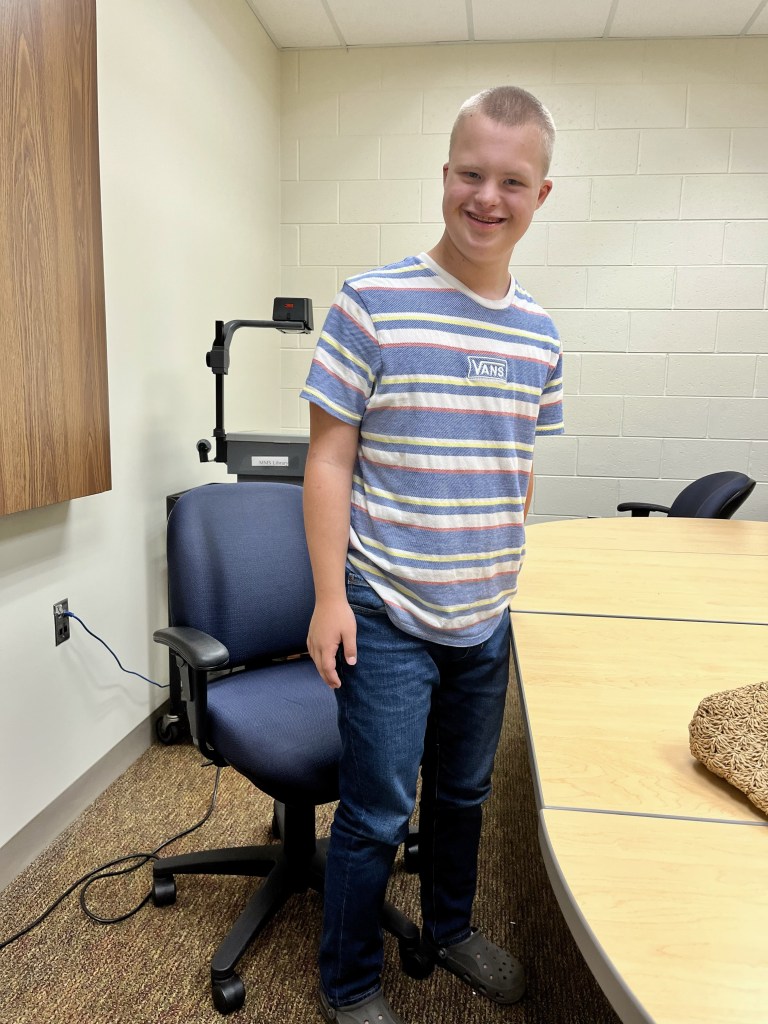
He’s a 16-year-old kid. He wants to be a 16-year-old kid the way he is, just like any 16-year-old kid wants to do things the way they do.
Why should a kid with prosthetic legs be an inspiration when he plays baseball? He just wants to play baseball, and that’s the way he does it. Yes, it’s more challenging than if he had two flesh and bone legs that ran when he told them to. But the way he plays is normal for him.
When I narrowly viewed how things should be, I unintentionally one-dimensionalized people. Then when I had reason to truly care, my heart cracked open to multiple ways of being. That is true joy once experienced; it’s very freeing. Challenges don’t disappear but my mind is no longer caught in what should be, because Wil is exactly as he should be. Boys playing baseball, no matter how they get to the bases, are how they should be.
Whenever I define what should be, the deep value of the many ways things can be is lost in my angst. The value of a multitude of joys is equal to the value of true inclusion. But a change in thinking doesn’t happen until we have a reason to care.
Picture day was today. Last night Wil took a shower in preparation, and spent extra time choosing a shampoo. I heard him talking to himself as he smelled each one.
“Ewww! Too strong. Hmmm, this is old. Mmmm, smells good.”
With his sisters gone to college, Wil can safely use what they’ve left behind without swift sibling reprimands. When his sisters were home, the slightest change in position of their shampoo, conditioner or body lotion bottles was expertly detected.
Wil eventually, and excitedly, exited the shower, put on his fluffy blue robe, and walked directly to me. He bent his wet head so I could smell his freshly showered hair, then lifted his arm for me to smell his fresh skin. Wil shared no words with these actions. This routine went back to the days of him refusing to bathe, and me adding positive reinforcement when he did. This same routine also remains with him blowing his minty fresh breath in my direction after he brushes his teeth.
“Oooo, fresh!” Is my expected, and routine reply. He’s 16 years old now, and we really don’t need this routine anymore, but it makes us both laugh, so we keep it up.
He combed his hair, played it into a Mohawk, “like this Mom?” We laughed again, he put on his pajamas, and he went to bed.
I’m not sure what happened overnight, but he was a different version of himself this morning. I had to coax him out of bed, then he wouldn’t get dressed. My guess would be overwhelm. He typically wears a favorite dressy shirt on picture day, but today he picked a black cotton Luke Bryan shirt that wasn’t exactly unwrinkled. He was muttering to himself, which meant he knew he picked this shirt to pick a fight. He wanted me to tell him to pick something else. And it would be him flat out refusing to do anything.
If he had simply picked out a shirt, without the muttering, I would have asked him to go back and take another look. I would help him if he wanted. And he’d do that, and come out saying, “This one, Mom?”
But I knew this muttering mood well. And it’s one where I give him space to work through what he needs to. And that’s what I did. Almost. His hair dried funny in the back. So I waited until he was eating breakfast (aka when he was happy and distracted) and put a wet comb through it.
“Mooooooom!”
“Wil, I know you’ll be disappointed if your hair is sticking up.” As he wears a baseball cap every day, I asked him to wait to put it on until after pictures. Well, in the mood he was in, you can guess what he did. Hat on.
“Wil, if that’s what you want to do, fine. But think about when you get your pictures and your hair is all sticking up. Is that what you want?” I asked. He pondered this.
“Gel, Mom.” He said. Vanity does have its perks!
Wil is a wild card, with a few wild hairs! I never quite know what will offset him, so I’m always reading his cues. I think that’s why I enjoy our predictable routines — oooo, fresh!—-even if he’s outgrown them. When we make it to the car every school morning, and he starts singing, it’s like I scored all aces, and we both turn up the volume on our voices and laugh, as we always do, at our ridiculousness.
Individuals with disabilities are not more or less special — they are not put on this planet to teach us. All of us are born of the same place; all of us are born of our own ways. All of us are here just as we all are—meant to live and breathe and express our greatness the best we know how, in any way we know how.
But we do not see individuals with disabilities born of the same place we are. To make sense of it all we paint pretty pictures of angelic qualities, or dismissive pictures of lacking abilities, or tuck away the pictures in our minds, recoiling in fear and resistance to understanding.
Wil has undoubtably changed my life. But not because he’s special, or angelic, or here to teach me, or less than. He changed my life when I stopped painting pictures to make my mind more comfortable about his disability. He changed my life when I saw his greatness the same as mine, in his own individual way. That he was born of the same place as we all are, expressing his greatness in the best way he knows how, in any way he knows how.
When we see all of ourselves as born perfectly, in our own ways, then this thing called “acceptance” will no longer hold weight, because acceptance will simply—and beautifully complicatedly—be.
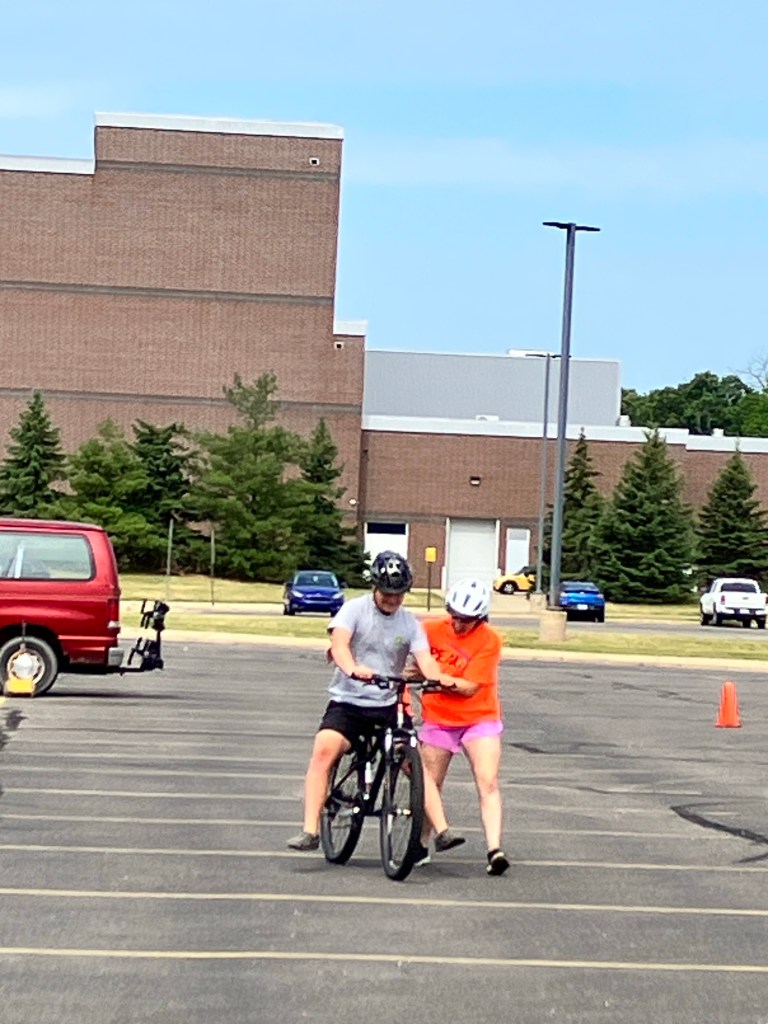
I walked into the parking lot area where Wil was to take his PEAC bike camp. I was overcome with a positive, uplifting feeling — thankfully this type of feeling is not unfamiliar. I’ve grown accustomed to this shift from breathing dense air into a higher atmosphere in only one step.
This atmosphere is one of people helping people. It is beyond a good deed. It is true unity. We innately know the difference as it’s the way we are supposed to be — together.
This is one of the many gifts individuals with special needs offer us. We only need to rise beyond ourselves to accept this handed gift.
We may believe our thinking is correct; or it is good—that we are good people.
Even those of us that call ourselves open-minded may find we have unwittingly closed off our minds when spending time with individuals with disabilities.
Why is this?
Because we have to see it their way first to understand. And many times — in some cases most of the time— their way is not easily readable. So we push our agenda on those with disabilities.
Individuals with disabilities’ way of communicating may be very different, or even non-existent in a verbal sense, so actions must be carefully observed. And even then we may remain clueless. It takes too much patience, and so we, even unconsciously, push our way on them, or we ignore them.
Our own belief system must be suspended to decipher theirs. We must let go of trying to be “good” or “helpful” because our version of what is good or helpful may not be for them. This very fact is likely the most challenging, and yet the most empowering process, in our very own lives.
When we suspend our own belief system in order to understand theirs, something shifts within us. Something bigger, something higher — spiritual even.
This process has no end. In fact, in 16 years I’m only just beginning. I’m stronger than I’ve ever been in trying to understand Wil, and understand the world’s reaction to him. I’m learning as a parapro to understand many differing abilities. It’s challenging and I need the expertise of those around me, because again what I think of as being helpful may not be helpful to them.
But it’s also so amazing to understand what in some ways may never be understandable. It wakes up something in me. Not because I’m trying to be a good person; it is because I truly want to understand what these kids are trying to say.
Those with disabilities are true gifts to us all—and yet this population is so very ignored and misunderstood. We must first forget ourselves, in full effort to understand another, and in that we find a stronger constitution of our own selves within.
Wil has grown so much in his 10th grade year, and I can’t thank Kristi Campbell, Hope Schook and Heidi Drake enough for that! For this fact, it gives me space to snicker when I read about a day like this:
10:05 Refused to work 10:08 Turned it around 10:25 Refused to work 10:30 Turned it around 1:50 Refused to work 1:54 Turned it around
Just last week, I worked with a paraprofessional that subbed for Wil in 1st grade while his primary para was on maternity leave. We laughed that the main topic of daily conversation then was how to get Wil out from under the table most of the day. At the time, though, it was no laughing matter!
But with time, collaboration & communication with caring educators, we’ve come a long way, baby!
We are on to larger concerns, as Wil is an adventurous guy; without fear/recognition of danger which will likely be on our radar for years to come.
So seeing these little bursts of stubborness that he can resolve in minutes, is him showing his personality in full force and finding the self-desire within him to turn it around for a better day — while giving his teachers a run for their money! And we wouldn’t want him any other way!
Wil and I were at the orthodontist’s office. He has a top set of braces; this appointment was about a bottom set to correct his underbite.
“As many kids with Down syndrome have a smaller upper jaw, the underbite is common,” the orthodontist said.
The commonality of an underbite in people with Down syndrome, I knew— what I didn’t know was why! I sat on a blue swivel chair next to Wil marveling at my casual lack of knowledge!
Moments after Wil was born I learned about hypotonia, as the nurse said Wil was “floppy” which is an indicator of Down syndrome. After 3 excruciatingly long days for Wil’s genetics test to prove what we already knew, I met with a geneticist. I learned all about those squiggly, little chromosomes. I learned about his stubby fingers, the space between his toes, his small nasal passages that would later cause terrifying stridrous breathing with days and nights at the hospital. I met with a cardiologist for the first year of Wil’s life and learned with relief that the little hole in his heart closed on its own. I learned about the commonality of clogged tear ducts that unclogged on their own soon after Wil’s first birthday. I learned when Wil was 6 months old he had hypothyroidism, about Wil’s tiny ear canals causing multiple infections, about his mild astigmatism and the therapies he would need and why he would need them.
I learned and learned and learned.
I continue to learn and learn and learn. What will life look like after high school? What post-high school programs are available to Wil? What job training is available to Wil? What social opportunities? What about girls? What about independence? What about college? And most importantly, what will Wil think about adulthood and how will I navigate that with him?
But on that blue swivel chair in the orthodontist’s office, I really didn’t even need to know why Wil had an underbite. I didn’t have to seek out any specialists, programs or community support. I didn’t need to create anything or join forces with others to create something. I just sat there and listened; and learned something casually new about my juice box-toting boy who is now turning into a man.
Wil’s paraprofessional, Kristi, told me how Wil — of his own will — went to the closet in gym class, pulled out two baskets and two balls. He proceeded to toss the balls in the baskets. His peers joined in his created game by cheering him on.
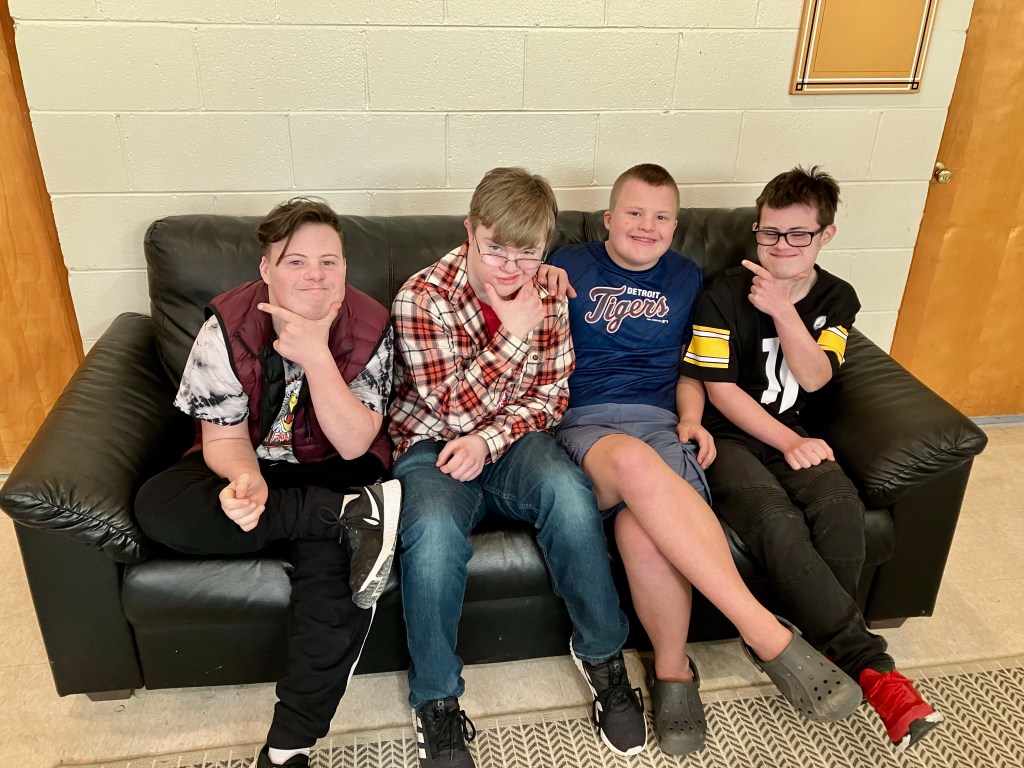
Today I picked up Elizabeth, Wil and their friend Kimmy from school today. Elizabeth had an NHS meeting, so Wil, Kimmy and I sat in the car waiting for her with the windows down. As kids poured out of the school, Wil yelled out his hellos, and peers called out and waved to Wil. One friend, Trent, walked up to our car and chatted w Wil. Trent has about every sport there is on his letter jacket. After their chat he fist bumped Wil and walked away.
Wil takes this all in stride, having no idea how this type of interaction is not commonplace. To him, it’s just another day at school with friends.
Kimmy, whose aunt and sister have special needs, said how embracing of Wil the students are at school. I responded that it fills my heart; its what inclusion is meant to be. Wil’s experience is as it should be but isn’t how it always is.
Kimmy agreed, saying she sometimes forgets how people don’t grow up under the same circumstances as she does, and don’t always understand certain reactions and behaviors of individuals with special needs.
I’m so thankful for this Community School experience. It’s enriched my life as much as Wil’s. It’s what inclusion is meant to be — a benefit for all. It’s about friends being friends; of all abilities.
In embracing our vulnerable population we embrace our own vulnerabilities.
We crave Love. Love is the base of all things. Love is survival. We crave, live and breathe for Love.
In embracing individuals that we previously misconceived as having lesser value, we find in fact their value is greater than ours as theirs is the truth-pathway to LOVE. In embracing those we do not fully understand; we must find within ourselves a deep patience and seek to view life in new and fresh way. It is in this way we find Love — a love deeper than we knew existed. A love that touches and speaks of God. We feel God and His Presence even if we are not religious; even if we are non-believers. Whatever we believe, we cannot deny what we feel. We call it Love. And yet it matters not what we call it. It only matters that we FEEL it.
Once we are touched by that feeling, we crave more. This Love lifts us, lights a fire within us. We find it hard to believe it was something we closed ourselves to. But we did not know we were living behind a closed door until our child with a disability; or our experience with individuals with disabilities opened the door for us. The blast of fresh air is what alerts us once we open our minds. It blasts us with a gust, not unlike a hurricane; it forces us out of our closed mind so far that we can never go back. We never want to go back. In fact all we want to do now is pound on closed doors in our desire that those behind the closed doors know this Love.
We see the fear, and know the difficulty to get past that fear. But once you feel the blast of fresh air in your face you cannot but want more of it, and want more of it for others. And so you advocate for your child, but it is so much more than equal rights and acceptance. It is a Love, a Love for all that lays hidden. A Love that is locked away inside of us. We are scared of it’s immensity. But in the fight for your child you release it. You must, for their sake more than yours. And you find in this unlocking a Love greater than you ever knew existed but it does exist in immensity all around you. And when you breathe it in fully it grows and grows and grows. There is no end to it, and though it is bigger than you could ever conceive, even a small slice of it breathes new life into. You cry in the sheer love that you feel. And you know you can never run out of that love because it is always there, it is bigger than anything your mind can conceive.
You must re-open yourself to this Love every day. Recharge yourself with it. When the doors start to shut due to habit or other’s actions — your child opens the door for you with a kiss on the cheek, a simple gesture, or a silliness. And when you try to describe this type of grand simplicity that has the power to open a door, those behind closed doors see only the simplicity of the gesture, as they have not opened themselves to the grandness. They refuse to open the door to this Love, staying in a sheltered space they know. Fully unaware that the immensity of Love is available to them if they only unlock the door. But when we don’t know, and what we only know is behind the door there is great security in that. There is great control in that. And we think we are thriving when really we are not. We have created a life that feels good behind the closed door. Even when it doesn’t feel good, it is what we know — how terrifying to go outside of what we know.
When we spend time to truly know and understand our vulnerable population, oh, what LOVE. It is open, it is free. Our children never tire of opening the door; it is their nature. It is on us to open ourselves to them.
You will know when you feel the Love. This Love is yours, it is all of ours. It is in endless supply. Let us circulate it. Let us ventilate closed doors. Let us embrace our vulnerable population.





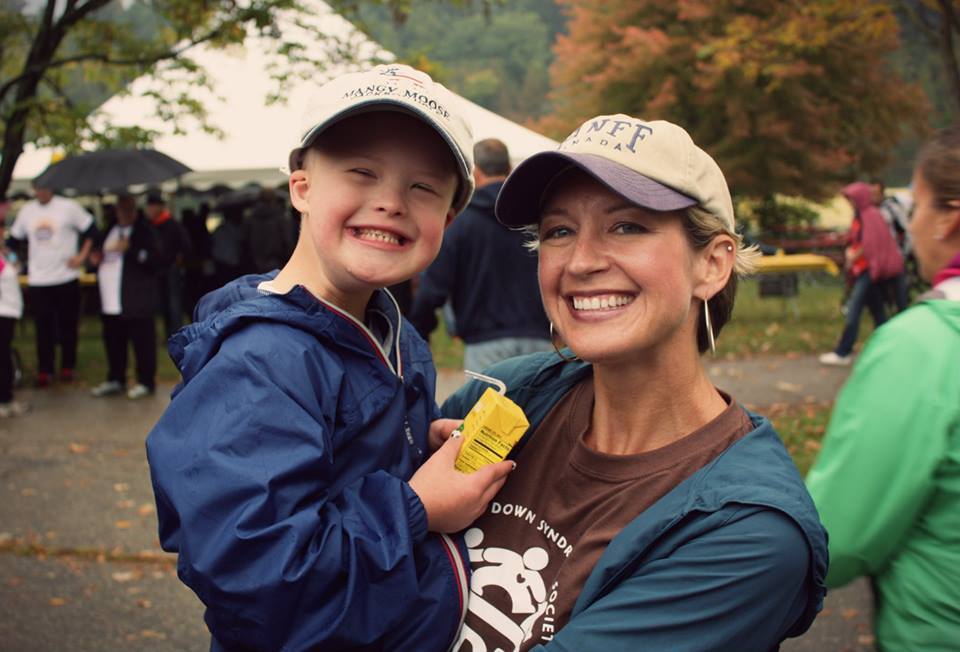


 'WIL'ingness = Willing to Embrace Extra in Life