Independence Takes a Village with Dependent Children

I have recently gotten back in the pool (after a year 😅) thanks to our friend, Dawn, taking great care of Wil after school and honing in on his life skills learning.

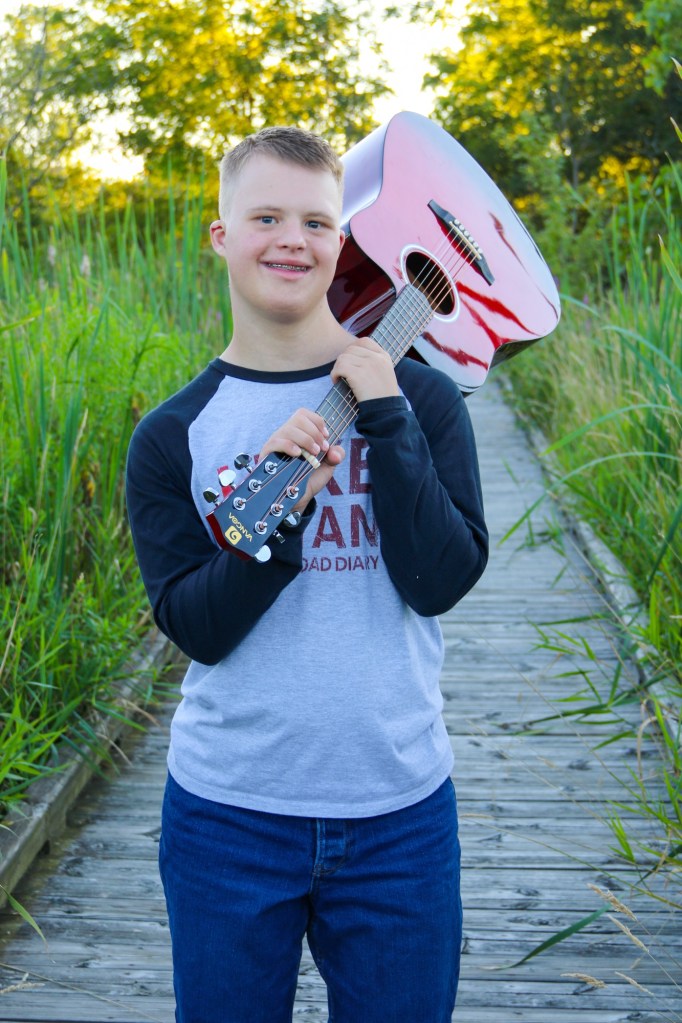
While I swam Monday, Dawn’s husband came over to have a guitar jam session with Wil 🎸

When you have a dependent child, your schedule revolves around that child’s schedule. It takes a lot to find someone you fully trust, and that matches your schedule, so you and your child both can enjoy needed independence time.

Wil is my buddy, and he is so much fun! I’m thankful he’s not flying from this nest for some time to come. And yet, Wil is almost 19. He deserves someone other than mom all the time to expand his young adult life.

When I mention respite care outside of our disability circle, I receive a blank stare in response. That likely wouldn’t have been in my vocabulary either! But independence doesn’t happen without it when you have a dependent child.

When you meet someone with a dependent child, know that they most likely love having their child home, but at the same time, both parent and child need time to spread their wings, and that doesn’t happen without an extra set of loving, caring hands.

Our lives always include extras, and that extra includes extra special people with extra special hearts. 💕

Headway

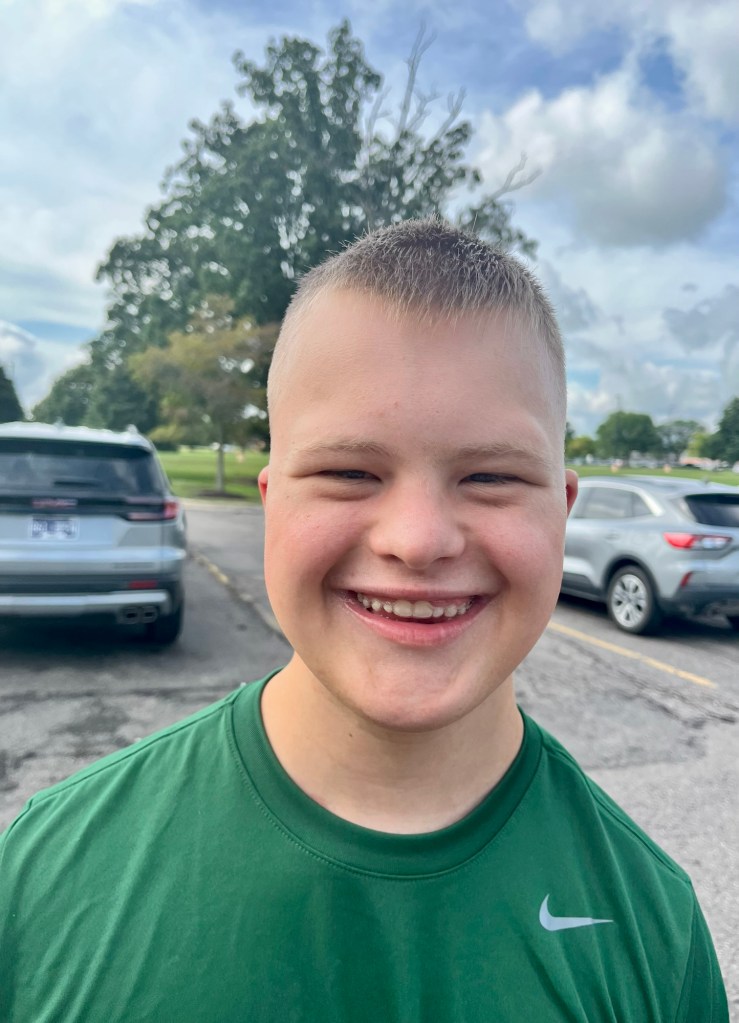
Watching Wil get his haircut today had me nearly in tears. The clippers buzzing, Wil chatting, smiling, relaxed.

Years ago this sight was a distant dream. The haircut triggered my emotions, but deep down it’s about progress.

It’s about feeling so desperate and on-guard with almost anything you do, because so much is a struggle for your child to acclimate to.

It’s about walking out the door, but never just walking out the door.

It’s about always thinking ahead, strategizing what might trigger your child. And even as much as you think ahead random things happen. A dog barks and dang, its the one time you forgot the noise-cancelling headphones, and your child takes off and you sprint after them before they hit the parking lot on the way to the car. Leaving the house is never just leaving the house. You always have to leave with as much of a crystal ball as you can muster.

And then fast-forward to watching your grown child calmly sit, and you actually left the house without much of a plan.

I think, a lot of times, happiness is not some elusive place, but a place of working hard for something. Of just climbing that ladder every day, and you are so used to climbing it, that you don’t even realize you’ve hit this certain level until one ordinary day you are blissfully suspended in air.

And once your brain’s thought process catches up to that elevated feeling and brings you back to earth, you realize happiness is about progress.

Turning the Tide: A Story of Growth and Inclusion

Growing up, Wil has loved boat rides with his Grandma and Grandpa. So when his sisters were invited on an impromptu trip around the lake with some of the neighbor’s kids, they jumped on — and Wil stayed back with his grandparents.

My dad noticed a shift in Wil’s demeanor. He didn’t say anything, but my dad could feel it — that quiet pause, the internal processing. He turned to my mom and said, “Wil wanted to go too.” They decided they’d take Wil out for his own boat ride to lift his spirits. So off they went, stopping at his favorite swim spots along the way. Wil jumped in the water as he always does, with my parents jumping in with him. It worked — his mood lifted (there’s good reason Wil adores his grandparents!).

But the moment they returned to the dock, Wil spotted his sisters and the neighbors hanging out in the yard. My mom said he couldn’t get off the boat fast enough to join them.

Whenever Wil turns a corner in maturity, I feel a sudden wave of sadness for him — and then, not long after, I’m chuckling at his light-hearted ingenuity.

This summer in speech, Wil is working on initiating conversations. He struggles with finding ways to insert himself — to say things like, “Hey! I want to go too!” It seems so simple, but that’s just not in his current arsenal. He wanted to go, but didn’t know how to insert himself. But eventually, he found his way.

Processing time may be slower for Wil, but that does not mean his ways are not effective.

I share this story because no one intentionally left Wil out. In the past, he’s always chosen boat rides with his grandparents — that’s been his comfort zone. If he had said he wanted to go, he would’ve been welcomed. So sometimes, inclusion isn’t about purposeful exclusion. It’s about learning how to speak up — and that’s exactly what Wil is learning to do now.

I’m curious now to see if Wil does start to speak up more. He’s entering a new season — he’s graduated high school, and he’ll be around new people who don’t know him as well. They won’t read his cues the way longtime friends have. That shift will come with challenges, but maybe also with opportunities.

Because often, inclusion really just begins with getting to know someone. And showing up — or speaking up — in a way that you can be known.

Paradoxical Path

A singular new word Wil calmly adds to his vocabulary, in a such a way that only I — or his closest educators — would hear stands out like a stacatto flashing me back in time to a movie reel loop when he was 5 or 7 or 10, working a skill on a repeat loop that at the time I couldn’t see beyond.

But here I stand, still marveling at one added word, one added achievement, one added milestone, taking me back and pushing us forward seemingly in flow but full of staccato moments.

I’m not who I used to be raising Wil, yet I’m closer to who I am at my core.

I must pave ways for Wil and yet must leave space for him to create his own. He has a high level of vulnerability and yet has an inner strength many desire.

Wil has grown in me a patience I never knew I had, and yet also has grown an immense impatience to grow more; to learn more; to expand borders.

I have learned many stereotypes are hysterically true; and many are heretically innaccurate. Wil’s sisters called him, “Wil ‘the snail’ Taylor” every time they followed him as he two-stepped up and down the stairs. I’ve shared many laughs with fellow Ds mommas over stereotypes and shared many tears with these same mothers over stereotypes. Stereotypes can bind or separate. You need to walk the walk to know which is what.

And friendships. He has some deep ones. He also has many cheerleaders we’ll never see again once he leaves this school. But the impact his presence has made, and theirs on him, is undeniable.

Raising Wil is a paradox; surface friendships that leave a lasting impact, single breakthrough words that flash back to a former time loop on repeat, patience that creates a relentless drive, stereotypes that create binding laughs in their known truths, and stereotypes that create pain in their ignorance of the truth.

I now stand beside Wil with great hope of what’s ahead, pure enjoyment of where we stand right now, bouyed by the memories that brought us here, and on occasion flash me back.

Light 💡 Ranch

Not so long ago, if anyone gave Wil choices he’d pick the last choice offered.

This morning I asked him, “What dipping sauce do you want? Ranch, mustard, ketchup or honey mustard?”

“H — Ranch.” Wil corrected his auto-response for what he wanted.

Life is full of tiny miracles embedded within everyday occurrences. Our kids with disabilities slow life down just enough to reveal these hidden gems for the light they are.

Age is Just All Numbers

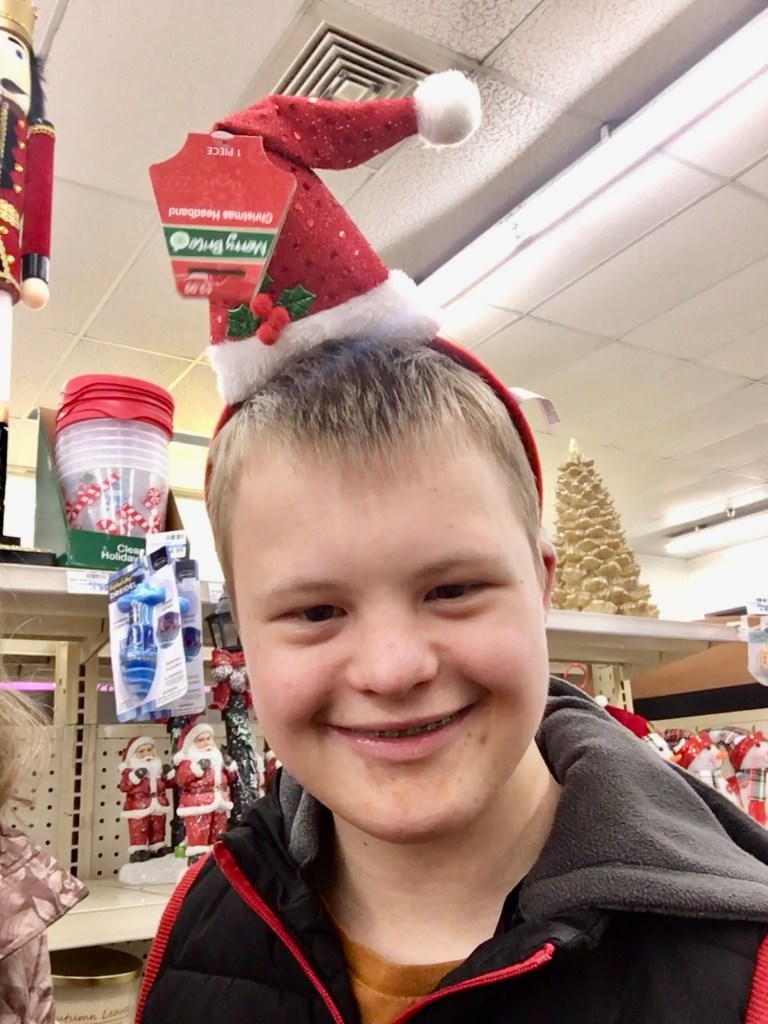
Wil and I decorated the Christmas tree. It’s the first time we’ve done it just the two of us.

Usually the twins are here so he’ll hang a few ornaments, but then move on to singing or other activities around us.

As Wil was home sick, and we needed low-key activities to stave off boredom, I suggested we decorate the tree. The tree was up, we were just waiting for the twins to come home this weekend. But I said let’s do it.

That’s all I needed to say. Wil got the box of ornaments from the basement and we got to work.

As it was just the two of us decorating, he put up more ornaments than usual. He picked one area of the tree and put all the ornaments there. Fine motor skills are hard for him (such as pinching his fingers together), so when he got frustrated putting the ornament loops over branches, he just shoved the ornaments into the tree.

“Wil, take a break when you need to. I know this gets tiring for you. But watch this, if you hold it like this it’s easier. And feel free to spread out.”

He did take a brief break. Then he tried looping a few more ornaments but stuck to the same spot.

All of his ornaments in one spot, many shoved in, was so darn cute — like a younger child would do. But also mixed with the teenage defiance of “you can tell me what to do but I’ll do it my way.”

Tree decorated, we cleaned up pieces of sparkle and felt that had fallen off of older handmade ornaments.

Wil picked up a red piece of felt, held it under his nose and said, “Look Mom, a mustache!”

Wil is an expert at spontaneous joy. As frustrated as he gets at things that are hard for him, he always has a silly something up his sleeve. It’s these moments that have changed my life. How otherwise mundane tasks can be incredibly joyful in the simplest of ways.

Which is one of the many reasons I don’t like the question: “What mental age is he?”

Ummm, he’s 5, 10, 17, 25 all in one moment. What mental age are you?

Some of us, like Wil, have all our ages all bunched up together in one spot.

Sometimes we need some guidance to spread out, and other times we know exactly how to make the best of right where we are. ❤️

The Bright Side

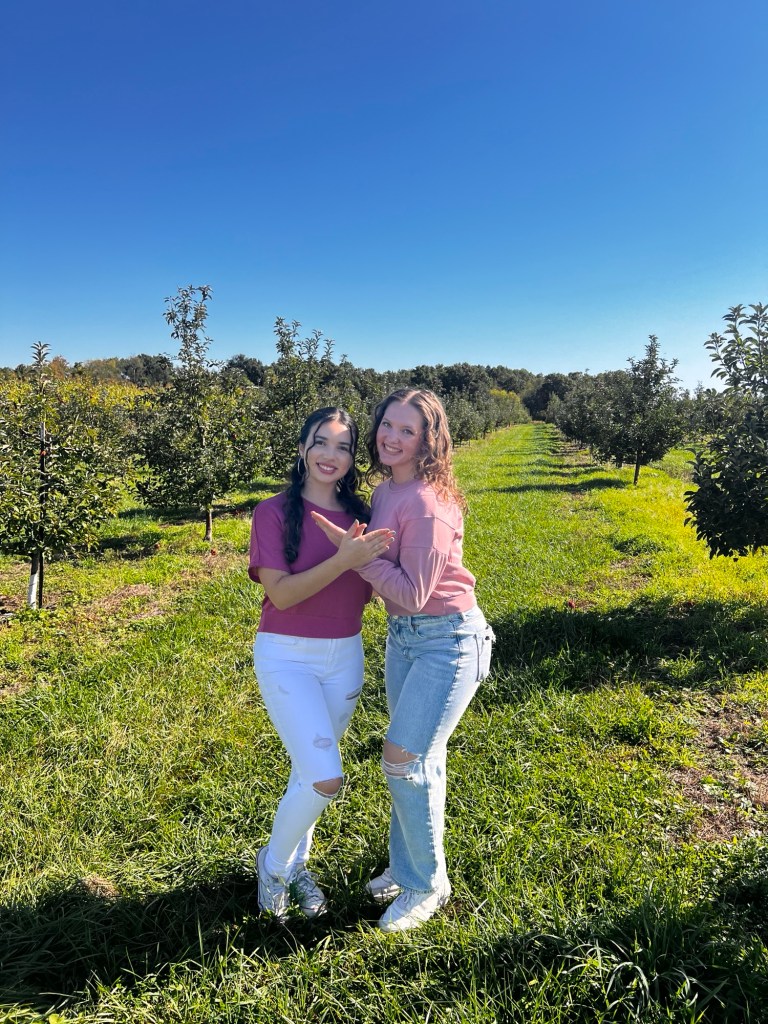
Elizabeth sent me this picture of her and her sorority sister, Isabelle. They were visiting a cider mill and enjoying the day with their sisters.

I love to see her big heart and smile, and loving life on her own. She has more than earned this time. She and her twin sister, Katherine, are great big sisters to Wil. Having a brother with a disability has impacted them. How couldn’t it?

Elizabeth is a sophomore in college studying to be a Physician’s Assistant. Since her senior year of high school, she’s worked as a Certified Nurse Assistant. She’s currently working at the local hospital as a CNA with a full rigorous academic load. As a CNA, she’s worked in many challenging situations, but no matter how challenging she treats each person with dignity. Every story she shared with me shows concern about the person underneath the challenging behavior.

Growing up with Wil, which requires patience and many times schedules built around his timing, plays a big part in this. Yes many times his needs come first. I think many believe this is a burden for siblings. But there is a flip side, there always is. And that flip side is growing a deep compassion within yourself for how others think, feel and operate. This understanding for others is grown strong by living it every day.

I love to see Lizzie in pics like this enjoying time and living life for herself. She deserves time that is all about her and all about her dreams. And with that, she also always carries with her the knowledge and compassion of what it means to care about another. There is always a flip side 😊

Staying Open

It happened after an event in the high school gymnasium. I don’t remember the event, but the after-scene is a moving photograph vivid in my mind. Wil approached a group of male high school peers on the gymnasium floor. At his approach, the circle broke with fist bumps, hellos, and high-fives with Wil. Two boys asked him a few questions, which drew Wil into the circle. Wil’s words – spoken with a slight stutter as he often does when he has so much to say, but his brain struggles to push the words out as quickly as he thinks them – had their attention. When Wil finished sharing, the boys resumed their conversation. The boys talked and laughed; the circle grew subconsciously tighter. Wil stood in the same place but found himself on the periphery.

These boys were not consciously excluding Wil. They were engrossed in their own stories and had forgotten Wil was there. It broke my heart to watch Wil walk around the circle of boys trying to find ways to re-insert himself.

Contrast this with Wil choosing to sit with a group of boys in the lunchroom mid-year. He one day, seemingly randomly, positioned himself at their table. They all welcomed him in and he joined them every day after that. The lunch table is also a more conducive environment for Wil to remain prominent while everyone is seated around a table. He can more adequately speak at his own pace. A few years ago, I spoke with a classmate about when Wil randomly sat at her lunch table. She said that at the time there was a lot of drama and gossip happening at their table. When Wil joined them, the drama stopped and the fun returned.

Wil recently went to his friend, Will D.’s, graduation party. Will D. also has a disability but has a much higher athletic ability than Wil T. Will D. has run ½ marathons and was on the track, cross-country, and baseball teams. As such, many typically developing athletic classmates attended Will D.’s graduation party. Two of these teammates were playing cornhole out in the sideyard when we arrived. These two boys gave a hearty hello to Wil T. and invited him to play cornhole with them. All the players found an equilibrium; their conversations were well-matched, relaxed, and fun. Watching this filled my heart.

At the water park yesterday Wil was floating down the lazy river in his tube. The lazy river is designed like an oblong circle, which splits and rejoins at one end. At the split, you choose to go under faucets spouting water or take the faucet-free dry option. Wil would alternate his decisions at the split, weighing more heavily on the “get wet” side. I watched as he by-passed certain tubers, and slowed to join others. He hung around a group of tween girls for some time, laughing when they laughed, choosing the same split in the river as the girls did. He then moved on to join a group of three young men. The men engaged him in some talk and fist-bumped him. When those young men exited the river Wil joined other young-ish groups. Down syndrome was on his side in this environment. No one questioned him, they immediately accepted him when he floated into their circle. Even if they didn’t converse, they shared the enjoyment and togetherness of the moment.

I wonder, what would the world look like if we all just opened our circles a little?

Steps in Time

Just 2 years ago during graduation party time I needed an eagle eye on Wil. At one party he fled the party and would not leave the front porch. At another he ran to a side street and sat in the middle of it. Yesterday, at each grad party he hung with his buddies. And made new buddies. He played cornhole with known and new friends. He joined a basketball game with upper classmen from MSU. At each party, I only went to check on him here and there. A stark contrast from two short years ago.

He’ll be a senior next year, and then likely on to a young adult program. When he’s 20 he may have a whole new level of independence from what he has now. Time, opportunities, supports and his own will will tell.

Every individual is their own, no matter their disability. We cannot define nor predict their growth, but we can observe, we can open doors, and we can learn where to step in and offer supports, and as I’m currently learning, when to step back.

Stages of Independence

I sat in my seat as Wil walked up on stage to receive his school honors. He needed no support or assistance. He, like his peers, walked from his seat to the stage and back to his seat.

As he returned to his seat, I waved so he could find me, but he didn’t need my wave. He didn’t even look up at me as he made his way back. He knew where he was going without me.

Last Tuesday while in a class I’m taking, I watched a Youtube about people with physical and cognitive disabilities living on their own with support. If I was at home, I would have had a full-on sob. I consciously held myself together the best I could. Tears silently escaped the corners of my eyes that I discreetly brushed away.

What I was watching is fought hard for. These individuals’ independence, and the supports required for their independence, is what’s right and what these individuals fully deserve. And yet, this terrifies me for my own child at the same time. Wil will always have a level of vulnerability. I have to put a helluva lot of trust in someone else’s hands if he does choose to live independently with outside support.

And yet, here I am, the one who has worked so hard for his independence for the last 17 years, waving for him to find me. In many ways it’s we parents of our vulnerable kids who can’t let go. Our hearts are just as vulnerable as we navigate impending adulthood for our kids.