Wil has grown so much in his 10th grade year, and I can’t thank Kristi Campbell, Hope Schook and Heidi Drake enough for that! For this fact, it gives me space to snicker when I read about a day like this:
10:05 Refused to work 10:08 Turned it around 10:25 Refused to work 10:30 Turned it around 1:50 Refused to work 1:54 Turned it around
Just last week, I worked with a paraprofessional that subbed for Wil in 1st grade while his primary para was on maternity leave. We laughed that the main topic of daily conversation then was how to get Wil out from under the table most of the day. At the time, though, it was no laughing matter!
But with time, collaboration & communication with caring educators, we’ve come a long way, baby!
We are on to larger concerns, as Wil is an adventurous guy; without fear/recognition of danger which will likely be on our radar for years to come.
So seeing these little bursts of stubborness that he can resolve in minutes, is him showing his personality in full force and finding the self-desire within him to turn it around for a better day — while giving his teachers a run for their money! And we wouldn’t want him any other way!
My son will not play in the NBA; my son will not invent a new vaccine. My son will not design a software program nor manage your finances. My son will not drive a car nor drive a recycling truck.
But my son sang for nearly 4 hours on our drive up north without any music playing other than what was in his head. My son can put an impromptu Luke Bryan medley together faster and more expertly than Luke himself. My son knows the lyrics to well over 100 country songs. My son still jumps in puddles at age 16, finds reasons to laugh over things we’ve long forgotten, and has a joie de vivre that is enigmatically contagious.
My son is also frustratingly slow when he doesn’t want to do something, often coming to an abrupt halt. He will not be bullied, pushed or cajoled. He will do things in his own time; not mine and not yours. My son is hurt deeply when others try to force their timeline or opinions on him; yet he doesn’t hold a grudge against others. He quickly forgives, but he never forgets.
My son has his own opinions, idiosyncrasies, habits and preferences. My son, just like you and me, is fully human in beautifully challengingly ways. That is where we all can meet.
Wil does not have to win a pulitzer prize to prove his worth to this world. In fact, his having a disability gives us the opportunity to be better humans than we are. Wil, in his own way, is a pearl.
Wil was always a pearl; it was my heart that was the sand that needed to be molded and shaped.
Many do not take the time to look within their own hearts to see the sand; and this is required to take the time to understand my son. To understand Down syndrome. Our closed minds are the sand that we must mold over time and experience, and in that we find the pearl of his existence. And the beauty of that journey is we come to value what human life is about. It’s more than achievement. It’s more than habits. It’s about remembering the songs in our hearts before the sand gritted and obscured them.
I don’t want a cure for Down syndrome; I want a cure for a belief system. I want to turn sand into pearls within us. If we can create vaccines and information systems and recycling systems, can we not do this?
Wil and I were at the orthodontist’s office. He has a top set of braces; this appointment was about a bottom set to correct his underbite.
“As many kids with Down syndrome have a smaller upper jaw, the underbite is common,” the orthodontist said.
The commonality of an underbite in people with Down syndrome, I knew— what I didn’t know was why! I sat on a blue swivel chair next to Wil marveling at my casual lack of knowledge!
Moments after Wil was born I learned about hypotonia, as the nurse said Wil was “floppy” which is an indicator of Down syndrome. After 3 excruciatingly long days for Wil’s genetics test to prove what we already knew, I met with a geneticist. I learned all about those squiggly, little chromosomes. I learned about his stubby fingers, the space between his toes, his small nasal passages that would later cause terrifying stridrous breathing with days and nights at the hospital. I met with a cardiologist for the first year of Wil’s life and learned with relief that the little hole in his heart closed on its own. I learned about the commonality of clogged tear ducts that unclogged on their own soon after Wil’s first birthday. I learned when Wil was 6 months old he had hypothyroidism, about Wil’s tiny ear canals causing multiple infections, about his mild astigmatism and the therapies he would need and why he would need them.
I learned and learned and learned.
I continue to learn and learn and learn. What will life look like after high school? What post-high school programs are available to Wil? What job training is available to Wil? What social opportunities? What about girls? What about independence? What about college? And most importantly, what will Wil think about adulthood and how will I navigate that with him?
But on that blue swivel chair in the orthodontist’s office, I really didn’t even need to know why Wil had an underbite. I didn’t have to seek out any specialists, programs or community support. I didn’t need to create anything or join forces with others to create something. I just sat there and listened; and learned something casually new about my juice box-toting boy who is now turning into a man.
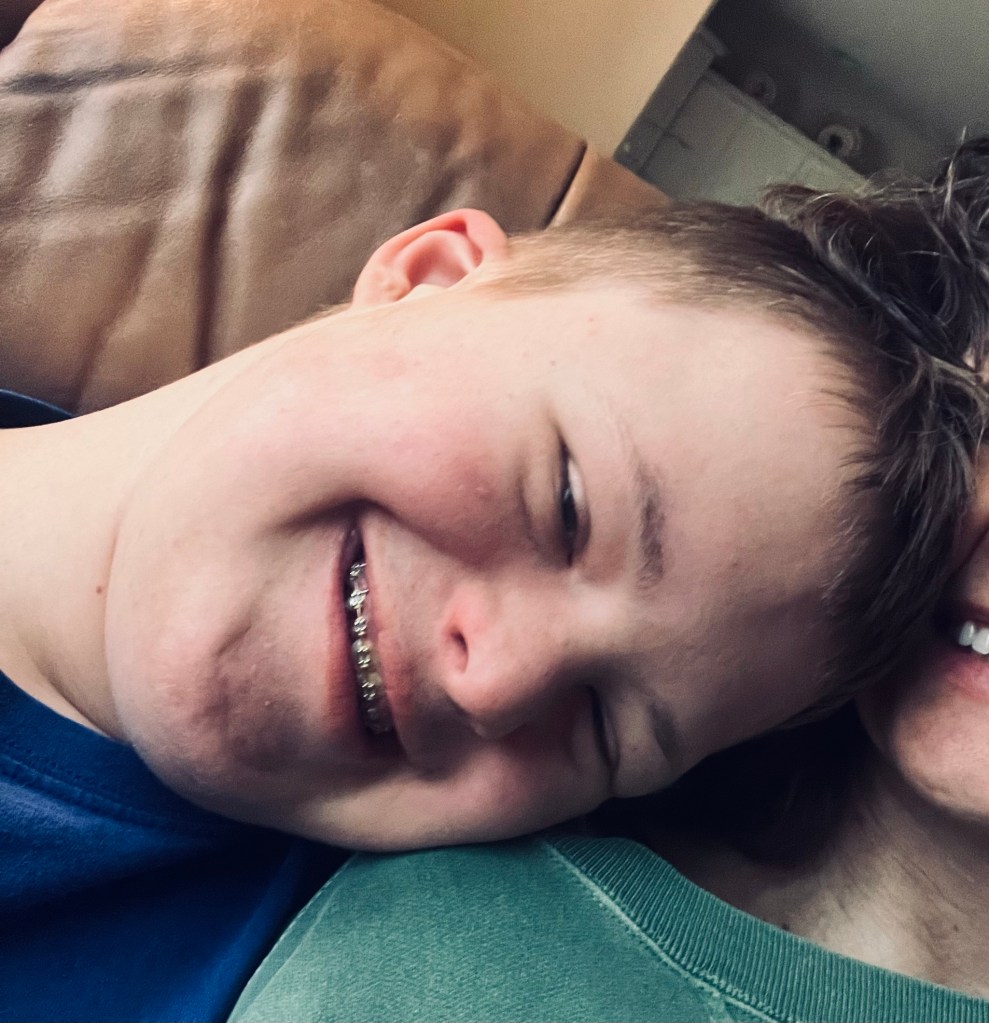
Wil was just giggling to a tv show. Now he squished himself next to me in the Lazy-boy, as I was reading quietly, and started giggling. When I made him breakfast earlier, he danced around the kitchen, giggling.
“The first problem for all of us, men and women, is not to learn, but to unlearn. We are filled with popular wisdom of several centuries just past, and we are terrified to give it up.”
Gloria Steinem may have had women’s rights on her mind with this quote, but it rings very true for our friends with Down syndrome. I was so scared when I received Wil’s diagnosis. Why? Because of an outdated belief system handed down to me from centuries just past. I had no other frame of reference; it was what I knew and the unknown is a scary place.
When I opened my mind; when I truly looked at Wil and accepted anything and everything to come — all the knowns and most importantly the unknowns — is when my world first cracked open, then burst open, and love flowed in place of the fear.
Wil chose not to wear green today. Just because he was told to. I wouldn’t be surprised to find him dressed in green tomorrow; because it would be his choice. Wil did follow the color code on Valentine’s Day. He had been coveting Elizabeth’s neon pink shirt and she let him borrow it for the occasion. And, Wil is all about the love ❤
During Spirit Week at school he makes up his own mind to play or not to play. If it’s wear black day, he may purposely avoid black — or go all in with hat, shirt, undies, pants, socks and shoes in black. If one of those pieces — even the undergarments — is not black, he may abandon the whole outfit even if we have minutes to leave for school. However the last time the school had Dutch Day, he spent careful time the night before selecting which Dutch shirt, which Dutch hat, and what pants and socks would go with.
On World Down Syndrome Day 3/21 (representing 3 copies of the 21st chromosome), ironically he has refused to wear his crazy socks on certain years. And believe me, he has a drawerful to choose from. He’ll wear his snowflake socks in July if they match his shorts. He wears his blue star socks whenever singing the Star Spangled Banner in choir. He has socks that look like a fish is swallowing your leg, which he said he’ll wear this 3/21, but I won’t know for sure until seconds before we leave for school if that choice will stand.
Wil could care less that you are wearing crazy socks on a certain day of the year. He’d get more joy out of your socks if you wore snowflakes in July!
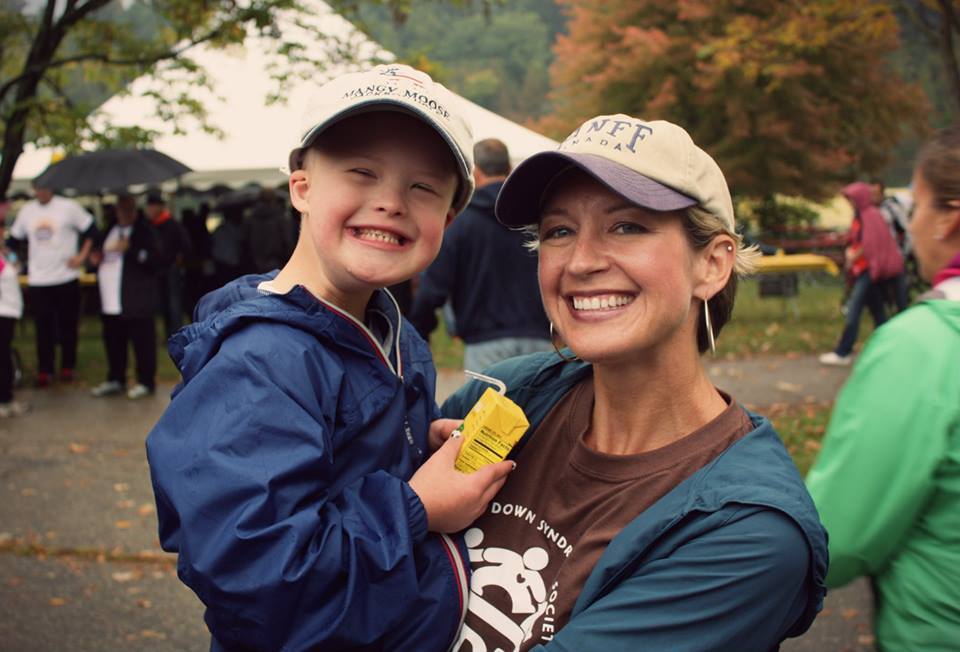
Wil loves the Buddy Walk because it’s a big celebration of people in-person, coming together to enjoy a great day outdoors. Wil’s not out to make a calendar or societal-driven statement. Wil’s about making friends and living life fully his way.
Let’s celebrate Friendship over counting chromosomes. Let’s celebrate who we are behind the date on the calendar and behind the clothing. Let’s celebrate how different we are, and how different we aren’t. No matter what you wear, or what day you wear it, Wil will love you anyway, every single day of the year.
At a social function a man said to me that he felt sorry for people who had children with Down syndrome. How hard it must be. Then he met a woman he love’s daughter, who has Down syndrome. Now he can’t imagine life without knowing her daughter. He shared how much bigger and brighter life is.
Some heads won’t be knocked open, no matter how hard you fight, claw and shout. But there are those whose hearts will open without even trying. They only need to be invited in.
Wil’s paraprofessional, Kristi, told me how Wil — of his own will — went to the closet in gym class, pulled out two baskets and two balls. He proceeded to toss the balls in the baskets. His peers joined in his created game by cheering him on.
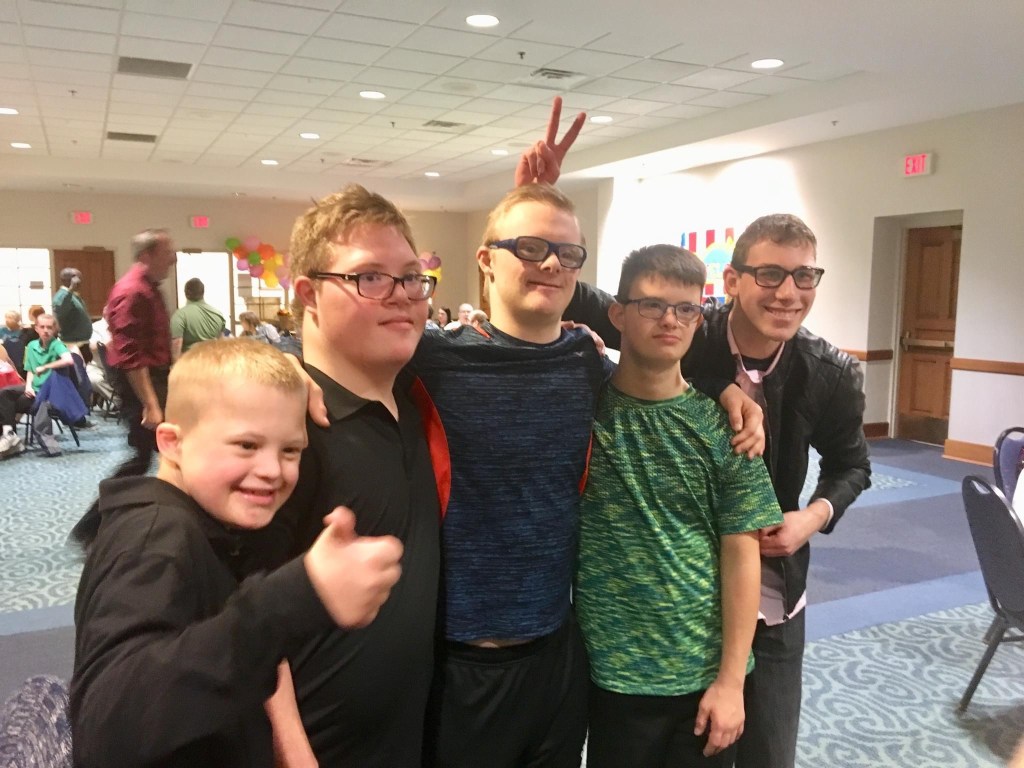
Today I picked up Elizabeth, Wil and their friend Kimmy from school today. Elizabeth had an NHS meeting, so Wil, Kimmy and I sat in the car waiting for her with the windows down. As kids poured out of the school, Wil yelled out his hellos, and peers called out and waved to Wil. One friend, Trent, walked up to our car and chatted w Wil. Trent has about every sport there is on his letter jacket. After their chat he fist bumped Wil and walked away.
Wil takes this all in stride, having no idea how this type of interaction is not commonplace. To him, it’s just another day at school with friends.
Kimmy, whose aunt and sister have special needs, said how embracing of Wil the students are at school. I responded that it fills my heart; its what inclusion is meant to be. Wil’s experience is as it should be but isn’t how it always is.
Kimmy agreed, saying she sometimes forgets how people don’t grow up under the same circumstances as she does, and don’t always understand certain reactions and behaviors of individuals with special needs.
I’m so thankful for this Community School experience. It’s enriched my life as much as Wil’s. It’s what inclusion is meant to be — a benefit for all. It’s about friends being friends; of all abilities.
In embracing our vulnerable population we embrace our own vulnerabilities.
We crave Love. Love is the base of all things. Love is survival. We crave, live and breathe for Love.
In embracing individuals that we previously misconceived as having lesser value, we find in fact their value is greater than ours as theirs is the truth-pathway to LOVE. In embracing those we do not fully understand; we must find within ourselves a deep patience and seek to view life in new and fresh way. It is in this way we find Love — a love deeper than we knew existed. A love that touches and speaks of God. We feel God and His Presence even if we are not religious; even if we are non-believers. Whatever we believe, we cannot deny what we feel. We call it Love. And yet it matters not what we call it. It only matters that we FEEL it.
Once we are touched by that feeling, we crave more. This Love lifts us, lights a fire within us. We find it hard to believe it was something we closed ourselves to. But we did not know we were living behind a closed door until our child with a disability; or our experience with individuals with disabilities opened the door for us. The blast of fresh air is what alerts us once we open our minds. It blasts us with a gust, not unlike a hurricane; it forces us out of our closed mind so far that we can never go back. We never want to go back. In fact all we want to do now is pound on closed doors in our desire that those behind the closed doors know this Love.
We see the fear, and know the difficulty to get past that fear. But once you feel the blast of fresh air in your face you cannot but want more of it, and want more of it for others. And so you advocate for your child, but it is so much more than equal rights and acceptance. It is a Love, a Love for all that lays hidden. A Love that is locked away inside of us. We are scared of it’s immensity. But in the fight for your child you release it. You must, for their sake more than yours. And you find in this unlocking a Love greater than you ever knew existed but it does exist in immensity all around you. And when you breathe it in fully it grows and grows and grows. There is no end to it, and though it is bigger than you could ever conceive, even a small slice of it breathes new life into. You cry in the sheer love that you feel. And you know you can never run out of that love because it is always there, it is bigger than anything your mind can conceive.
You must re-open yourself to this Love every day. Recharge yourself with it. When the doors start to shut due to habit or other’s actions — your child opens the door for you with a kiss on the cheek, a simple gesture, or a silliness. And when you try to describe this type of grand simplicity that has the power to open a door, those behind closed doors see only the simplicity of the gesture, as they have not opened themselves to the grandness. They refuse to open the door to this Love, staying in a sheltered space they know. Fully unaware that the immensity of Love is available to them if they only unlock the door. But when we don’t know, and what we only know is behind the door there is great security in that. There is great control in that. And we think we are thriving when really we are not. We have created a life that feels good behind the closed door. Even when it doesn’t feel good, it is what we know — how terrifying to go outside of what we know.
When we spend time to truly know and understand our vulnerable population, oh, what LOVE. It is open, it is free. Our children never tire of opening the door; it is their nature. It is on us to open ourselves to them.
You will know when you feel the Love. This Love is yours, it is all of ours. It is in endless supply. Let us circulate it. Let us ventilate closed doors. Let us embrace our vulnerable population.






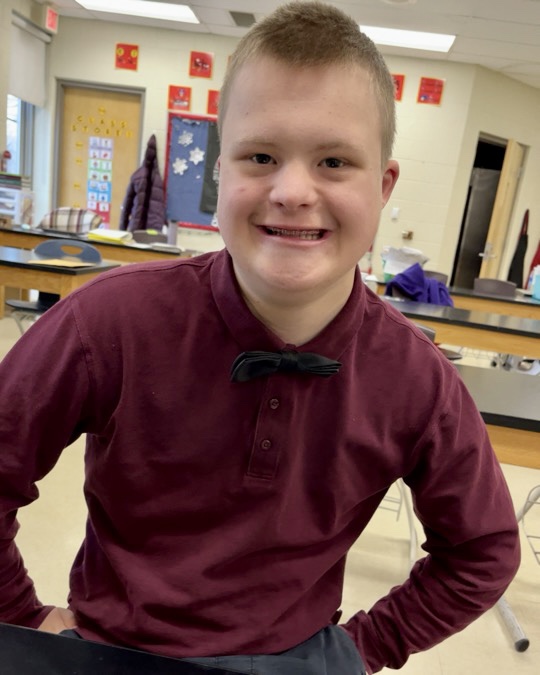

 'WIL'ingness = Willing to Embrace Extra in Life