Complex Simplicities

She usually wears shoes to golf but in this heat, my guess is she wouldn’t leave the house without her flip-flops. She slipped off her flip-flops at the driving range and sliced the golf ball just as expertly as she did with shoes on.

She sat down to brush the dirt off her feet. Her bare feet were lifted to nearly chin level. Hypotonia (low muscle tone) allows our kids with Down syndrome great flexibility. The loose dirt fell off, but a dark stain remained on her heel. She wanted that to come off too, but wasn’t able to brush it off. She knows me as Wil’s mom, so I bent down and asked if I could help. She nodded. I poured water from my water bottle across her heel then scrubbed with my hand. She tilted her foot inward to get a better look, but never let her feet fall below chin-level. The dark stain had faded but she shook her head. Not good enough.

I poured more water on her heel and scrubbed again. She tilted her foot inward, took another look and shook her head. Another parent ran up to the golf course’s restaurant to get some napkins. But even those didn’t remove the dirt to her satisfaction. Her dad soon walked over, as he was volunteering on the putting green. By his expression I could tell he knew what was happening. He bent down and had a quiet conversation with her. She finally let her feet fall down to the ground then slid on her flip-flops. Victory! She took her dad’s hand, I waved good-bye and they headed toward the parking lot.  

The next day was equally as hot, but the evening had slightly cooled, so I sat on the back porch and Wil got his recumbent bike out. He expertly maneuvered the handles to make perfect cuts and turns across the grass. Sweat dripped down the side of his face but I don’t think he even noticed. Wil turned his head toward me and smiled every few seconds to be sure I was watching. 

When Wil was a baby he wore tiny lycra biker shorts with the inseam sown together. Otherwise his legs would flop out as Wil also has hypotonia. The idea of these shorts was to strengthen his hips and train his body to keep his legs in. Every time I watch Wil ride his bike, I’m brought back to those tiny biker shorts.  

Wil clomps heavily when he walks, and has a slight side-to-side swagger. Wil had speech therapy with his friend Teddy this summer. Teddy’s mom and I would always share a smile as Teddy and Wil clomp, clomp, clomped off to the classroom together. 

When Wil was born, I was told by parents who were ahead of me on this journey: “It may be hard to see now, but your life will be so much fuller with Wil in it.” 

That remained stuck in my head because it both struck a chord, and yet felt too abstract. I wanted more details. I wanted to know how my life would be fuller. What did that mean exactly? 

But how do you share with a new mom how endearing a flip-flop stand-off is when she is navigating the complexity of acceptance? How do you explain the depth of joy in watching your child ride his bike when she is navigating doctor appointments and therapies? How do you share the feeling of a deep-down connection in another mom’s smile when she is bewildered by a new journey full of new, unknown people. 

My answer to that now is no more detailed than the response I received over 14 years ago. I had to first embrace the complexities before I fully received the gifts of the simplicities.

True-Blue Happiness

As I waited in line at the pharmacy for Wil’s thyroid meds, I glanced at the magazine covers displayed below the check-out counter. A woman on one shiny cover sat cross-legged in a peaceful, meditative pose; mindfulness is the way to happiness. Another shiny cover had a full-page close up of a spotless country kitchen; simplifying your home is the way to happiness. Another shiny cover — this one in black-and-white – pictured a shirtless male weight-lifter; a sculpted body is a sure-fire way that happiness will find you.

Though nearly every magazine cover touted a way to happiness, I didn’t see a single one with a denim visor. 

At Wil’s Special Olympics golf last Thursday night, the golfers split into three groups: one at the driving range, one at the putting green and one chipping near the sand trap. Wil and I were at the driving range. As each group made the rotation, we crossed paths with one of Wil’s new friends. She is in her early 20s and also has Down syndrome. I admired her outfit and told her so. She wore a denim visor, and when I complimented her on it she said that a bus driver had given it to her. She then launched into the story behind it. 

I hung on her every word. Her words easily melded from one into the other. There were no pauses; there was no stuttering. It was a good story, and all the better that I could enjoy hearing it from her own perspective.  

Wil speaks in paragraphs, but not yet in stories. If you compliment Wil on his hat, he’s sure to say thank you. He may add that it’s from his grandpa, or his uncle, but that would be the extent of the detail. He has a lot of words to share, but tends to stutter in getting them all out. He’s working on remembering to take deep breaths to slow down his words.  

Every advancement in communication Wil makes, no matter how long it takes, is a thrill. Even the simplest requests that he’s been making for years, like what he wants for lunch, still gives me a smile. When you wait to hear someone’s very own thoughts, and their very own perceptions, it’s nearly impossible to take one word for granted; and I never want to.

A friend of mine in our golf group has a son in his mid-20s with Down syndrome. Her son has had a very recent shift in behavior. Though she has a few guesses as to why, she’s not sure. He’s not highly verbal, so she listens intently to anything he shares with her, be it physical, verbal or situational. Any type of communication from him could be the key that opens the door to what he is struggling with. It’s incredibly trying and frustrating to want to help your child when multiple communication barriers exist. 

As she communicates her situation to me, I feel her pain. I feel her angst. I know her frustration. It’s exhausting. But on this journey, you can’t get tired. You have to keep going. You have to keep navigating, deducting and assimulating. Even if you may never see the whole picture, one shared thought from your child is a beacon of light.  

These are not shiny, abbreviated forms of happiness. What we have is a connection and understanding created through inter-woven threads of time. What may appear simple from the outside — a story, a word, an emotion, a sign — is held up by solidarity and strength. Together we beam brighter under the sun and weather the storms through the test of time.

Just like a denim visor; with a good story behind it. 

Behind the Magic

Wil jumped onto the tube without hesitation.

Wil’s friend CJ, who we were visiting, propped himself on the tube next to Wil. Elizabeth laid down on the opposite side. CJ’s dad, Randy, asked if they were ready. All three gave a unanimous thumbs up. Randy fired up the boat and CJ’s mom, Cheri, was already expertly snapping pictures. Heavy clouds loomed; we wanted to tube as much as possible before the storm hit. 

With Wil’s apparent confidence, Randy took the tube over some higher waves. Wil’s smile never wavered.

Last year’s tubing expedition took loads of coaxing to get Wil on the tube. It was Cheri who was finally successful. She climbed on the tube wearing her sunglasses. She told Wil she didn’t want to lose them, so the tube would stay right next to the boat. Wil inched his way onto the tube next to Cheri. He had a tight grip and winced at every slight movement. 

Once Wil secured himself next to Cheri, he looked around the lake in awe. He couldn’t believe it! He’d made it onto the tube. After crossing that threshold, Wil never looked back. His bravery had clearly stuck with him into the next summer.

CJ, who will be a junior in high school this year, gives daily weather reports which he started during the pandemic. His weather reports became so popular that the local news has also broadcast them. CJ is a daredevil with watersports, is on the school’s marching band and bowling team, and shoots a mean 3-pointer. CJ, like Wil, has Trisomy 21, the most common form of Down syndrome. CJ recently started strength training and flexed his biceps for us. CJ asked Wil to join him in a few push-ups. Wil jumped right in with him. It became clear Wil needs to improve his core and upper body strength to do proper push-ups, but he saw CJ do it, so he knows he can do it too with time and practice. 

All of CJ’s interests may or may not match Wil’s, but it’s important for Wil to see what can be done by a slightly older peer. When Wil was a toddler he watched his sisters, Elizabeth and Katherine, swim in the lake. He wanted so badly to swim like they did but he didn’t like how the bottom of the lake felt on his feet. Even with water shoes, he was hard to convince. One day he put on one of his sister’s bathing suits thinking he could magically swim. He quickly found that wasn’t so. 

My parents, who live on the lake, kept walking Wil to the steps that led into the water. Little-by-little, step-by-step, he eased in. With time, encouragement and practice, mixed with the desire to swim like his sisters, he learned that he didn’t need magical powers. Now when he steps into the lake and jumps on a raft, his smile never wavers. 

Wil doesn’t have to sink repeated 3-pointers to have value (though he’s sunk a few). However, each new jump he achieves adds value to his life. There is no magic behind it — it’s role models like Katherine and Elizabeth, my parents and friends like CJ, Cheri and Randy plus a dose of desire, patience and leaps of faith. 

The smile on the other side of the leap, though…that’s all magic.

Tunes of the Territory

Wil had become overwhelmed and fled the situation with little warning. I chased after him and tried to get him to open up. He never did. 

Wil has grown greatly in his communication skills, and each time we go somewhere he grows in independence too. However there are multiple stops that must break way to starts. The unexpected throws Wil off and we find ourselves at a standstill. It’s all part of the territory, but at times the repeated standstills weigh on me. 

I’ve heard you need to fight for your joy. And some days I do. It seems the only way to get through at times. But whenever I take a deep breath, step back, open my eyes (and ears), I’ve found joy has a way of letting itself in.  

Last Wednesday night McKenna Marsh, a senior at Wil’s school, came over to watch Wil while Matt and I had a date night. Though we know McKenna and her family, this was the first time she would be Wil’s caregiver. Wil was very excited about this (as was I) so when McKenna arrived he ran to the door to let her in. We walked to the kitchen and started chatting. Wil’s high energy fell to silence. 

“Wil, you are very quiet. I know you are excited to spend time with McKenna. Is something on your mind?” I asked.

He tucked his head, and with a coy sideways smile at McKenna said, “I’m feeling a little bit shy.”

Joy flooded through me! Wil hadn’t retreated into deeper silence. He hadn’t run away. I hadn’t asked multiple questions to draw out his emotions. He opened up of his own will — by being a flirt! 

The next night, driving home from Special Olympics golf, with the windows down and country music blasting, Wil and I belted out the country songs at the top of our lungs. 

“Mom look!” As I rounded a curve, off to the right, hanging low over a wide-open field, the sun was an oversized fiery pink ball. Scattered clouds absorbed its color creating a brilliant sky. We fell in silent awe. 

Wil and I looked at each other with easy smiles and synchronously resumed our loud and off-pitch tunes. I never regret the weight of this territory, otherwise I may never know such heights.

I Wanna Hold Your Hand

Wil recently lugged the karaoke machine from our basement, plugged it in his room, and blasted his “Music Together” CD. Wil also navigates YouTube like a pro and blasts his favorite country music videos. Though I need to keep an eye on his searches for “kissing.”  

Wil demands hugs every morning, watches PBS Kids, is very particular about the clothes he wears, rolls his eyes at me and uses the word “embarrassing” though he himself lives without fear of embarrassment.

Wil is a full-on teenager with a healthy dose of youthful innocence. That is part of his charm and his individuality. It’s also very interesting to navigate as a parent. I wonder on what his young adult years will look like.

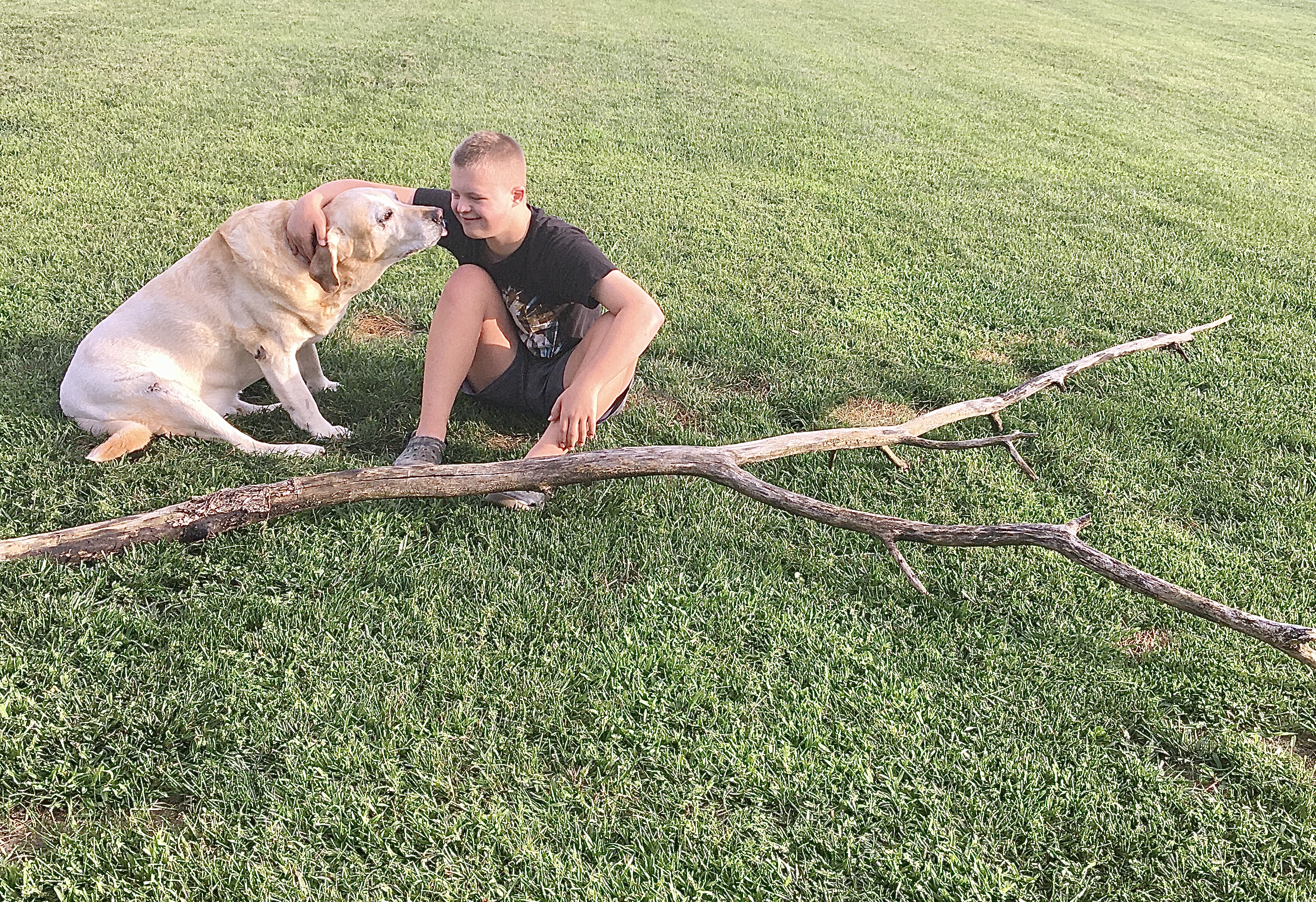
Wil goes outside on “adventures.” He grabs his wagon, walks down the property line and collects sticks. He greatly enjoys this natural independence. He also has low muscle tone and low thyroid, so this type of activity is beneficial to his physical well-being. However, there is a level of danger Wil only partially understands. Sometimes his adventures take him too far. Though Matt and I have talked to him at length about this, he occasionally goes on adventures without telling us.

Just yesterday, Wil disappeared. We all split up to head to the places he usually goes. I ran out the back door to find Wil crouched in the bushes along our property line. He stood up and walked toward me carrying a large branch. 

“Look, Mom!” He was proud of his find while my heart skipped a thousand beats.

A friend recently shared that her niece, Tina, has Down syndrome. Tina is 23 years old and wants to marry her boyfriend. Her boyfriend also has Down syndrome. Tina and her boyfriend each have jobs and live at home with their parents. My friend explained that Tina’s boyfriend has a higher level of independence than she does. Tina’s parents, though always supportive and proactive when it comes to her independence, are very concerned about this next step. They do not know if Tina fully understands the next level of independence she is asking for.  

Every year Wil grows in leaps and bounds. Questions and concerns I had about him only a year ago, Wil answers himself in time. But that is also the challenging piece that makes my heart skip a thousand beats. Like Tina’s parents, I prepare for and open doors for him, and he opens many doors for himself, but he may still need a hand to hold through some of them.

Suddenly I have the urge to play “I Wanna Hold Your Hand,” on Wil’s karaoke machine while he rolls his eyes at me and tells me I’m embarrassing. 

Growth Rings

Last week, after swimming at the Saline Rec Center, I gave Wil a dollar bill and 2 quarters to buy a Gatorade in the vending machine. 

He held the dollar bill in a pincher grasp (between his forefinger and thumb). It took him a moment to steady the dollar bill so it would fit through the narrow slot. Wil then secured the same pincher grasp on each quarter, which was slightly more challenging due to their size, and slid each one through the coin slot. I then asked him which Gatorade flavor he wanted. He pointed to the lemon-lime. 

“Ok, do you see the letter and number under the Gatorade you want?” I asked. “Punch in those same buttons.” Wil punched in the buttons with care, and a lemon-lime Gatorade slid out of its place and fell to the bottom of the vending machine. Wil reached down, pulled his Gatorade out of the machine and raised it in victory.

I had a quick flashback of Wil sitting in his high-chair. Theresa, his speech therapist, was teaching him how to pick up a Cheerio with a pincher grasp. Wil tried to scoop it with his fist. The fine motor skills required to achieve a pincher grasp was (and still is to a lesser extent) very challenging for Wil. It took much patience, care and repetitive practice for him to achieve. Like many of Wil’s achievements, there is more than what is seen on the surface. Each success has a depth to it; like the rings within the trunk of a tree. 

Our neighbor, Nancy, recently started taking Wil to Dollar General to work on his life skills. As a retired educator with the Washtenaw Intermediate School District, Nancy has years of experience working with people with disabilities. Nancy’s grown son has autism, so she understands the many rings of this tree as a mother, too. 

When Nancy first took Wil to Dollar General, he just followed her around. This fact didn’t surprise me, but shook me up all the same. When Wil and I grocery shop, he may run ahead to pick out something he wants, or help me take items off of the shelf, but I’ve never given him more ownership than that. I realized, talking to Nancy, how easy it is to fall into familiar routines and miss obvious growth opportunities. 

On Wil’s last visit to Dollar General with Nancy, I gave him $10.00. Elizabeth asked him to buy her Chapstick and I asked him to buy himself toothpaste. Then Wil bought himself a drink. The cashier asked Wil for $7.30. Wil gave the cashier $2.00. Nancy said, “Try again. $7.30.” Wil gave the cashier $3.00. Nancy said, “Try again. $7.30.” Nancy’s goal is to teach Wil to listen to what the cashier asks for. He then gave the cashier $7.00 and $1.00 more for the change (“One more for the change” is a term Nancy taught Wil for covering the change. Wil now chants, “And one more for the change!”). 

As much as I revere how far we’ve come, and cheer with each new victory, I also fall unconsciously into repetitive familiar circles. Until a friend like Nancy comes along, shakes up the tree, prompts another look, another listen, and to try again. And that’s how the rings on the tree grow one more for the change! 

Wil & Nancy

In Our Wheelhouse

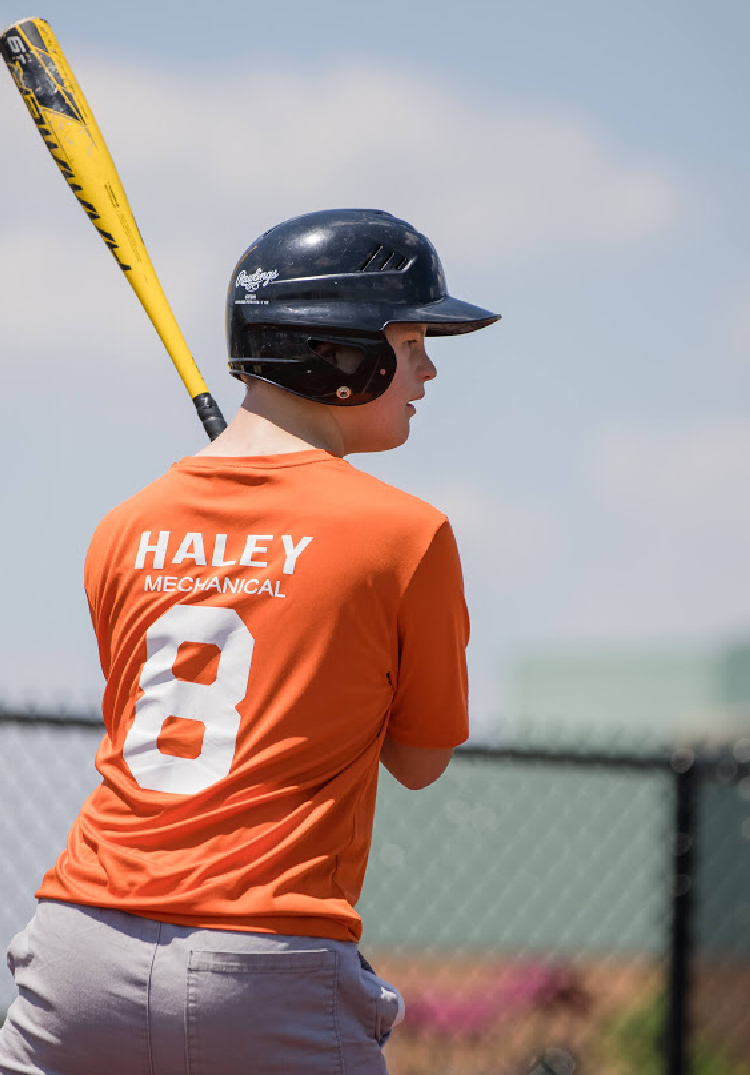
Wil sat down in the outfield. A bead of sweat slowly slid down the side of his pink cheek. The outfield was made of rubber; I’m sure it felt like a cushiony relief to him. Wil gets overheated very easily. I placed an icepack I had carried with me on the back of his neck. 

At his previous Challenger baseball game, Wil played 2nd and 3rd base. The weather was cooler and my parents were spectating, so he had plenty of showing off to do. Wil ran after every ball and threw it to his coach on the pitcher’s mound without hesitation. (The coach is diligent about Wil stopping, taking a step and throwing. Wil is equally diligent about following those instructions.) 

A batter in a wheelchair bunted the ball and her sister grabbed the handles of the wheelchair and ran her to first base. The next batter runs every base in a single hit, no matter where his ball lands. Sure enough, after he hit the ball, he tapped all the bases (passing those already on base), then sped across home plate. He raised his arms in success and the spectators cheered. The next batter stepped up to plate and the inning would continue until every player made it home. 

When a strong hitter came up to bat, the coach asked everyone in the outfield to back up. Wil didn’t budge. A father, who had been standing near us with his son, walked over and crouched down to talk to Wil. The father then reached out his hand, Wil took it and stood up, then we all walked deeper into the outfield. 

I thanked him and he said, “It’s always easier when it’s not coming from Mom or Dad. Music is the only thing that motivates my son. Some days I swear I have constant music playing on my phone.” 

Last Sunday at our Down Syndrome Support Team picnic, Elizabeth and I walked by a boy of about 10 years old. He was walking backwards with his arms spread out wide. His younger sister, a cute blond with pigtails, was trying to run past the width of her brother’s arms and escape to the parking lot. Their parents were a few feet behind them packing up their belongings.  

The boy smiled at us and said, “One thing I don’t like about Down syndrome is they don’t listen!” 

Elizabeth and I laughed. “We know exactly how that is,” I said. “I think we’ve chased her brother at least one thousand times!” 

I find it incredibly refreshing, rejuvenating actually, to be in places where our kids can be themselves without stares, sideways glances or need for explanation. No matter how diverse or similar our children’s disabilities are, there is an underlying understanding. Though you can feel it on the inside, on the outside, it is seen in gestures such as an outstretched hand, cheers for home runs (in any order), and laughs about siblings. 

Kindness, I have found, looks quite “typical” in any place it is shared.

Taking Note


On Wednesday, I opened Wil’s school folder and found a letter folded in half.  There was an intricate drawing on the outside of the letter to make it appear an envelope. I opened the letter and a colorful “Hey Wil! Good Morning!” popped out at me. Along the side of the letter were the names of Wil’s friends, who were also the creators: Sarah Stommen, Ashley Bobo, Lilly Smith, Lila Harvey. I knew how good this letter made me feel. I could only imagine what it felt like to Wil.

On Thursday, Wil and I went to his school’s Academic Awards night. He’d been to this event previous years for Katherine and Elizabeth, but this was the first time he would be walking up on the stage to accept an award for himself (Wil is on track for a Certificate of Completion).

Wil doesn’t like to be in auditoriums, or any place with loud abrupt noises such as applause. Even the anticipation of applause will keep him from entering the auditorium. Wil typically wears his noise-cancelling headphones to these events, but on Thursday night he didn’t want to wear them. (As he’s gotten older, he’s become more self-aware and refuses his headphones in nearly all instances except movie theaters.) 

When we walked up to the school, Wil saw his friends mingling on the sidewalk. Wil ran to them, and they ran to him, becoming a blur of laughter and hugs. The friends walked together into the auditorium and Wil didn’t hesitate once at the entrance. They all chose seats together near the stage.

I chose a seat a few rows up because I still wasn’t sure how things would go when he went up on the stage. But Wil handled it like a pro. He walked up to accept his award when his name was called, then made his way back down to his seat with his friends. When the event was over, he and his friends ran outside together for pictures. 

On Friday, the school had a civil war re-enactment. Square dancing was part of the event. Wil’s paraprofessional sent me a video of Wil square dancing with his classmates. He was all smiles and followed every direction of the square dance right along with everyone else. 

There were hiccups and deeper frustrations mixed in our week, too. But that’s how it goes with Wil. I’ve learned to take every moment one step at a time, because every stuck moment breaks way to freedom in the form of a supportive note, a good friend, or Wil’s own emergence of independence. 

One of the greatest gifts of raising Wil is that no moment could ever be taken for granted as typical. 

You Are Here

Like many mothers, I loved my son before he was born. My daughters and husband placed their hands on my belly and felt his kicks and punches. We pondered names and dreamed our dreams. The field of possibilities was laid open before us.

The golden gates to that field slammed shut seconds after Wil was born. My brain valiantly fought to pry them open, objecting to each indicator the medical staff shared with me that my son may have Down syndrome.  Look at the way his arms and legs splay out, they said, see his short stubby fingers and his low-set ears, note the thickness of his neck. Interestingly enough, they never mentioned the shape of his eyes. 

As Wil melted into my chest the day he was born, I reveled in my love for him. I was careful to keep thoughts of his expected diagnosis locked tight in a separate compartment, though it hovered perilously above me. I looked down into his eyes; their shape struck me. I was both awed by their beauty and intensely terrified. My brain, still playing defense attorney, objected strenuously. But when the heart knows, the defense must concede to rest. The compartment above me busted open and everything spilled out all over us on the hospital bed. 

Just days after Wil came home from the hospital, I stared at him in his crib. Though my brain had rested its case — we even had genetic proof by this time — it begged to object. I simply could not believe I had a child with Down syndrome. But it was true. My heart held deep love for him, yet my brain kept its distance. I had never felt so contradicted in my life. As I stood there, my stomach suddenly dropped as if I was going down a roller coaster. The ground vanished below me and I stood suspended, as if in an elevator well. I visually saw darkness under me and the four walls of Wil’s room suffocated me. I knew this experience was a figment of my imagination but my body felt every sensation as if it were real. 

When I was able to regain my balance and logically analyze what happened, I knew what it meant. I felt completely out of control. Though I had many loving people around me and a packet full of helpful information, I realized more than ever that the work of acceptance is intensely personal. I had to take the first grounding step into acceptance myself. 

Acceptance has no clear start point. I never found a big, red “you are here” circle followed by dashed lines leading the way to acceptance. Rather, acceptance is like an open field surrounded by clouded mountains. You just jump in wherever you are, firmly plant both feet in the field, and figure it out from there. 

I overstepped into territory I wasn’t ready for, like reading books about teens with Down syndrome before Wil was even a year old. Those books offer a different meaning to me now for the landscape I’ve travelled, but then it was too much knowledge too soon. I learned how to back-step and move in new directions.

Fourteen years later, I’m still back-stepping and running forward, climbing, traversing, discovering; yet I arrived to acceptance the day I jumped in and firmly planted both feet on the ground. 

I know the feeling of the gates being closed on me. And that is why at the top of every mountain we ascend, like Julie Andrews in “The Sound of Music,” I open my arms wide above the clouds, spin with the wind and soak in the spectacular view of this beautiful, vast landscape I gratefully call home.  

Once Upon a Hat

On Friday morning, Wil sat on his bedroom floor rifling through his bin of hats. He couldn’t decide which one.

“Well, no hat then!” Wil announced to himself. 

“Do you need some help, Wil?” I asked.

“No.” I sat down next to him and laid his hats on the floor. He turned them all down.  We had to leave for school in 10 minutes. 

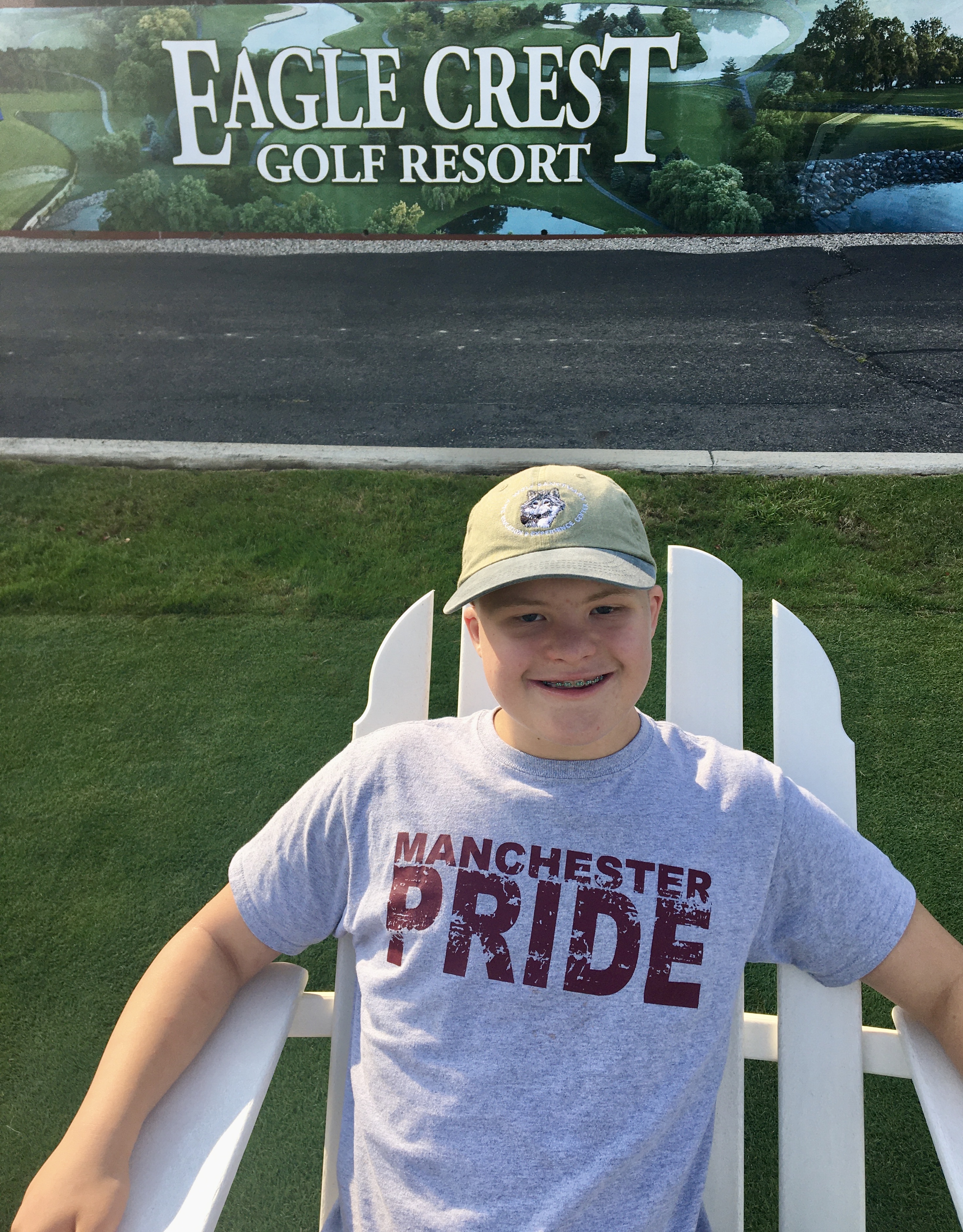
Wil had a Manchester shirt on so my best guess was he wanted a Manchester hat too. I presented his Manchester hats to him but he turned them all down. I convinced him to get off the floor, even without a hat, which was a good sign. 

A few months ago when Wil couldn’t decide on a hat, he stayed on the floor. I told him I was taking his sisters to school so they wouldn’t be late and I’d be back to get him. When I returned, he was seated on the porch step with a hat and backpack on. I was proud of him for turning his day around. 

On this Friday morning, however, when Wil stood up he fled the house without a hat or backpack. Katherine dashed after him. I grabbed Wil’s Manchester hats, his backpack, and flew out the door behind them.

I found Katherine standing in the dog kennel which is attached to the side of our garage. Wil was attempting to climb through the dog door which would have been hilarious to all of us, if we hadn’t been in a time crunch. 

“Silly Wil,” I said. “Woody is going to be jealous of you using his door. Come on, you don’t want to be late to see Ms. Campbell, do you?”

“Kristi Campbell!” Wil jumped out of the dog door and exited the kennel as he said his paraprofessional’s name. Then he stood unmoving in the driveway ­— two steps forward and one un-moving step is still a step forward in our book.

I walked behind him, put my hands on his waist and said, “Chugga-chugga choo-choo!” As I pushed him forward, he leaned back in resistance, yet kept putting one foot in front of the other. When we reached the car, Katherine opened his door but he stood firm by it. 

“All aboard,” I said. I bent his head down and kind of hoisted him into the car. He laid on his stomach with his legs hanging out. At this point his resistance was becoming a game. I was in part thankful for that, as I knew he was pulling out of his funk. But I was also running out of patience as he was in jeopardy of making his sisters late for school, which wasn’t fair to them. 

Elizabeth was in the back seat with Wil and talked him into sitting up straight and putting his backpack and seatbelt on. 

“Hey, Wil,” Elizabeth said looking at the Manchester hats I threw in the car, “that Manchester visor is mine.”

“No, my visor,” Wil said. They bantered back and forth. I knew what Elizabeth was doing. Sure enough, Wil chose the Manchester visor.

I reached my arm over the seat and splayed my hand. “Give me a turkey, Wil. You turned it around! Now you are going to have a great day.” He fist bumped my open palm. “And how about those sisters of yours? They are awesome.”

“They are bratties.” Wil said and laughed.

“No, you’re bratty,” Elizabeth said and playfully nudged Wil. (Typical sibling banter is as refreshing as it gets when life isn’t feeling so typical.)

By some miracle, we all made it to the school with 90 seconds to spare and in good spirits.

Sometimes it’s the simplest things that throw us off track, the simplest things that place us back on track, and the simplest things that we appreciate most.